
 +66 98 432 7651


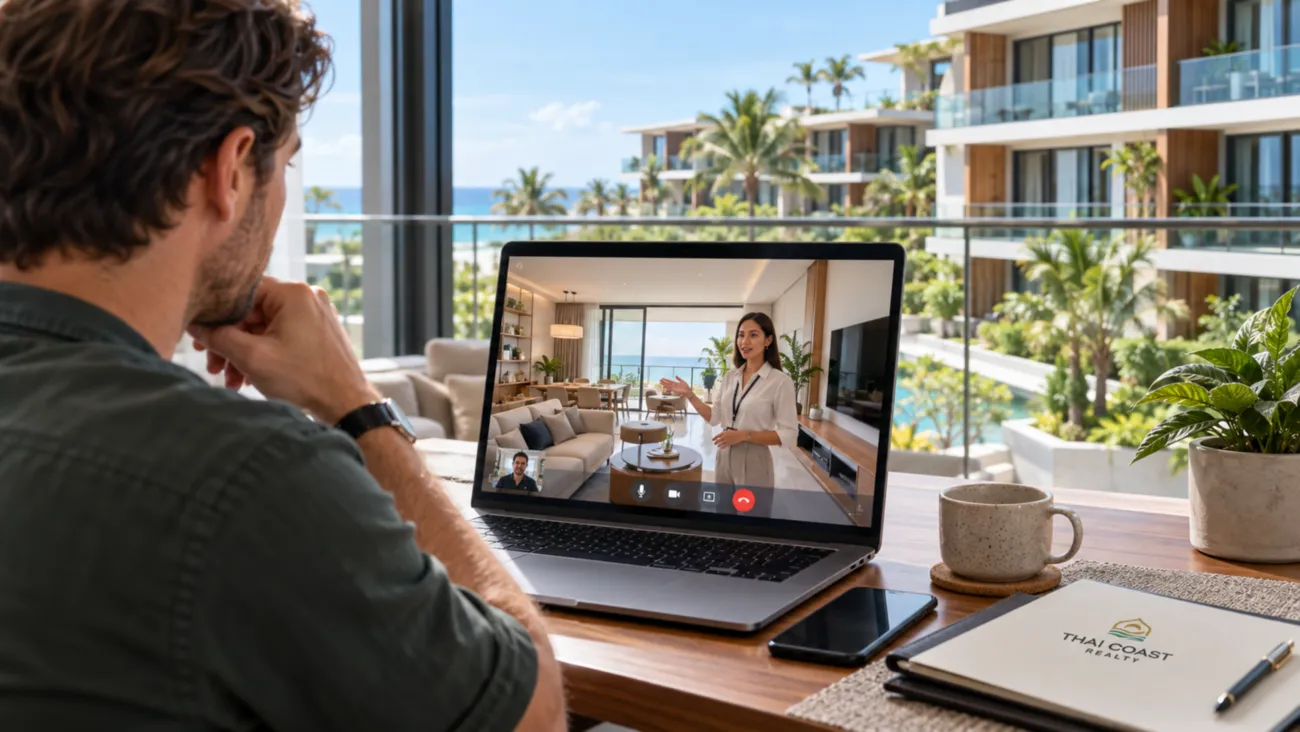
A significant portion of Thai real estate transactions can indeed be completed without the buyer being physically present in the country. Foreigners regularly reserve, inspect, sign, transfer funds, and register properties remotely—especially when it comes to apartments in registered condominiums that are under construction or completed properties from a verified seller.
But “remotely” does not mean “easier.” The process depends on the type of property, the form of ownership, the structure of the contract, the payment route, and the requirements of the specific Land Office—the government agency responsible for real estate registration in Thailand. Some steps the buyer can complete on their own from anywhere in the world, while others require an authorized representative in Thailand.
A remote purchase is not a simplified version of a transaction. When the buyer is not in Thailand, the verification of documents, payments, and the representative’s authority must be even more rigorous.
Buying Real Estate in Thailand Remotely: The Essentials in 1 Minute
| Question | Short answer |
|---|---|
| Is it possible to buy an apartment without visiting the property? | Yes, for a condominium, many steps can be handled remotely through an authorized representative. |
| Can a foreigner obtain freehold ownership? | Yes, for a registered condominium within the foreign quota |
| Foreign Quota | No more than 49% of total area for registered condominium units |
| Can a foreigner buy land directly? | As a general rule, no; there are certain exceptions provided for by law |
| Maximum recorded lease | Usually up to age 30; a promise of an extension is not the same as an already registered extension |
| Do I need a power of attorney? | Yes, if a representative handles the registration on behalf of the buyer |
| Do I need a Thai bank account? | Not in all cases; the payment route and bank confirmations must be agreed upon in advance |
| Base transfer fee | 2% of the government-assessed value; the allocation of expenses between the parties is determined by the terms of the transaction |
| What You Can't Miss | Due diligence, review of the SPA, payment schedule, and technical acceptance |
| Is it possible to buy a villa remotely? | It is technically possible, but the land and construction aspects require a much more thorough review |
The main rule: Do not transfer a large sum of money based solely on a presentation, reservation, or promises made by an agent. Before making the main payment, you must clearly understand the legal status of the property, the terms of the SPA, the recipient of the funds, the bank transfer route, and the registration process.
Is it possible to buy real estate without traveling there?
The answer depends on the property and the structure of the transaction. For an apartment in a registered condominium, provided that the requirements regarding the foreign ownership quota and banking documents are met, most of the steps can indeed be completed remotely. For a villa, house, or plot of land, the legal framework is more complex—and in-person attendance or more thorough legal preparation is often warranted.
What can actually be done remotely:
- Selection and Comparison of Properties: catalogs, presentations, communication with an agent;
- Live Video Viewing a specific unit or object;
- Reservations and signing the reservation agreement;
- Due Diligence — verification of documents, the developer, and the property;
- Approval and Signing the master purchase and sale agreement (SPA);
- Drafting a Power of Attorney — Power of Attorney — for a representative in Thailand;
- International Bank Transfer and obtaining the necessary bank confirmations;
- Registration of a Right through an authorized representative—in cases permitted by law;
- Technical Acceptance with an independent on-site inspector present.
However, it cannot be said that any property in Thailand can be purchased online via 100% without any conditions. Specific requirements vary depending on the property, the Land Office, the banking process, and the required documentation. Some Land Offices request additional documentation. Certain developers establish their own reservation and payment procedures.
Traveling in person is especially justified if:
- A pre-owned property is being purchased, and its condition appears questionable based on the video;
- The transaction involves a complex ownership structure—for example, a company;
- property—a villa or a parcel of land with a non-standard title history;
- The buyer is looking for a home for permanent residence and is unfamiliar with the neighborhood;
- An unusual banking or documentation issue has arisen that requires your personal presence.
The following sections provide detailed information on the transaction process.
“How to Buy Real Estate in Thailand“
Examples of projects that can be reviewed remotely
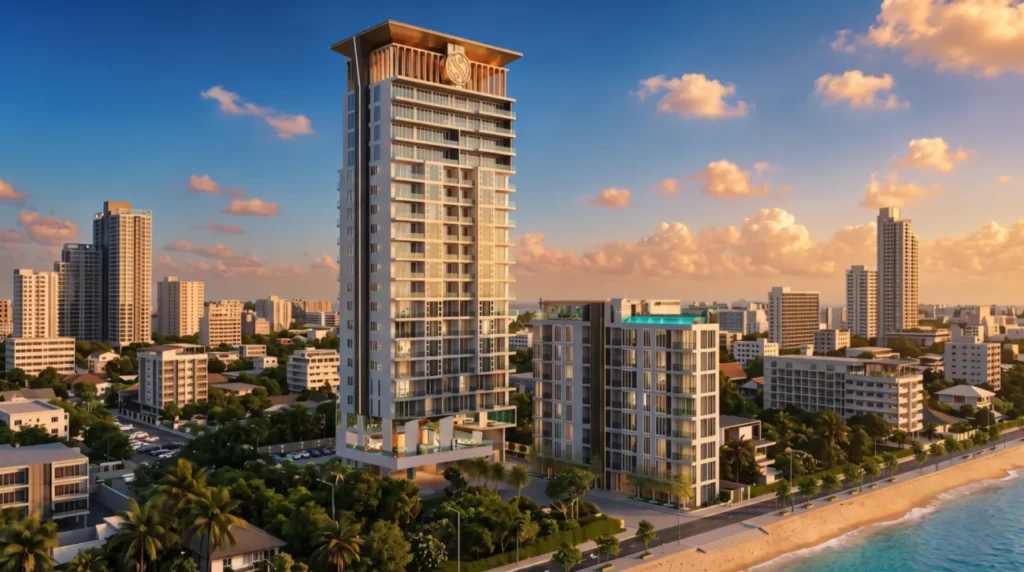

 Pattaya, Pratamnak
 starting at 34.5 m²

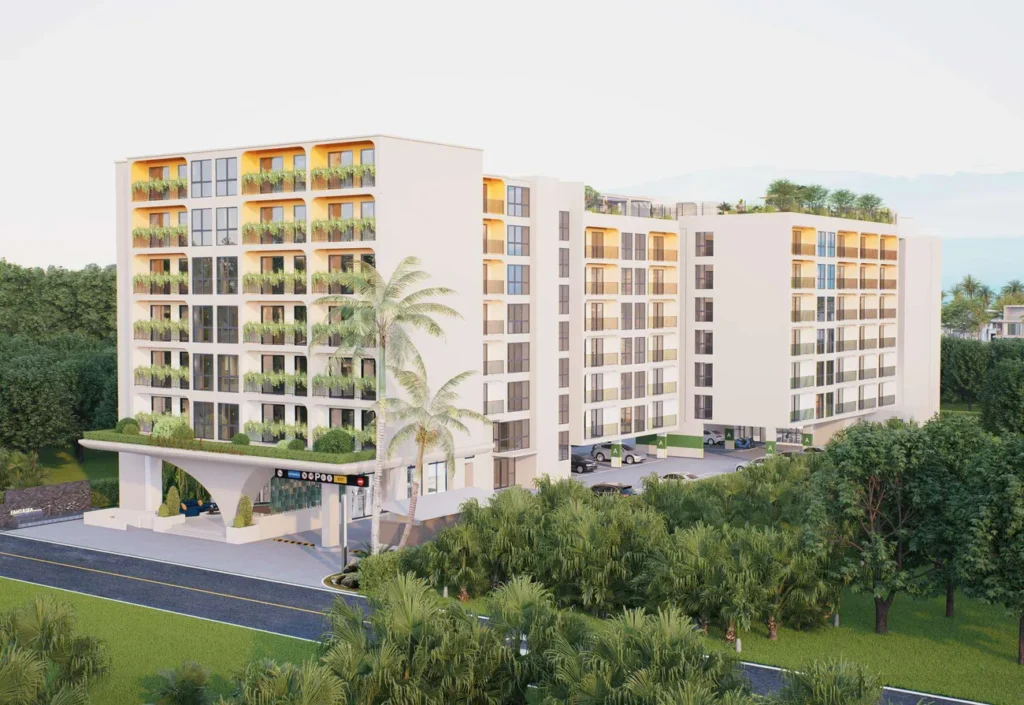
 Phuket, Katufrom 23.75m²
 Phuket, Layanfrom 475.10m²

What Can a Foreigner Buy Online?
Before moving on to the transaction process, it is important to understand the different types of properties—because the legal form determines both the possibility of a remote purchase and the scope of additional due diligence.
Condominium: freehold and leasehold
A foreign national may directly own an apartment in a registered condominium in the form of freehold — full ownership rights. This is the most accessible and legally straightforward option for a nonresident.
A key limitation is — foreign quota (foreign quota): The total share of units in a condominium owned by foreign nationals and legal entities must not exceed 49% of the total area of all registered condominium units in that condominium. This requirement is established by Thailand’s Condominium Act (thailand.go.th). Before each transfer of ownership, you must obtain a current certificate from the condominium’s legal entity—the residential complex’s management organization—confirming the foreign ownership ratio and that the transaction can be registered within the established limit. The quota may be exhausted, so the certificate should be requested immediately before the transfer.
If purchasing a freehold property within the foreign quota is not possible, in some projects or transactions, a foreigner may be offered leasehold — Long-term lease. For real estate, the registered lease term generally cannot exceed 30 years. The contract may include provisions regarding future renewal, but such a contractual promise should not be equated with an already registered additional 30-year term—its enforceability and risks must be assessed separately. A leasehold does not confer ownership in the traditional sense; the scope of the buyer’s rights is determined by the terms of the lease agreement.
Villa, House, and Land
As a general rule, a foreign national may not directly purchase land in Thailand, except in certain cases provided for by law. A villa or house on a plot of land is a more complex arrangement: the building itself can be registered in a foreigner’s name, while the land is held through a registered lease or another legal structure.
A Thai company must not be established or used as a mere vehicle to circumvent restrictions on foreign land ownership. If the land is owned by a Thai legal entity with foreign participation, it is necessary to separately verify the authenticity of the business, its capital structure, control, and compliance with Thai law. Schemes involving nominal Thai shareholders carry significant legal risk. Any ownership structure must be reviewed separately with a Thai attorney.

Table 1. Types of Properties and Online Purchases
| Object Type | Option for a remote transaction | Typical Rights of a Foreign National | What to Check Especially Carefully |
|---|---|---|---|
| Freehold Condo | High, provided the conditions are met | Full title (condominium unit title deed) | Foreign ownership quota, bank confirmations, property status at the Land Office |
| Condo leasehold | High | Long-term lease (up to 30 years; renewal terms are a separate matter) | Renewal Terms, Rights Upon Sale, Inheritance Rights |
| Off-plan condo | High, but vetting the developer is critical | Freehold or leasehold upon completion | The developer's rights to the land, permits, payment schedule, and terms in case of delays |
| Ready-to-move-in apartment (resale) | On average, watching videos isn't often enough | Freehold or leasehold | Hidden defects, debt-free certificate from a legal entity, features, actual owner |
| Villa | Low, without an independent inspection | Construction—possible; land—through a legal framework (lease or other means) | Land title documents, building permits, ownership structure, management |
| House with land | Low; an in-person visit or a detailed inspection is recommended | Through a registered land lease or other legal structure; in certain cases, as provided by law | Legal history of the land, encumbrances, current status |
Not sure which format is right for you?
Please specify your budget, the purpose of your purchase—whether it’s for living, renting, or investment—and the region you’re interested in. We’ll select some options and show you which ones you can realistically consider remotely.
[Find a Property]
What's the difference between buying a new-construction unit and a pre-owned apartment remotely?
| Stage | Off-plan / New construction | A Ready-to-Move-In Resale Apartment |
|---|---|---|
| Main Focus of the Audit | Developer, land, permits, spa | Owner, title deed, encumbrances, debt |
| Inspection | Project + construction site + similar completed project | The specific unit being purchased |
| Payment | Usually according to the contract schedule | Under the terms of a specific transaction |
| Foreign quota | The feasibility of a future/upcoming freehold transfer is being assessed | Verified before registration |
| Certificate of No Debt | Applies to the transfer of a finished unit | Required before the transfer |
| Major Technical Risk | Discrepancy between the result and the SPA specification | Hidden defects in an existing structure |
| Major Legal Risk | Issues related to the project, land, permits, and contract terms | Encumbrances, seller, outstanding balance, documents |
Who Is Responsible for What?
| Participant | His task | What You Shouldn't Automatically Assign to Him |
|---|---|---|
| Agent | Recruitment, negotiations, scheduling viewings, and communication | An independent legal opinion, if the agent represents the commercial side of the transaction |
| Thai lawyer | Due Diligence, Contract Review, and Legal Structure Analysis | Technical acceptance in lieu of a specialized inspector |
| POA Representative | Actions expressly authorized by the power of attorney | Actions Beyond the Scope of the POA |
| Inspector | On-site inspection of the facility | Verification of Legal Title |
| Condominium as a Legal Entity | Condominium documents, including the certificates required by law | Representing the Buyer's Interests |
| Bank | Transfers and Bank Confirmations | Determining the Legal Status of a Property |
| Land Office | State Registration | Due Diligence on Behalf of the Buyer |
How a Remote Transaction Works
This is the main section. Below is— ten consecutive steps, which cover the process from the initial review to receiving the documents after registration. The sequence is not arbitrary: each subsequent step builds on the results of the previous one.

Step 1. Purpose, Region, and Type of Facility
The buyer determines: the purpose of the property (rental, primary residence, investment), the region, and the budget. These factors determine which type of property is suitable and how complex the entire process will be. An off-plan condo in Pattaya and a villa on Koh Samui are fundamentally different transactions in terms of the level of control involved.
Phase 2. Selection of Properties and Initial Request for Information
An agent or agency provides a selection of properties. The buyer reviews the properties, requests floor plans, payment terms, and information about the developer or owner. No money changes hands at this stage.
Step 3. Live Video Viewing
This is not a promotional video. It is an online tour during which an agent or representative is physically present at the property and shows it in real time—based on the buyer’s requests. For details on exactly what to look for during the video tour, see the separate section below.
Step 4. Verifying the Seller or Developer
Before booking. For an existing property: verification of the owner’s identity based on documents, type of title deed, encumbrances, and outstanding debts. For a new construction project: the developer’s legal entity, land rights, permits, and history of completed projects.
Step 5. Booking
The amount of the reservation deposit, the unit hold period, and the final transfer deadline are not set at a single, universal rate for all properties. They depend on the seller and the contract. Before making a payment, check these three factors: the deposit amount, the reservation period, and the terms for a full or partial refund.
Step 6. Main Contract
A Sale and Purchase Agreement (SPA) is a key document in a transaction. It governs the rights of the parties, the price, the payment schedule, the timing of the transfer of the property, the scope of the transaction, the parties’ liabilities, and the procedure for refunds in the event of a breach of the terms. Large payments should not be made before the SPA has been reviewed and approved simply because the seller or agent is rushing the reservation. It is standard practice to request a copy of the contract for review before signing. If they refuse to provide it, that’s a cause for concern.
For a remote transaction, clarify in advance the format in which the parties will sign the SPA: is exchanging signed scans sufficient at the relevant stage, or does the seller require the originals? You should not automatically assume that an electronic copy serves as a substitute for the original for all subsequent procedures. Separately, clarify which documents will need to be physically sent to Thailand and by what date they must be in the representative’s possession.
What to Check at a Spa Before Signing a Contract
| Condition | What the buyer needs to understand |
|---|---|
| Object | Unit number, area, floor, and property identification |
| Law | Freehold or leasehold |
| Price | Total Contract Value |
| Payments | Amount and date of each tranche |
| Recipient | Who exactly receives the money? |
| Transfer Deadline | The specific procedure for determining the date |
| Delay | Buyer's Responsibilities and Rights |
| Package Contents | Finishes, furniture, appliances, accessories |
| Defects | How they are identified and resolved |
| Termination | Grounds and Financial Consequences |
| Transfer Costs | Who pays the applicable fees and taxes? |
| Management | If a lease or income is promised—separate management terms and the operator’s obligations |
Step 7. Power of Attorney and Documents
If the buyer does not come to Thailand to register in person, he or she must complete Power of Attorney — A power of attorney for a representative authorized to act on your behalf during registration at the Land Office. The representative must act under a power of attorney in a form acceptable to the relevant Land Office. For documents signed outside Thailand, the requirements for signatures, notarization, legalization, and translation must be confirmed in advance. The requirements regarding form, certification, and translation are covered in a separate section.
Step 8. Coordination of the funds’ route and bank confirmations
The payment route is agreed upon in advance — before sending the money, not during the process. This is important for freehold condominiums, where you must confirm a legitimate source of funds during registration. The specific format of the bank document and the Land Office’s requirements are outlined in the section on money transfers.
Step 9. Technical Acceptance
Registration of title and physical inspection of the property are separate procedures. The inspection is conducted on-site with an independent inspector or representative present. The buyer participates remotely—via video call, a photo report, and a defect list.
Step 10. Registration and Receipt of Documents
Registration of title through an authorized representative is carried out at the Land Office. After registration, the buyer receives a complete set of documents. For a condominium, this is the original condominium unit title deed with the new owner’s details recorded; for transactions involving land or a structure on a parcel of land, the set of title documents differs and is verified separately.
Would you like to find a property in Thailand remotely? Please specify your budget, the purpose of your purchase, and the region you're interested in—Pattaya, Phuket, Koh Samui, or Bangkok. We'll prepare some options for you to compare before making a decision. Browse real estate listings
Table 2. Flowchart of the Stages of a Remote Transaction
| Stage | What the buyer does | What You Can Ask a Representative to Do | Which result should I check? |
|---|---|---|---|
| Defining the Purpose and Scope | Formulates a request, researches the market | Selection, consultation | Match of Items to the Query |
| Video Viewing | Asks questions live on air | Hosts a live demonstration on site | Video recording, list of comments |
| Due Diligence | Reviews documents and data | Requests documents from the Land Office and from a legal entity | Proof of ownership, absence of encumbrances, quota |
| Reservations | Signs the reservation agreement and pays the deposit | Submits the signed agreement | A copy of the contract signed by both parties |
| SPA | Approves and signs | Can receive and forward a document | Signed SPA with attachments |
| Power of Attorney and Documents | Processes applications abroad in the required format | Verifies compliance with Land Office requirements | Certified Power of Attorney |
| Money Transfer | Initiates payments, saves receipts | Receives payment (if the developer/seller is a legal entity) | Bank receipt, payment description, bank confirmation (if necessary) |
| Acceptance | Participates via video conference, reviews the defect list | Conducts a physical inspection and prepares a defect report | Defect list, photos, videos, confirmation that the issues have been resolved |
| Registration | Awaiting completion; will receive documents by courier | Acts on behalf of another person under a power of attorney at the Land Office | Original condominium unit title deed in the buyer's name |
Example: The customer is located outside Thailand
The buyer selects a ready-to-move-in condo → the agent conducts a live video tour → the lawyer verifies the owner, title deed, and encumbrances → the parties agree on the SPA → the buyer completes a POA using the form previously agreed upon for registration → the bank and the agent confirm the payment route → the funds are transferred to the recipient specified in the contract → an inspector conducts the acceptance inspection → the legal entity issues the necessary certificates → the agent registers the transfer with the Land Office → the original title deed, with the new owner’s name recorded, is handed over to the buyer.
This example applies to a standard condo and should not automatically be applied to a villa, land, or a non-standard ownership structure.
Documents and Power of Attorney
The set of documents depends on the type of property and the transaction structure, but the basic set of documents required for a remote condo purchase is as follows:
Buyer's documents:
- International passport (valid);
- Notarized copies of passport pages, if required;
- Power of Attorney—the original document issued in the name of the representative in Thailand, in a form acceptable to the relevant Land Office;
- Bank documents confirming a legitimate source of funds.
Transaction documents:
- Reservation agreement;
- Sale and Purchase Agreement (main agreement);
- Acceptance Report and Defect List;
- Proof of payment for each installment.
Documents from the facility:
- For condominiums—the title deed for the condominium unit (original or certified copy for verification); for properties with land—the relevant land title document and the set of title documents are verified separately;
- Documents from the developer or seller: registration information, land title, permits;
- A certificate issued by the condominium's legal entity confirming the foreign ownership ratio (for freehold condos);
- A debt-free certificate issued by the condominium's legal entity confirming that there are no outstanding debts for common area expenses (for a completed property).
Documents after registration:
- The original condominium unit title deed with the new owner's name recorded on it;
- Land Office documents regarding the transfer of title;
- Bank transfer confirmations (keep them—you may need them if you sell the property in the future).
Power of Attorney: What You Need to Know
A Power of Attorney is a legal instrument that allows an authorized representative to represent the buyer's interests at the Land Office during registration. Thailand's Department of Lands publishes official power-of-attorney forms (dol.go.th), including a separate form for transactions involving condominium units and Form TD.21 for land transactions. Using official forms reduces the risk of registration being denied on procedural grounds.
To reduce risk, it is prudent to limit a power of attorney to a specific transaction, a specific property, and the necessary scope of authority; if necessary, its term may also be limited. Excessively broad powers (“authorized to perform any actions with respect to the real estate”) pose obvious risks to the buyer. The form and content should be agreed upon in advance with the relevant Land Office and reviewed with a lawyer before signing.
A document signed outside Thailand may require notarization, consular or other legalization, and translation. The exact chain of custody must be verified before the original is signed — from the representative, the attorney, and the relevant Land Office. Having the original document amended due to a discovered discrepancy could delay the scheduled registration date.
An Important and Up-to-Date Explanation Regarding the Apostille (October 2026):
Thailand deposited its instrument of accession to the Hague Apostille Convention on June 30, 2026. However, the convention will not enter into force for Thailand until February 28, 2027, as officially reported by Thai Ministry of Foreign Affairs. This means that as of the publication date of this article—October 2026—the standard apostille It hasn't been replaced automatically yet the previous procedure for legalizing foreign documents for use in Thailand.
Practical conclusion: The procedure for certifying a specific power of attorney must be confirmed well in advance. Assuming that the apostille is already valid in Thailand is a mistake that may only become apparent during registration.
Seven issues must be resolved before a large payment can be made
- Who is legally considered the seller?
- What type of title does the buyer acquire—freehold or leasehold?
- Have the title deed and any registered encumbrances been verified?
- Have the full SPA and the apps been approved?
- To whose bank account is the money being sent, and does the recipient match the information in the transaction documents?
- What bank document will I need for the Land Office?
- Who will register the right, when, and under what power of attorney?
If even one of these questions remains unanswered in writing, it is best not to send a large payment until the matter is clarified.
How to Transfer Money
Is it necessary to open an account at a Thai bank?
There is no universal rule requiring every foreign buyer to first open a personal bank account in Thailand. For freehold condominiums, what matters most is not the existence of an account itself, but rather that the source and route of the funds comply with the applicable basis for purchase and that you can obtain bank documents that the Land Office will accept. Therefore, the payment route should be coordinated with the bank and the Land Office. Before the translation, rather than trying to correct it after the money has been sent.
International real estate transactions in Thailand require careful preparation—and not just because the amounts involved are large.

Why is the route approved before departure?
When a foreigner purchases a freehold condominium unit, they must confirm one of the legally prescribed grounds for the purchase and submit acceptable evidence of the funds’ origin and source to the Land Office. In a common scenario, the buyer transfers foreign currency to Thailand, and upon conversion to baht, the Thai bank issues a document Foreign Exchange Transaction (FET) — one of the common banking documents used to verify the relevant funds’ trail; its sufficiency and the completeness of the accompanying documentation should be verified in relation to the specific transaction. However, the law also provides for certain other acceptable sources, such as funds from a non-resident baht account or a foreign-currency deposit account at a Thai bank. Therefore, The specific format of the bank document—including whether a FET or other confirmation is required—must be agreed upon with the bank and the relevant Land Office before sending the money.
If the payment route does not meet the requirements specifically applicable to a foreigner’s purchase of a condominium unit, the Land Office may refuse to accept the submitted bank documentation. It is important to verify in advance not only the currency of the payment but also the source of funds, the type of account, the names of the payer and payee, and the documents the bank can provide.
An error in the payment process may not become apparent when the money is sent, but only later—when the documents are needed for registration or a future sale of the property.
Payee
Funds should be transferred only to the recipient and to the account specifically designated in the SPA or another verified transaction document. If the seller proposes a different account or a third party, the legal basis for such a payment must be verified before the transfer is made. Before each transfer, you should double-check the account details directly with the developer or seller. — not via an email received during the correspondence, but through a separate communication channel. The substitution of bank details in correspondence (known as BEC—business email compromise) is a common tactic used by scammers.
We do not recommend transferring cash to intermediaries whose status is unknown, making transfers with fictitious payment descriptions, or using any methods that circumvent banking and sanctions requirements.
What You Need to Clarify Before Sending a Large Payment
- Recipient — a legal entity or an individual; exact name; must match the contract;
- Account Number and Bank — verified against the company's official documents;
- Payment Reason — a reference to the contract;
- Source of Funds and Account Type — whether it falls within the categories eligible for freehold registration at a specific Land Office;
- Payment Purpose — the correct wording for the sending bank and the receiving bank;
- Who issues the bank confirmation? — Check with the recipient's Thai bank to find out in what format the FET or other document will be issued;
- Documents for the Land Office — What specific form of confirmation is accepted in your case;
- Correspondent Bank Fees — The amount must be received in full or adjusted for the commission, as provided for in the contract.
The specific methods of transferring funds depend on the banks involved, the sender’s country, and the current availability of correspondent banking relationships—and they are subject to change. There is no universal transfer process that applies to all countries and banks. Be sure to check with your bank about the available options before signing the agreement, not after.
What to Check Before Paying
Due diligence—the process of verifying the property and the seller before making a large payment—is not simplified but rather complicated by remote purchases: the buyer cannot personally review the documents, assess the physical condition of the property, or communicate with the management company. Therefore, the responsibility for conducting this verification falls on a local representative or a retained attorney on site.
For a completed project
- Owner: Who is the current owner according to the Land Office records, and does this match the terms of the contract?;
- Title Deed: for a condominium—a condominium unit title deed; no restrictions on transfer;
- Encumbrances: mortgages, liens, and other encumbrances registered on the property;
- Amounts owed to the condominium legal entity: Prior to registering the transfer of ownership of a completed condominium unit, a current debt-free certificate from the condominium’s legal entity regarding common area expenses is required; any outstanding balances must be identified and settled prior to the transfer;
- Foreign quota: A current certificate from the legal entity confirming the foreign ownership ratio—requested immediately prior to registration;
- Compliance with documents: area, floor plan, floor, unit number as listed in the documents and as it actually is;
- Physical condition: Defects, signs of leaks, and the condition of plumbing fixtures, air conditioners, and windows are assessed during a video walkthrough and a physical inspection;
- Furniture and equipment: a detailed list of what is included in the transaction under the contract.
For new construction / off-plan
- The developer's legal entity: registration information, company history, completed projects;
- Right to a parcel of land: who owns or leases the land on which the project is located;
- Permits and approvals: building permit and other required project documentation; separately—the necessary EIA approval/report, if the project is subject to environmental impact assessment requirements;
- Project Status and Actual Progress: Photos and videos from the construction site—not renderings;
- SPA Terms and Conditions: payment milestones, their alignment with construction phases, penalties, and the refund process;
- Timelines and Liability in the Event of a Delay: What happens if the developer delays the completion date;
- Finish Specifications: what exactly is included in the package according to the contract;
- Procedure for the Transfer and Acceptance of a Property.
Due Diligence Checklist Before a Large Payment:
- The original or a certified copy of the title document (condominium unit title deed for a condo) has been received and verified;
- The identity of the seller or the developer's legal entity has been verified;
- Verified that there are no encumbrances at the Land Office;
- A current certificate regarding the foreign ownership ratio has been received from the legal entity (for a freehold condominium);
- Received a debt-free certificate from a legal entity (for a completed condo);
- The full text of the SPA has been reviewed and approved;
- An independent legal review of the contract was conducted;
- The payment route details and recipient information have been verified;
- For off-plan properties—building permits and the developer’s rights to the lot have been verified;
- The format for bank confirmations for the Land Office has been approved.
New Construction Projects for Comparison

 Phuket, Bang Taostarting at 45 m²
 Pattayafrom 34m²


How to Verify an Object Using Video
Watching a video is not the same as giving a presentation. The difference is fundamental.
A commercial or a pre-recorded video They are designed to make the property look attractive: the best lighting is chosen, flaws are hidden, and the most photogenic angles are highlighted. This is a marketing tool, not an inspection tool.
Live Video Viewing It takes place in real time: the representative is physically on-site, the camera is on, and the buyer controls what they want to see. It is precisely this format that has practical value.
A good online listing answers the buyer's questions rather than simply repeating the property's promotional description.
What to ask to be shown during a live video viewing:
- The apartment number on the door or in the elevator lobby—to confirm that this is indeed the correct unit;
- The view from each window, without splicing or editing;
- Hallway, common lobby on each floor, mailboxes;
- Front door: locks, weatherstripping, hinges;
- Walls and ceilings—for cracks, stains, and signs of moisture;
- Plumbing fixtures: faucets, drain, water pressure—turn on when shown;
- Air conditioners: turn them on, check that they are working properly, and check the condensate drain;
- Windows and balcony doors: how they open, seals, condition of the frame;
- Balcony or terrace: flooring, railing, drainage;
- Utility areas: electrical panel, water heater, boiler (if applicable);
- Common areas: elevators, swimming pool, parking, lobby;
- The actual distance from the complex to the street, road, or beach—if that's a factor in your purchasing decision.
When it comes to resale properties, it's important to understand the limitations of video viewings: a musty smell, vibrations, noise from neighbors or the street, the actual quality of the building materials, and the condition of the adjacent units It is impossible to assess this remotely. This is an argument in favor of an independent on-site inspection or—in some cases—a personal visit.
Apartment Inspection Without an On-Site Visit
Registering a property title with the Land Office and the technical acceptance of the property are two separate procedures. Registration formalizes the change in ownership. Acceptance confirms that the property is being transferred in the agreed-upon condition and with the agreed-upon fixtures and fittings.
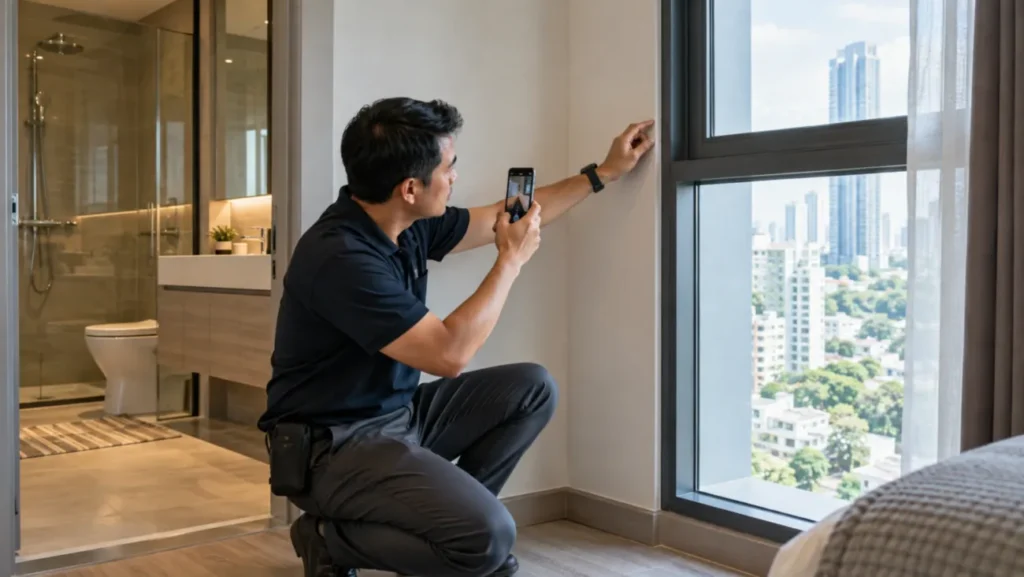
How to organize a remote acceptance inspection:
The buyer appoints an independent inspector (or authorized representative) to conduct an on-site inspection. At the same time, a video session is arranged during which the buyer can observe the process in real time and ask questions.
Based on the results, a report is prepared defect list — a list of identified nonconformities. The procedure for rectifying defects, the handover of keys, and the deadline for the final payment must be explicitly defined in the SPA and the handover documents. It is preferable for the buyer to agree in advance in the SPA on a mechanism whereby material defects are documented prior to the final settlement or where clear deadlines and responsibility for their rectification are specified.
What's important to check during acceptance:
- Compliance of the floor plan and square footage with the project;
- Walls, ceilings, floors—finish, cracks, chips;
- Plumbing fixtures: faucets, mixers, toilet, bathtub, drain;
- Air Conditioners: Operation of Each Unit;
- Electrical work: outlets, switches, lighting;
- Windows and doors: opening, closing, double-pane windows, handles;
- Furniture and built-in appliances—if provided for in the SPA;
- Meter readings (electricity, water) at the time of transfer;
- Keys, access cards, parking chips—the complete set;
- Documents of the management company (legal entity): articles of incorporation, management information.
Table 3. Remote Technical Acceptance
| What to Check | How to Verify Remotely | Which document or material should be kept? |
|---|---|---|
| Layout and Area | Verification against the floor plan via video | Annotated screenshots, floor plan from the SPA |
| Condition of walls, floors, and ceilings | Video footage of each surface taken in good lighting | Video file with timestamps |
| Plumbing | Video showing how to turn on the water and check the drain | Video file, inspector's comments |
| Air Conditioners | Videos showing how to turn on and operate each unit | Defect List with a Note on Operational Readiness |
| Furniture and Appliances | Comparison of the SPA list with photos showing the actual condition | SPA Comparison Chart + Photos |
| Meters | Photos of meter readings at the time of transfer | A photo with the date and a representative's signature |
| Keys and Access Cards | Video showing the receipt and inspection of the kit | List of keys in the acceptance report |
| Defects | Photos and videos with descriptions of each one | Defect list with signatures and deadlines for correction |
How much time and money should be budgeted?
What determines the timeframe for an online purchase?
| Script | What determines the term? |
|---|---|
| Ready-to-move-in condo | Document verification → SPA → POA → translation → preparation of certificates → transfer |
| Off-plan condo | Construction and Payment Schedule → Acceptance → Preparation for Transfer |
| Resale condo | Seller due diligence and unit → settlements → certificates → transfer |
| Villa | Land and Building Inspection → Ownership Structure → Contract → Registration Procedures |
For a completed project, the timeline cannot be determined solely based on the Land Office’s processing speed: delays may be caused by the POA, the mailing of originals, the bank, the receipt of certificates, or the resolution of legal issues.
Factors affecting timelines:
- Project status (completed, under construction, excavation phase);
- The time required to prepare and legalize a power of attorney in the buyer's country;
- Banking route and processing time for an international transfer;
- Requirements of a specific Land Office;
- For the current appointment policy and wait times at the Land Office, please check immediately before your transaction.
What the expenses consist of:
- Price of the property;
- Reservation deposit;
- Legal review (due diligence and contract review);
- Translation and notarization of documents;
- Consular or notarial procedures involved in executing a power of attorney abroad;
- International wire transfer (fees);
- Taxes and registration fees upon transfer of title;
- Services of an independent inspector during acceptance;
- Submission of original documents (if necessary);
- Management fee (common area fee) upon acquisition of ownership rights;
- Sinking fund (building reserve fund)—an initial contribution or other payment, if provided for by the rules of the condominium legal entity and the terms of the specific project;
- Furniture or additional fixtures, if the property is being transferred without finishing.
The exact amounts of taxes and fees depend on the type of transaction, the value of the property, and the seller's status.
What other payments are involved besides the price of the property?
| Consumption | What You Need to Know |
|---|---|
| Transfer fee | The base rate is 2% of the government-assessed value; the party responsible for the expense is determined by the terms of the transaction |
| Specific Business Tax | Where applicable—3.3% of the applicable tax base |
| Stamp duty | Where applicable—0.5%; as a rule, it is not charged simultaneously with the SBT for the same transaction |
| Withholding Tax | The calculation depends on the seller's status and the circumstances of the sale |
| Legal Review | The cost depends on the subject matter and the scope of the due diligence |
| Technical Inspection | Calculated separately depending on the facility and the scope of the inspection |
| Common Area Fee | The size is determined by the specific condominium |
| Sinking fund | It depends on the rules and conditions of the specific project |
| Bank Fees | They depend on the bank, the currency, the chain of correspondent banks, and the method of transfer |
Important: The seller's taxes and registration fees should not automatically be considered the buyer's expenses. It is necessary to specify in the SPA, prior to signing, who will actually pay these specific amounts.
Example: If the government-assessed value of the condominium is 5,000,000 THB, the base transfer fee at the 2% rate is 100,000 THB. This does not automatically mean that the buyer pays the entire 100,000 THB: the allocation of costs must be specified in the contract. The seller’s taxes are calculated separately depending on the circumstances of the transaction.
The Main Risks of Online Shopping
When to Stop an Online Transaction
Do not send the next large payment until further verification has been completed if:
- The seller or agent does not provide the complete SPA until payment is made;
- The recipient's bank account does not match the transaction documents;
- The representative cannot explain exactly which right will be registered;
- The project documentation and the unit actually displayed do not match;
- They're pressuring you to pay, but they won't let you conduct an independent legal review.
On its own, any one of these signs does not prove fraud, but it does provide grounds to suspend payment until the circumstances are clarified.
Table 4. Risks and Ways to Mitigate Them
| Risk | What does it look like? | How to Reduce the Risk |
|---|---|---|
| Purchasing Based Solely on Renderings | The actual product differs from the promotional materials | Live video preview of a specific unit or a similar completed structure within the same project |
| Display another unit | The video shows a different property than the one specified in the contract | Ask to see the apartment number and floor plan |
| Lack of independent verification | Only the seller's agent reviews the documents | Hire an independent attorney or inspector |
| Deposit Prior to SPA Review | The money has been transferred, but the contract turns out to be unfavorable | Sign the reservation agreement only after reviewing the refund policy. |
| Alteration of Bank Account Information | A scammer sends fake payment details in their messages | Verify the recipient's details directly, through a separate communication channel |
| Payment to a Third Party | They are asking for the money to be transferred to an account that does not match the one specified in the contract | Payments shall be made only to the recipient expressly designated in the SPA or another verified transaction document. |
| A Power of Attorney That Is Too Broad | A representative is granted authority that extends beyond the scope of the transaction | Limit a power of attorney to a specific property and a specific term |
| No confirmation of foreign quota | Registration is not possible—the quota has been reached | Request a current certificate from the legal entity before the transfer |
| Incorrect route or bank document format | The Land Office does not accept the submitted documentation | Confirm the source of funds, the route, and the document format with the bank and the Land Office before the transfer |
| Hidden Debts on a Completed Condo | Any outstanding debt owed by the seller to the legal entity must be identified and settled prior to the transfer | Check for any outstanding debt owed to a legal entity before making a large payment; obtain a current debt-free certificate before the transfer. |
| Lack of technical acceptance | Defects are discovered after moving in, when the deadline for repairs has passed | Organize an independent inspection; include in the SPA a procedure for resolving issues prior to final settlement |
| Differences in the package compared to the SPA | The furniture or appliances promised in the contract are missing | Compare the SPA checklist with the actual condition of the property during acceptance |
| The promise of a “guaranteed income” | The management agreement omits material terms | Review the lease and management agreement separately from the SPA |
Find a property that you can inspect before arriving
Get a selection of properties based on your budget and region, including floor plans and purchase terms. Before you decide to reserve a property, you can arrange a virtual tour and request documentation for your selected options.
[Get a selection]
Pattaya, Phuket, Koh Samui, and Bangkok
Property laws are uniform throughout Thailand. However, The process of selecting a property and the typical risks faced by online buyers differ significantly depending on the region.

| Location | What to Check Remotely in Particular |
|---|---|
| Pattaya | The specific neighborhood, the condition of the finished unit, transportation, the complex's surroundings, and the actual view from the windows |
| Phuket | Location, project management, terms of the rental program, and—for villas—land structure |
| Samui | Land documents, access to the property, permits, and the villa's current condition |
| Bangkok | Walking distance to the BTS/MRT, noise levels, surrounding buildings, the view, and the specific features of the unit |
Who Should Consider Online Shopping
This is a good fit if:
- You're already familiar with the region and know exactly what you're looking for;
- Purchasing off-plan from a reputable developer with a track record of successful projects;
- A ready-to-move-in condo that can be subject to an independent legal and technical inspection;
- The property is being purchased for professional management, not for immediate occupancy;
- You cannot be physically present for every stage, but you are prepared to closely monitor each stage remotely.
It's worth visiting at least once if:
- You are looking for a place to live permanently or for an extended period and are exploring the region for the first time;
- The project involves a high-end villa or a property with a complex land layout;
- If you have any doubts after watching the video or while reviewing the documents;
- Resale real estate with an unclear technical condition;
- An unusual banking or documentary situation that requires face-to-face negotiations.
Online shopping is a practical tool, not a compromise. But it requires discipline at every step.
Summary: From watching videos to accessing documents after registration
Buying real estate in Thailand remotely is a common practice, not something out of the ordinary. But the key to success isn’t the video call itself, but rather the sequence of steps: property selection → video inspection → due diligence → contract negotiation → execution of a power of attorney → proper banking procedures → technical acceptance → registration → receipt of the complete set of documents.
Different properties require different levels of due diligence. An off-plan condo from a well-known developer and a villa on an island present fundamentally different challenges in terms of the scope of the due diligence process. The more unusual the situation—whether due to an unconventional ownership structure, a complex banking process, or the property’s disputed legal status—the more reason there is to be present in person at least at one stage of the process.
Thaicost operates in Pattaya, Phuket, Koh Samui, and Bangkok. If you’re considering a purchase and want to compare options before making a decision, we can put together a selection tailored to your needs.
This information is for reference only. Requirements regarding documents, bank transfers, and registration may vary depending on the specific property, the Land Office, and the bank, and are subject to change. Before proceeding with a transaction, you should verify the current procedures as they apply to your situation.
 Real estate in Georgia
 Real estate in Cyprus
 Real estate in UAE
 Real estate in Bali
 Real estate in Montenegro
 Real Estate in Spain
 Real Estate in Saudi Arabia
 Real Estate in Turkey
 Real Estate in Zanzibar
 +66 98 432 7651
 hello@thaicost.com
 Boat Lagoon Marina, 22/1 Moo 2, Thepkasattri Rd, Koh Kaew, Phuket 83000, Thailand




 Get TOP-7 catalog of objects