
 +66 98 432 7651



One of the first questions a foreigner faces when choosing an apartment in Thailand is: “Can I register this apartment in my name?” The answer depends not on the price of the unit, not on the floor, and not on the neighborhood—but on whether there is an available foreign quota.
Thailand allows foreign nationals to fully own a condominium unit—with title registered with the Land Department. However, this right is limited by law: collectively, foreigners may not own more than 49% of the total area of all units in a specific building. Any portion exceeding this limit falls under the Thai quota and is not available for registration as freehold property in a foreigner’s name.
Check out these condos that are for sale



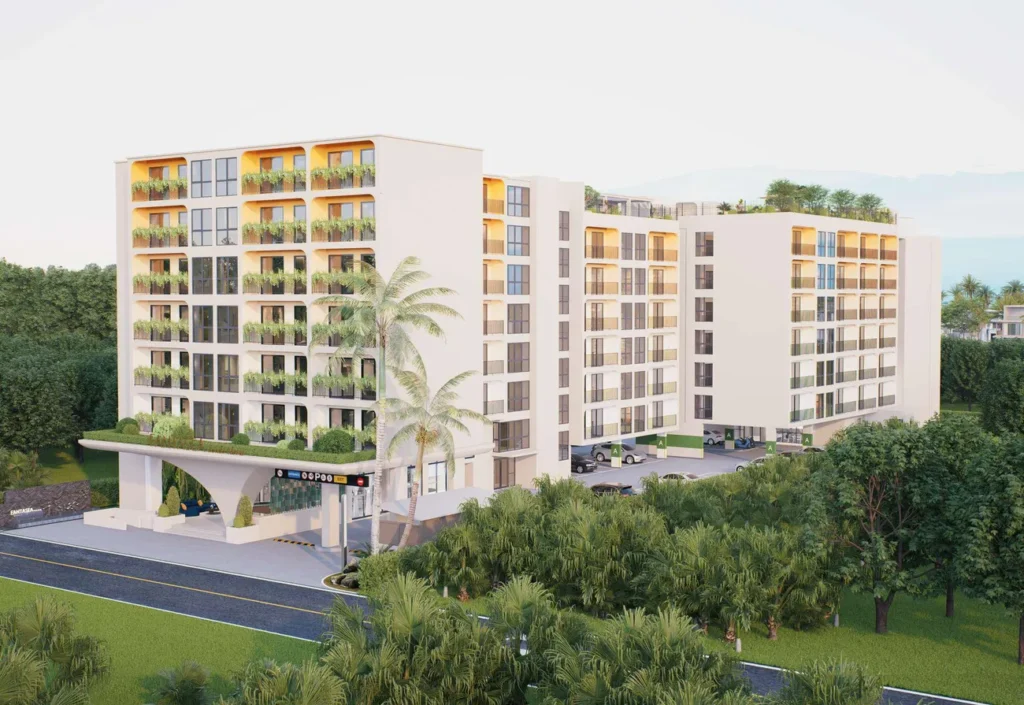


 Phuket, Rawai
 from 30m²
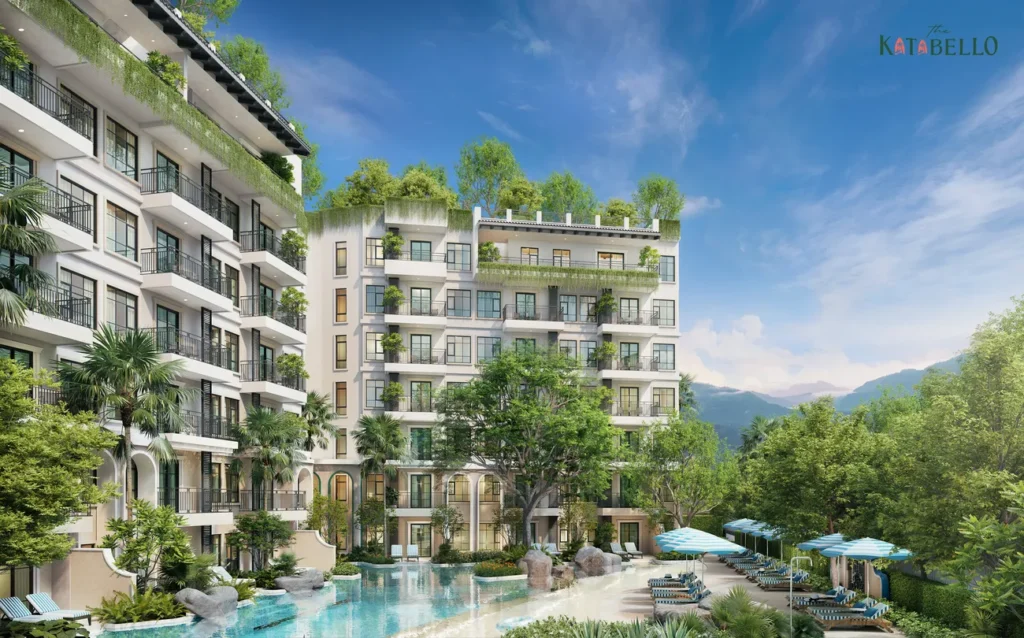 Phuket, Katafrom 28m²
In practice, this means that two buyers may simultaneously be selecting apartments in the same building, viewing similar units, and receiving similar offers—yet only one will be able to register the property in their name as a freehold; while the other will have to consider a different unit, a leasehold, or other options that require a separate legal review.
That is exactly why the quota status needs to be checked Before making a deposit, rather than after selecting an apartment. A mistake at this stage can be costly: the advance payment may be non-refundable, and it is not possible to transfer a unit from the Thai quota to the foreign quota at the buyer’s request—registration in a foreigner’s name is possible only if there is an available foreign quota and the Land Department’s requirements are met at the time of the transaction.
This article provides a practical breakdown of how the foreign ownership quota works, how to check its availability, what to do if the quota is full, and how all of this affects your choice of property in Pattaya, Phuket, Koh Samui, or Bangkok.
What Is the Foreign Quota?
The foreign quota is the portion of the total area of a registered condominium within which foreign citizens and foreign legal entities that meet the requirements of the Condominium Act may register ownership of a unit. Specifically, this refers to freehold ownership — a right registered in the state registry, with a title deed (condominium unit title deed) issued in the buyer’s name upon successful registration.
It’s important to clear up one common misconception right away: a “foreign quota” apartment is not a separate “type” of apartment based on floor plan, finishes, or location. It is the legal status of a specific unit in a specific building. Two identical apartments on the same floor may differ only in this respect: one is registered to a foreigner, and the other is not.
This rule applies exclusively to condominiums registered under Thai law—the Condominium Act B.E. 2522 (as amended). The property must have the status of a registered condominium. Villas, townhouses, and aparthotels without condominium status are not subject to this rule—they are governed by their own legal framework.
The foreign quota does not refer to a separate, privileged segment. Sellers sometimes market “apartments under the foreign quota” as something special, but in essence, they are simply units for which there is still available capacity under the foreign registration quota. The legal status of the quota does not affect the building’s finishes, view, floor level, or infrastructure.
In the primary market, the developer often determines in advance which units will be sold under the foreign quota. In the secondary market, you need to look at the specific unit: was it purchased by a foreigner, what is the current remaining quota for the building, and has the title been registered correctly?
A foreigner's right to own a unit in a condominium is governed by Condominium Act B.E. 2522, as amended by Amendment No. 4 B.E. 2551: Section 19 sets forth the conditions for foreign buyers, while Section 19 bis establishes a general limit on foreign ownership—no more than 49% of the total area of all units in the condominium.
How Rule 49% Works
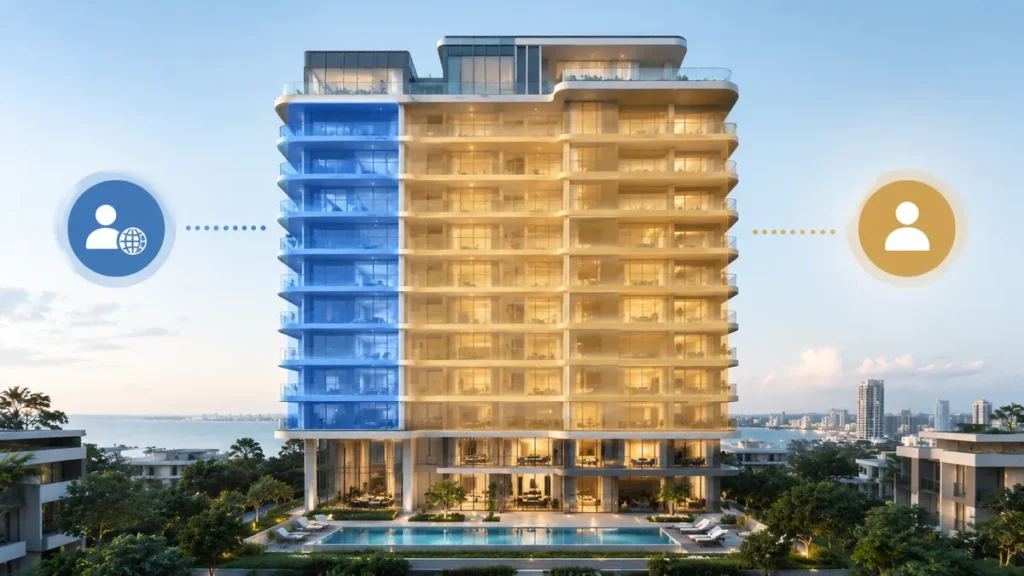
49% is calculated based on floor area, not the number of apartments. This is a key point that is often misunderstood.
The law stipulates that the total area of units owned by foreigners may not exceed 49% of the total area of all units in the condominium. The remaining share must be held by owners who, under Thai law, are not classified as foreigners or foreign legal entities.
Why is this important? Because apartments in the same building can vary significantly in size. A single large penthouse with an area of 300 m² “takes up” as much of the quota as approximately 8–10 standard studio apartments. Formally, the number of apartments in the foreign quota may be less than 49%, but in terms of square meters, the quota will already be exhausted—or vice versa.
Sample calculation:
Let's say a condominium consists of 200 units with a total area of 10,000 m².
- Maximum foreign quota: 49% × 10,000 = 4,900 m²
- Already registered to foreign nationals: 4,650 m²
- Balance: 250 m²
In this case, it is still possible to buy a 30-square-meter studio under the foreign quota. But it is not possible to buy a 75-square-meter two-room apartment—even if, technically, there are many “available” apartments in the building.
| Indicator | What does that mean? | Why It's Important for the Buyer |
|---|---|---|
| Total area of all units | Total square footage of all apartments in the condominium | Basis for calculating the quota: 49% is calculated based on this figure |
| A maximum of 49% for foreign nationals | The maximum square footage that can be registered in the names of foreign nationals | Exceeding the limit makes registration impossible |
| Remaining 51% | Must be under Thai control | It is not possible to “reallocate” to a foreign quota without a sale |
| Area of the selected apartment | The buyer's unit's specific square footage | Must fall within the remaining quota |
| Quota at the time of registration | Status is determined upon the transfer of land management rights | Therefore, the quota status must be confirmed not only during the property selection phase, but also prior to the registration of the transfer of title |
Following the table is the main practical conclusion: The quota is verified at the time the transfer of title is registered with the land administration office, and not just at the time of selecting a property or signing a contract. If, between the transaction and registration, someone else manages to register a large unit under the foreign quota, the remaining quota may turn out to be smaller than expected.
Foreign Ownership Quota and Freehold
Freehold is the most straightforward and common way for a foreigner to own a condominium unit. Upon successful registration, the buyer receives a condominium unit title deed in their name. This is a registered title: the owner may dispose of the unit, including selling it or transferring ownership rights as part of estate planning. However, inheritance, mortgaging, and renting out the unit require a separate review of the law, the condominium rules, and the terms of the specific transaction. We’ve covered the differences between freehold and leasehold, owner rights, and restrictions for foreigners in more detail in a separate article titled “Freehold and Leasehold in Thailand".
The foreign quota is a prerequisite for freehold registration for a foreign national. Without it, the land administration office will not formalize the transfer of title, even if all other terms of the transaction have been met: the contract has been signed, the money has been transferred, and the documents have been gathered.
The connection between these two concepts is straightforward: if you want freehold, check the quota. If the quota is full, freehold is not available for that unit, and no additional payment will change that. The law does not provide for any exceptions based on price or the buyer’s status.
Freehold is generally considered the most straightforward and clear form of apartment ownership for a foreigner, because the title is registered in the buyer’s name without a leasehold arrangement. However, this does not mean there is an “absolute legal guarantee” for any transaction: the contract, payments, documents, and fund transfers must also be properly executed. For more details on the differences between these forms of ownership, see the article “Freehold and Leasehold in Thailand.”
When purchasing a freehold property, the title deed is issued directly in the foreign buyer’s name. Passport details are included in the document, and any discrepancy between the name on the contract, payment documents, and passport can cause problems during registration. That is why it is important to use the name exactly as it appears in the passport from the very beginning.
When reselling such a unit, it is usually easier to treat it as a foreign freehold property, but the new buyer must still undergo a review by the land administration office and prepare a complete set of documents by the time of the transaction. This is one of the factors that influences the demand for specific units in the markets of Pattaya, Phuket, and Bangkok.
Foreign and Thai Quotas
The Thai quota refers to units that may only be owned by individuals who, under Thai law, are not classified as foreigners or foreign legal entities. It is this portion that makes up the percentage of the condominium’s total area remaining after the foreign quota has been allocated.
In some projects, units under the Thai quota may be offered on different commercial terms than similar units under the foreign quota. However, they should be compared not only in terms of price, but first and foremost in terms of legal status— A foreign buyer cannot simply “purchase” a Thai quota unit and register it in their own name as freehold property. A unit’s legal status is determined upon registration with the land administration office—and if the foreign ownership limit has been reached, the transfer of ownership to a foreign national will not take place.
| Format | Is it possible to register a foreign national? | What the buyer receives | Key Risks | When to consider |
|---|---|---|---|---|
| Foreign Quota / Freehold | Yes | Title document in the foreign national's name, full ownership | The quota must be available at the time of registration | The Main Option When Buying an Apartment in a Condominium |
| Thai quota | No (freehold) | It is not possible to register a vehicle directly in a foreign national's name | Attempts to circumvent the rules through nominees are legally risky | Do not consider without a thorough legal review |
| Leasehold | Yes, with some restrictions | Long-term lease (typically 30 years plus options), without the right to ownership | It depends on the contract; renewal is not guaranteed | When freehold is not available or the property is a villa or land |
| Thai Company Structure | Technically, yes | The company owns the unit; a foreigner is a shareholder | It's complicated, expensive, and legally vulnerable during an audit | Rare scenarios require legal expertise |
| Purchase in the name of a Thai citizen | No | The buyer has no rights to the property | Maximum risk: loss of property and money | Not suitable as a means of protecting the rights of a foreign buyer; carries a high risk of losing control over the property |
If an apartment is subject to the Thai quota, this does not mean that it will automatically become available for foreign freehold ownership after payment. The status must be confirmed. to transactions, not after the contract is signed.
To learn about the general process of buying real estate in Thailand as a foreigner, read the article “How to Buy Real Estate in Thailand".
Nominee structures involving Thai citizens or shareholders are considered to pose a high legal risk: if they are used to circumvent restrictions on foreign ownership, they may violate Thai law, including provisions regarding nominee shareholders under the Foreign Business Act. In practice, such structures can create serious legal risks, including disputes over ownership rights, registration complications, and potential financial losses. Any corporate structure should undergo an independent legal review.
A leasehold is a legitimate alternative worth considering when a foreign quota is unavailable. For more details on its terms, risks, and differences from a freehold, see our separate article on types of property ownership.
How to Check Your Data Allowance

Checking the quota is not just a formality. Verbal confirmation from the seller or agent is not sufficient. The quota may change between the time of the inspection and the date of registration. In active markets—especially in Pattaya and popular areas of Phuket—the foreign quota for popular projects is often filled or nearly exhausted.
To check the current quota status, you should contact the legal entity—the condominium management company—or the developer directly (if purchasing in a new construction project). In some cases, the land administration office conducts a final verification upon registration of the transfer of ownership.
What to ask before making a deposit:
- Written confirmation of the unit's status — Which quota a specific apartment falls under: the foreign quota or the Thai quota.
- Current remaining foreign quota for the project — in meters, not just as a percentage.
- A copy or details of the title document / proof of ownership of the apartment in the condominium — ensure that the property has the proper legal status.
- Contract terms that explicitly mention freehold / foreign ownership quota — This should be put in writing, not just “agreed upon verbally.”
- Procedure for Refunding the Deposit if Registration Is Not Possible — Put it in writing before signing.
- Confirmation of who is responsible for preparing documents for the land administration office — a seller, a developer, or a buyer.
These six points constitute a minimum checklist before making any advance payment. If even one of them raises concerns or the seller avoids providing a written response, that’s a reason to pause and conduct further verification.
Not sure if an apartment under the foreign quota, leasehold, or Thai quota is right for you? Take Thaicost’s quick property search—we’ll show you options that match your budget, purchase goals, and preferred region: Find a property in Thailand.
On the secondary market, verification is more complicated: you need to look not only at what the seller says, but also at how the specific unit is registered with the land registry and what the current remaining quota is for the building. When buying off-plan—in a new building during the construction phase—it’s important that the contract explicitly states that the unit is being transferred under the foreign quota. A “verbal” promise has no legal force.
For more information on what to check when buying a property, see our article on legal due diligence for real estate in Thailand.
Documents and Money Transfers

Even if there is an available foreign quota, the transaction will not be completed automatically. One of the key requirements for registering a freehold in a foreigner’s name is that the payment be processed correctly.
The money to buy an apartment must be transferred from abroad in foreign currency and documented by bank records. This is due to the requirement to confirm the foreign origin of the funds—without such confirmation, the land registry may refuse to register the transfer of title.
The document that confirms an incoming international transfer is called FET — Foreign Exchange Transaction Form (or a similar bank statement). A Thai bank that has received the transfer may issue an FET or a bank confirmation of the foreign currency transfer if the payment has been processed correctly. You must request this document in advance— Without proper bank documentation confirming the transfer of funds from abroad, the land administration office may refuse to register a foreign national’s property rights.
Here are a few practical points to keep in mind beforehand:
- The recipient's name on the bank transfer must match the buyer's name on the contract and passport.
- It is best to specify the payment description as “purchase of a condominium unit,” including the property address and contract details.
- The transfer documents must cover the amount required to register the purchase of the unit; it is best to agree on the payment structure in advance with the bank, the seller, and your attorney.
- If payment is made in multiple transfers, you should confirm in advance for each significant payment which bank document will be required to verify the total purchase amount.
The Bank of Thailand administers foreign exchange regulations in the country, and in order to register a foreign owner under the Condominium Act, the buyer must provide proof of funds transferred from abroad—for more details on these rules, see the Bank of Thailand's website.
| Document | Why is it needed? | Who usually cooks? | What to Look For |
|---|---|---|---|
| Buyer's Profile | Foreign Buyer's ID Card | Buyer | The name must be the same on all transaction documents |
| Sales Contract | The main contract sets forth the terms of the transaction | Developer / Seller | Check the quota status, deadlines, and deposit refund terms |
| FET / Bank Confirmation | Proof of the Foreign Origin of Funds | A Thai bank upon receipt of a transfer | Request this in advance for each significant payment; without proper documentation, registration may not be completed |
| Document confirming ownership / title to a condominium unit | Document of Title for the Unit | Land Management | Verify that the property and seller information match |
| Quota Confirmation | Written confirmation of the availability of a foreign quota | Legal Entity / Developer | Request before making a deposit; valid as of the date of registration |
| Documents for Land Administration | Kit for Registering a Transfer of Title | Developer / Attorney / Parties to the Transaction | Finalize the list in advance, and make sure to include translation and notarization |
You should consult with a lawyer and check with your bank regarding the specific payment procedure and the list of required documents before initiating the transfer—requirements may vary depending on the sender’s country and the amount. For more information on the required documents, see the article on documents needed for a foreigner to purchase real estate in Thailand; for information on money transfers, see the article on how to transfer money to Thailand to purchase real estate.
If the quota is full
This situation is more common than it seems. In popular developments in Pattaya or Phuket, the foreign quota may fill up faster than in less active locations: foreign demand is traditionally high here, and the status of a specific unit should be verified before making a deposit. If a buyer enters the secondary market for such a project, they may find that all units in the foreign quota are already taken.
What is happening in this situation: The land registry will not register a freehold title in the name of a foreign national. A signed contract, a paid advance, and transferred funds do not change this fact—the legal barrier remains in place until the foreign ownership stake in the project is reduced.
Safe actions to take if the quota is full:
- Do not make a non-refundable deposit without a quota requirement — The contract must include a clear provision regarding the refund of the advance payment if registration is not possible due to a quota.
- Request a written status report on the unit — Make sure that the foreign quota has actually been filled and that this is not a mistake in the information.
- Compare alternative units in foreign quota — There may be other floor plans or floors in the same building with available units.
- Check out other projects — There may be an available unit in the same neighborhood or from the same developer.
- Review the leasehold terms separately — If you like the property, a leasehold can be a legitimate and viable alternative, but you should review its terms independently.
- Get an independent legal review — before considering any non-standard approaches.
- Do not agree to nominal schemes without understanding the risks — Registering the property in the name of a Thai citizen or a shell company creates a legal vulnerability that could result in the loss of the property.
The structure of a Thai company should not be viewed as a simple way to circumvent foreign ownership limits. Such a model is permissible only if there is a genuine business purpose, a proper ownership structure, and an independent legal review. Nominee shareholders and fictitious Thai control pose a high legal risk: such structures, when used to circumvent restrictions on foreign ownership, may violate Thai law. This is not an “alternative way to purchase a quota,” but a distinct legal arrangement—and it is best not to pursue it without professional legal assistance.
New Construction and the Resale Market
The quota mechanism is the same for both the primary and secondary markets—but there are differences in the details of the purchase process.
In new buildings The foreign quota is often allocated during the earliest stages of sales. Major developers set aside a pool of units for foreign buyers in advance and sell them at a separate price point or as a separate package. In popular projects, especially in resort locations in Phuket or central areas of Pattaya, part of the foreign quota may be reserved during the early stages of sales. Therefore, it is important to clarify the status of a specific unit in advance and specify it in the contract. When purchasing off-plan, it is essential that the contract explicitly state that the property is being transferred specifically under the foreign quota / freehold. The phrase “we will secure a foreign quota for you” without a specific provision in the contract is not a guarantee.
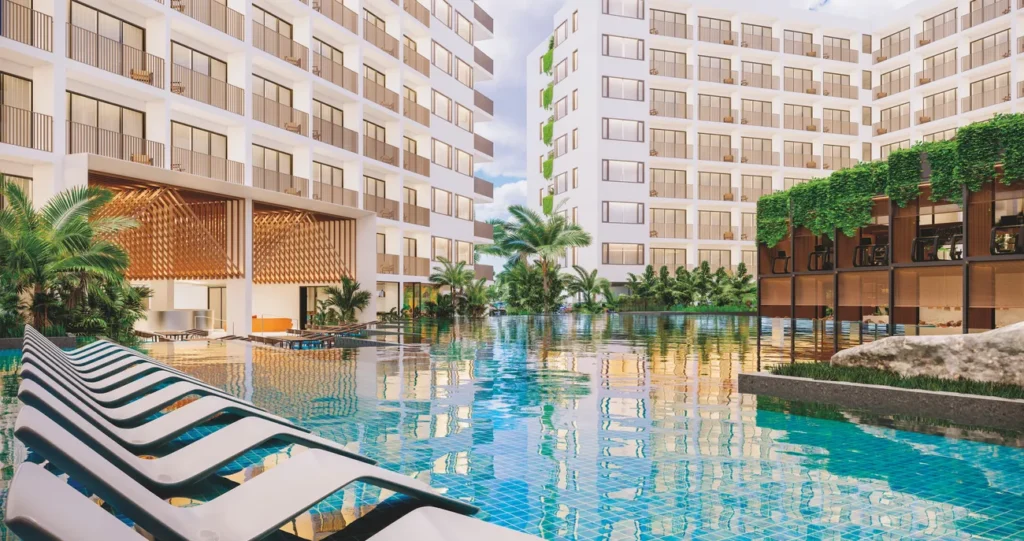
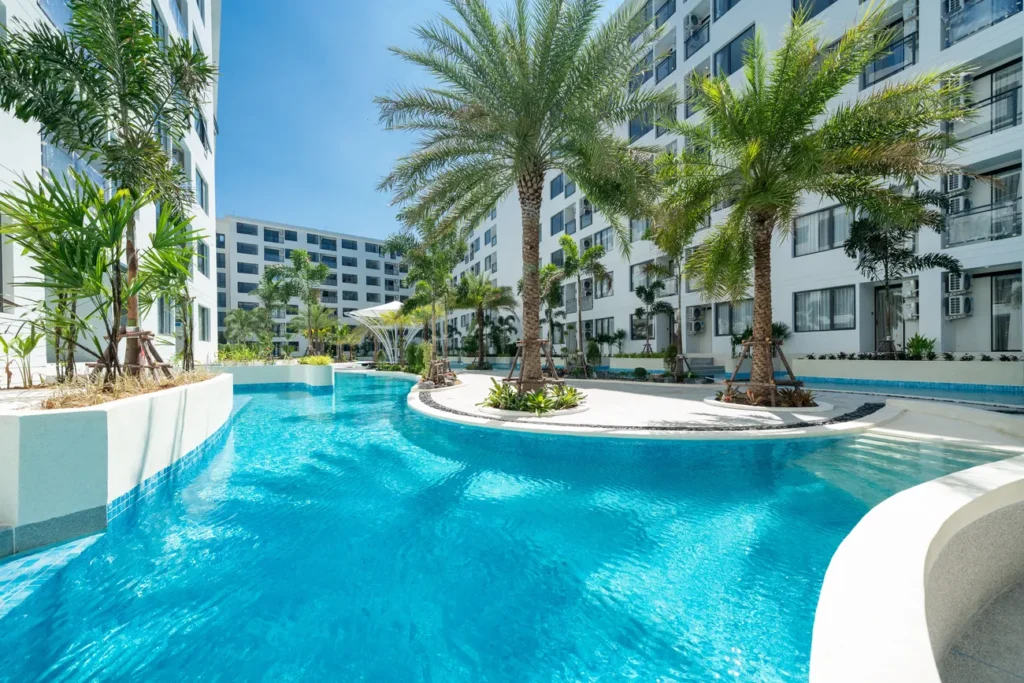
Check out what's available for sale in new developments


What to Check in a Newly Built Home:
- Remaining foreign quota at the time of booking and forecast at the time of check-in.
- Clear wording in the contract: the unit is transferred to the foreign quota / freehold.
- Procedure to follow if the developer is unable to secure quota status by the time of registration.
- The developer's reputation and its previous projects—including how well it has fulfilled its quota commitments.
On the secondary market The situation is more complicated. A foreign seller may sell a unit that was previously registered under a foreign quota. However, the new foreign buyer must still meet the legal requirements, and the transfer of ownership must be verified by the land administration office. The current quota balance for the building must also be verified in advance.
What to check on the used car market:
- The status of a specific unit in the land registry: on what basis it is registered, and who the owner is.
- The current remaining foreign ownership quota for the entire building as of the transaction date.
- Consistency between the information in the title document and what the seller is offering.
- The existence of encumbrances, liens, or debts related to building management (fees charged to legal entities).
For more information on the terms of the contract, see the article on real estate purchase and sale contracts in Thailand.
Impact on Price and Liquidity
The foreign quota is one of the factors that affects a unit’s commercial appeal. But it is not the only one, nor is it the most important one.
In some projects, units in the foreign quota are more expensive than comparable units in the Thai quota: demand from foreign buyers is steady, while supply is limited by law. In active markets—such as Pattaya or Phuket—the price difference between comparable units in different quotas can be significant, though not fixed. This is a market phenomenon, not a legal surcharge.
| Factor | How does it affect | Practical Conclusion |
|---|---|---|
| Freehold option | A foreign national may register ownership in their own name | Only if there is an available foreign quota |
| Resale to a Foreigner | A unit registered in a foreigner's name is generally easier to list for subsequent sale to a foreign buyer | New registration still depends on verification by the land administration office and the documents |
| Unit price | May be higher if the remaining quota is limited | Don't overpay just for status without an analysis of the property |
| Leasing Strategy | The quota does not restrict the right to lease | Rental yields depend on management, location, and demand |
| Select a region | In Pattaya and Bangkok, there are usually more options in the form of registered condominiums; on Koh Samui, villas and leasehold properties are more common | The availability of the foreign quota must be checked on a project-by-project basis, regardless of the region |
| Legal Review | Required regardless of quota status | Quota status does not replace a legal review |
That said, a property’s liquidity is determined by more than just the availability of a foreign ownership quota. Building management, rental demand, transportation accessibility, the quality of finishes, and the condition of the building—all of these factors influence the resale price and the time it takes to sell. A unit under the Thai quota in a poorly managed building with high maintenance costs may be less attractive to the market than a leasehold property with good infrastructure.
Regions of Thailand
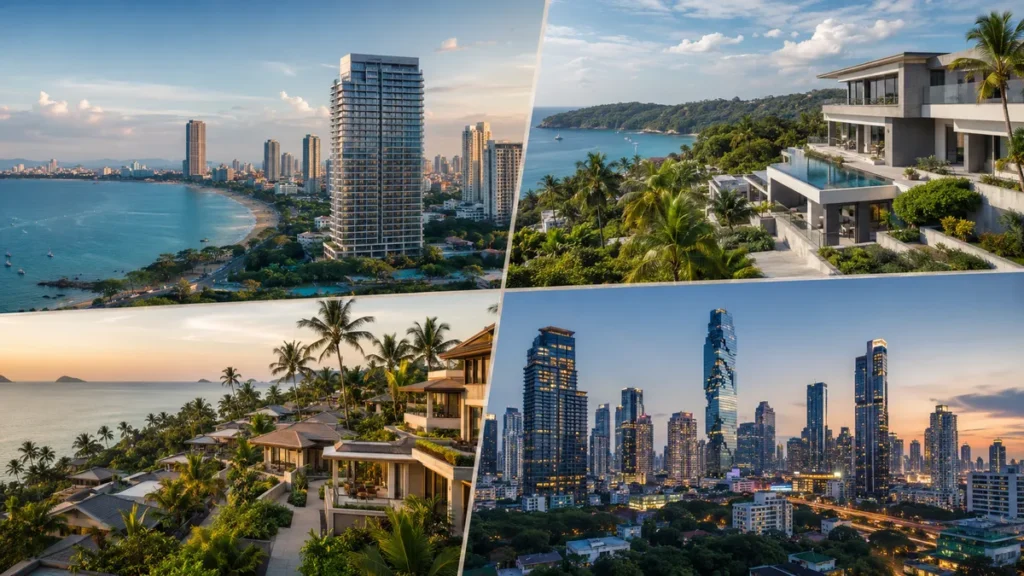
Rule 49% applies uniformly throughout Thailand, but the availability of quotas varies significantly from city to city.
Pattaya — one of the most active condominium markets for foreign buyers. A large number of registered condominium projects of various classes are concentrated here. Historically high foreign demand means that in a number of popular complexes, the quota has long been filled or is nearing its limit. Buyers should check the status of a unit very carefully—especially on the resale market in central and coastal areas.
Phuket It attracts international buyers due to high tourist demand and the rental potential of resort properties. In popular locations—Kamala, Nai Harn, and Bang Tao—the foreign quota in some projects is often sold out in the early stages. At the same time, there is a large market for villas here, where different legal structures apply and leasehold is more common. When purchasing a condominium in Phuket, the foreign quota remains a key factor for foreign buyers.
Bangkok — The capital’s real estate market offers a wide variety of options: from studios in tourist areas to spacious apartments in business districts. There are more projects here with available units, especially in new complexes along expanding metro lines. Purchases are typically aimed at long-term residency or renting to a business clientele. However, in large, long-established complexes in the city center, the quota may be nearly exhausted.
Samui — a market with a different set of rules. Most properties here are villas and low-rise residences, often sold on a leasehold basis. There are fewer condominium projects, but they do exist. When choosing a condo unit on Koh Samui, the foreign ownership quota is just as important as it is anywhere else—and you need to check it just as carefully.
It’s not wise to jump to conclusions about any particular region: quota availability depends on the specific project, not on the city as a whole. One property in Pattaya may have 30% quotas available, while another may be fully booked. In Pattaya and Bangkok, there are usually more options in the form of registered condominiums, whereas on Koh Samui, buyers more often encounter villas and leasehold properties—but the final decision should be based on the specific project. For more details on how to buy an apartment in a specific region, see the sections dedicated to each destination.
Common Mistakes Made by Buyers
Many problems that arise when purchasing apartments under the foreign quota stem not from the complexity of the law, but from insufficient due diligence in the early stages. Below are some real-life mistakes that occur in practice.
1. Assume that 49% refers to the number of apartments, not the area. This is the most common misconception. A buyer sees a building with “only 30% foreign-owned units” and assumes that the quota is available. But if those 30% units are large, the actual remaining available space may be minimal or nonexistent.
2. Trust a verbal promise regarding a quota. A seller or agent may be genuinely mistaken or may be deliberately oversimplifying the situation. Verbal confirmation has no legal force—you need a written document from a legal entity or the developer.
3. Make a non-refundable deposit. A non-refundable advance payment made before the quota has been verified poses a direct financial risk. If it subsequently turns out that the quota has been filled, the money may be lost without any legal grounds for its return.
4. Confusing freehold, leasehold, the foreign quota, and the Thai quota. These terms are often used interchangeably or as synonyms in conversation. The buyer must clearly understand what is being referred to in a specific offer: is it a freehold property under the foreign quota, a leasehold, or a Thai quota with the offer to “work something out”?
5. Transfer money without having to prepare bank documents. A payment that is not recorded in the FET or a bank confirmation will not be accepted by the land registry as grounds for registering foreign property. You should clarify in advance how to process the transfer in order to obtain the correct document.
6. Buy a unit under the Thai quota, thinking it will be easy to transfer the title. It is not possible to transfer a unit from the Thai quota to the foreign quota at the buyer’s request—registration in a foreigner’s name depends on the actual remaining foreign quota in the entire building at the time of the transaction. No additional payment or agreement with the seller can change this legal fact.
7. Do not review the contract before signing it. The contract must specify the quota status, the terms for refunding the advance payment, the ownership structure, and the registration procedure. The absence of these provisions is grounds for refusing to sign the contract until they are included.
8. Ignore the status of a specific unit. Even if a developer advertises a “foreign quota” in its promotional materials, each individual unit must be verified separately. A marketing promise is not the same as a legal guarantee.
Key Findings
- A foreign ownership quota is a limit on foreign ownership in a specific condominium, as required by law. Without an available quota, it is impossible for a foreigner to register an apartment as freehold.
- The limit is based on the area of the units, not on their number. 49% is the percentage of the total floor area that foreign owners may occupy.
- For a foreign national, this is a prerequisite for freehold registration. It is this factor that determines whether the title document will be issued in his name.
- You must verify the quota in writing before making a deposit. A verbal confirmation does not protect the buyer if the quota turns out to be full by the time of registration.
- FET / Bank confirmation of the transfer is linked to the registration of ownership. Without proper bank documentation confirming the transfer of funds from abroad, the land administration office may refuse to register a foreign national’s land rights.
- If the quota is filled, you should consider legal alternatives — a different unit, a different project, a leasehold — rather than nominal arrangements that create legal risks.
- It is critical to review the documents and the contract. The quota status, the terms for refunding the advance payment, and the format for the transfer of rights must be set forth in writing prior to signing.
Conclusion
The foreign quota is not a technical term from a legal dictionary. It is a practical filter that determines whether a foreign buyer will be able to register an apartment in their name in Thailand. It operates quietly: it isn’t mentioned in advertisements, isn’t visible inside the unit, and doesn’t affect the view from the window. But it is precisely this factor that determines whether the transaction will go through.
Before choosing an apartment in a condominium, it is important to check not only the view, price, and floor plan, but also the legal status of the unit. It is the foreign ownership quota that determines whether a foreign buyer will be able to register the apartment in their name under freehold.
If you’re looking for a property in Pattaya, Phuket, Bangkok, or Koh Samui and want to understand what options are available specifically for your budget, goals, and ownership structure—the Thaicost team will help you find a property with verified legal status, guide you through the transaction, and handle the paperwork in advance to ensure the registration process goes smoothly without any surprises.
 Real estate in Georgia
 Real estate in Cyprus
 Real estate in UAE
 Real estate in Bali
 Real estate in Montenegro
 Real Estate in Spain
 Real Estate in Saudi Arabia
 Real Estate in Turkey
 Real Estate in Zanzibar
 +66 98 432 7651
 hello@thaicost.com
 Boat Lagoon Marina, 22/1 Moo 2, Thepkasattri Rd, Koh Kaew, Phuket 83000, Thailand



 Get TOP-7 catalog of objects