
 +66 98 432 7651



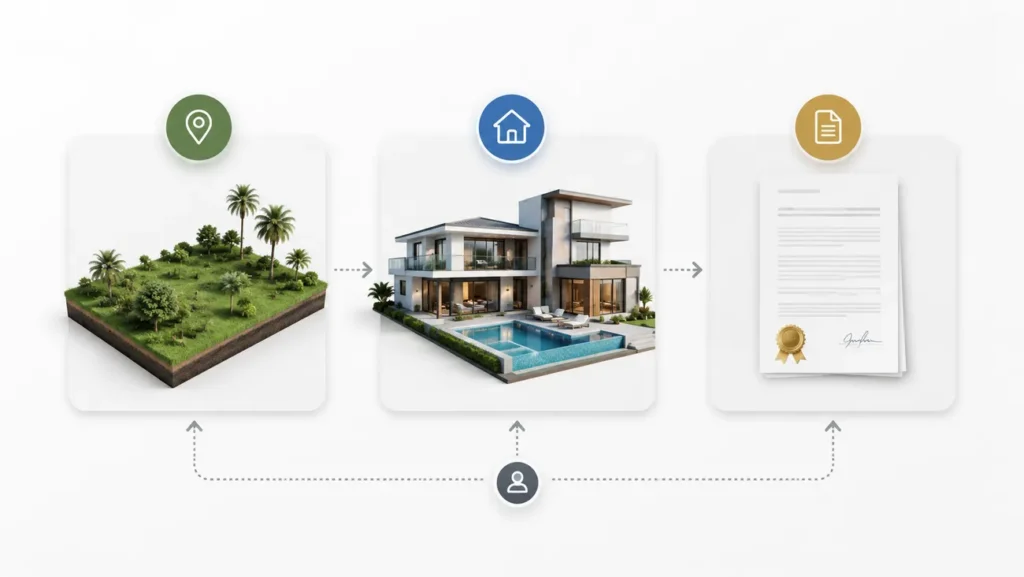
A foreign national is entitled to acquire ownership rights to a villa in Thailand. The property may be owned by a foreign national; however, the ability to formalize ownership depends on the specific property’s documentation and the basis for the ownership rights. The restriction applies to the land: as a general rule, a foreign individual cannot directly own a plot of land. This is why, when purchasing a villa, the rights to the structure and the rights to the land beneath it are almost always registered separately, based on different legal grounds.
This is not an obstacle to the transaction, but rather a structural feature of it. The buyer selects the structure based on the specific property, the purpose of ownership, who owns the land, and the results of the legal due diligence. A long-term land lease with simultaneous registration of rights to the building is one of the most common options. Along with long-term leases, the following are also used: superfice, which allows for the separation of the right to a home from the right to land, and usufruct, which grants the right to use someone else’s real estate and derive income from it. Each arrangement has its own terms, restrictions, and consequences—it’s important to understand them before signing the first contract or making a deposit.
Key Findings
- A building and the land on which it stands must be considered as two separate legal entities — They may have different owners and different bases of ownership.
- A contractual promise to renew a lease is not the same as a registered right — Renewal for a second and third term is not automatically guaranteed by law.
- A legal and technical review of the property must be conducted prior to any non-refundable payment — The results of the legal review determine the soundness of the entire transaction.
Foreigners generally cannot purchase land in Thailand directly, but they can obtain legal rights to a villa and the use of the land. In practice, this is typically achieved through a registered land lease, superficies, usufruct, or another structure tailored to the specific property. Due diligence on the land, the building, the seller, and the contracts must be completed before any non-refundable payment is made.
How Much Will a Villa in Thailand Cost in 2026: Data from Thaicost
The cost of a villa in Thailand depends not only on the region, but also on its distance from the sea, lot size, project quality, stage of construction, and infrastructure. The difference between two properties that appear similar at first glance can amount to several million baht due to the type of title, the quality of construction, or the location.
Phuket and certain areas of Koh Samui remain the most expensive markets. More affordable options can be found in Pattaya, Hua Hin, and certain areas of Chiang Mai. At the same time, the same budget can buy very different properties: for example, a small, modern villa in a complex under construction or a spacious house on the resale market.
The cost of a villa depends on the neighborhood, the number of bedrooms, the lot size, the distance from the sea, the stage of construction, and the legal structure of the transaction. For an accurate comparison, you should consider properties in the same class and analyze the primary and secondary markets separately. It is best to check current prices using the latest listing database, as price ranges within a single region can vary significantly.
Homes and Villas We Can Offer You
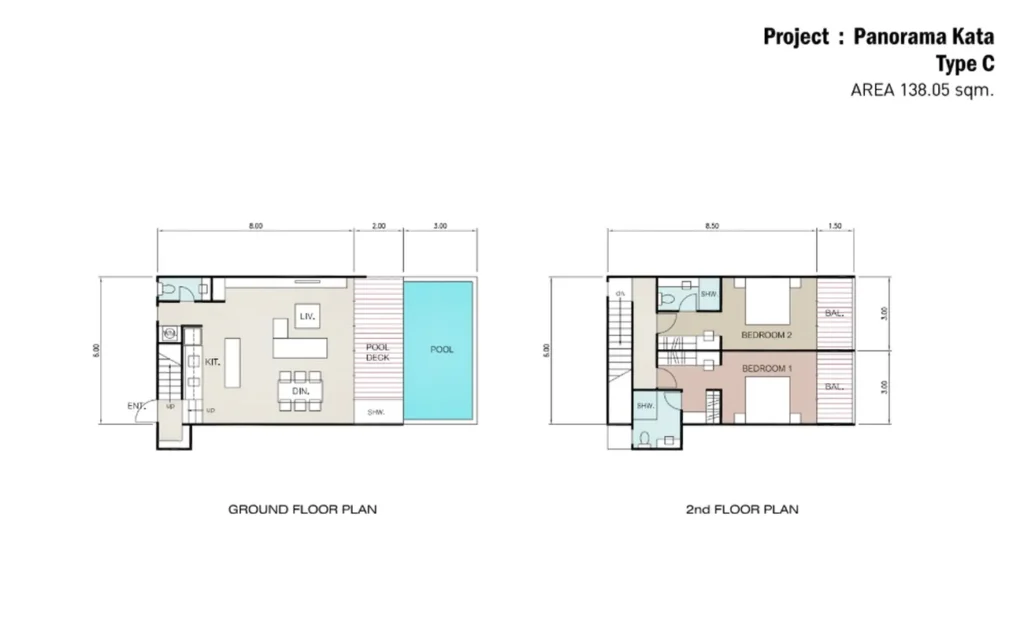
 PANORAMA KATA OCEAN VIEW VILLAS


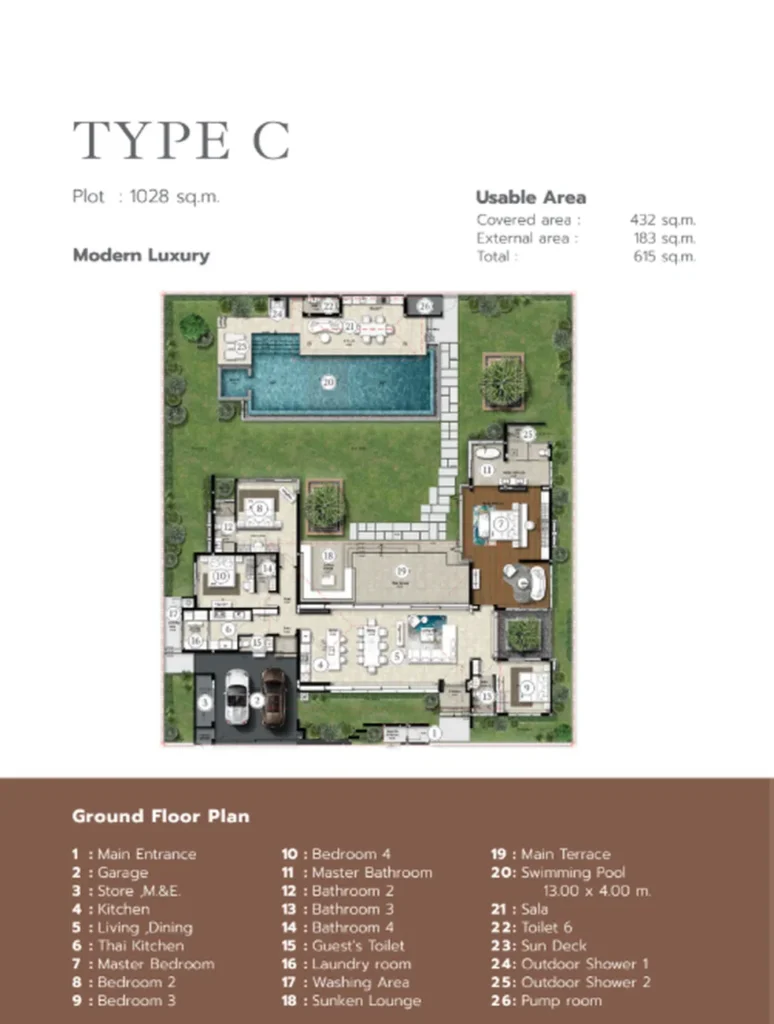
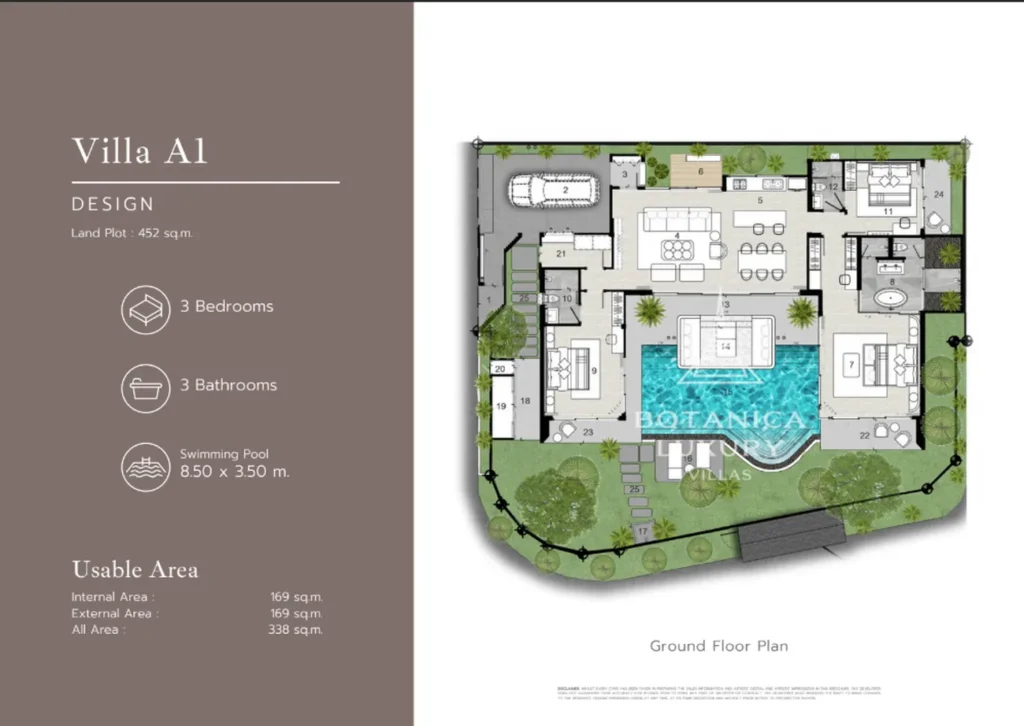
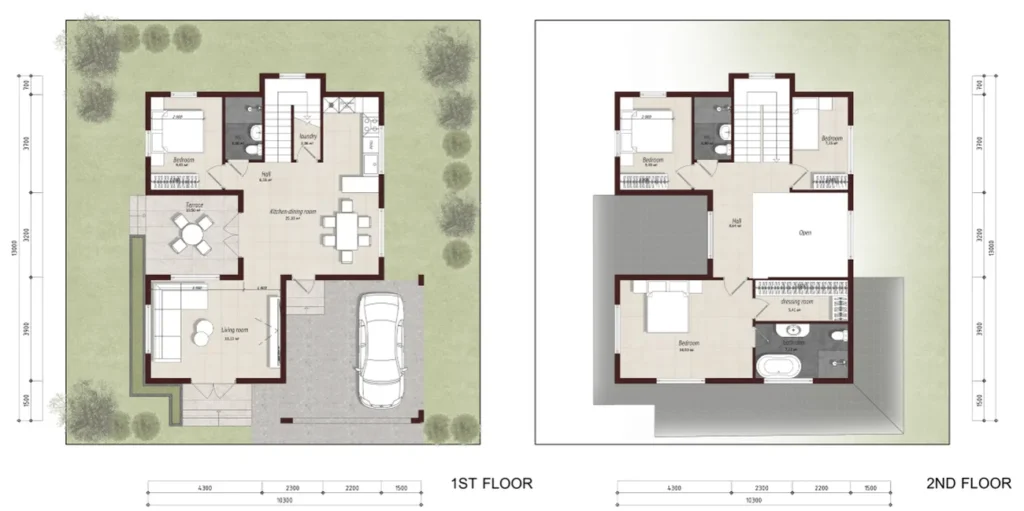
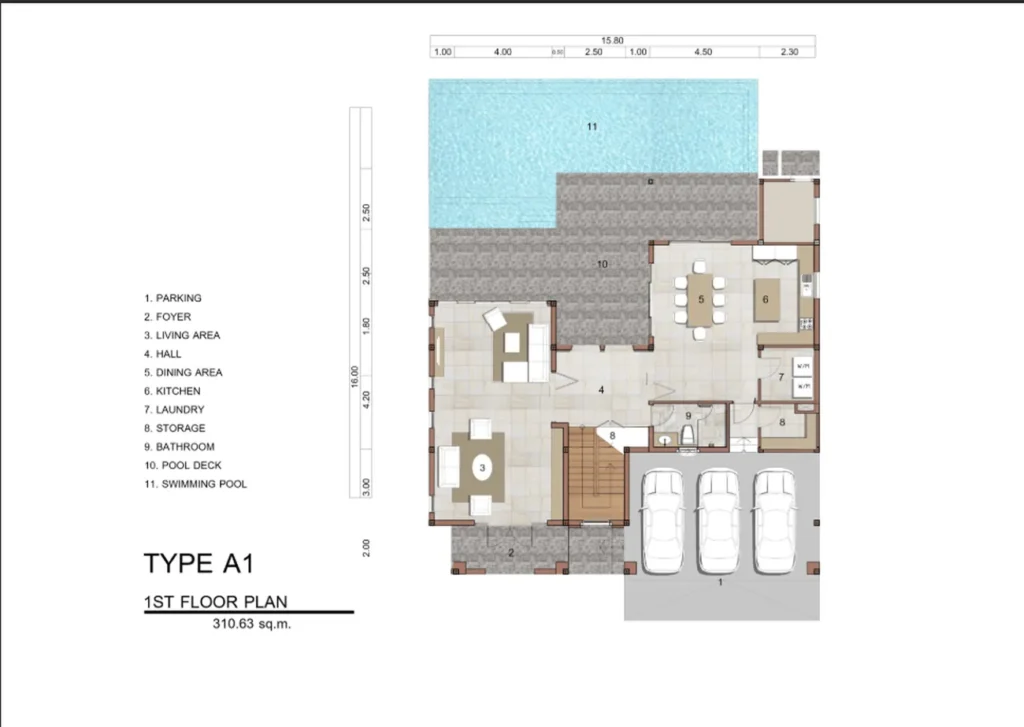
Prices listed in the property listings are updated as information is received from owners and developers. Before making a reservation, you must reconfirm the price, amenities, and availability of the property.
We'll find villas that fit your budget
Please tell us in which region of Thailand you’re considering a purchase, what your budget is, and what you’ll be using the villa for: as a primary residence, for vacation, for rental, or as an investment. A Thaicost specialist will select suitable properties and help you compare prices, payment terms, and closing options.
What Makes Up the Purchase Budget
Many buyers focus solely on the price of the villa, but the total cost of the transaction is always higher than the property’s price. In addition to the cost of the property, you must factor in government fees, legal services, bank charges, title registration, and—after the purchase—ongoing expenses for maintaining the home.
Some government fees are calculated as a percentage of the appraised value or the transaction amount, and the allocation of certain expenses between the seller and the buyer is determined by the contract. Therefore, it is important to request a complete breakdown of all costs in advance before signing the contract.
| Estimated consumption | When it happens |
|---|---|
| Price of the villa | always |
| State Registration Fees | upon registration |
| Legal Support | prior to the transaction |
| Bank Fees | for international transfers |
| Document Translation | if necessary |
| Technical Inspection | Before purchasing |
| Insurance | after purchase |
| Complex Amenities | after the transfer of the property |
Can a foreigner buy a villa?
Before discussing the various registration methods, it’s important to understand the terminology. In Thai law A villa, a house, and a plot of land are legally distinct entities, and each of them may have an independent basis for ownership.
A land parcel is registered through Thailand's Department of Lands, which is responsible for the state registration of land rights and the operations of regional land administration offices. Rights to a plot of land are confirmed by the relevant land document, the type of which must be verified prior to the transaction. The most comprehensive type of land document is— Chanote, or Nor Sor 4 Jor: It specifies the officially surveyed boundaries of the plot. There are also Nor Sor 3 Gor, Nor Sor 3 and other documents that differ in terms of surveying accuracy, registration procedures, and permitted transactions. The official English terminology for land documents can be verified in Land Code, published by the Department of Lands.
Thai law allows for the separation of rights to land and the building situated on it. However, a foreigner’s right to a specific villa must be substantiated by a set of documents: a purchase or construction contract, a building permit, evidence of the transfer of the property, and registered land rights. The house registry, the building permit, and the plans do not, by themselves, establish ownership.
This is precisely where the main misconception regarding villa transactions arises: in advertisements, the term “freehold” does not clarify the legal structure of the transaction. It may refer only to the building, to land owned by a company or a Thai owner, or it may be used inaccurately. The buyer must request a separate description of the rights to the land and the building — and not to take the marketing term “freehold” as an answer to the question about the structure of the transaction.
When purchasing a villa, buyers verify not just a single “title,” but separate rights to the building, the land, and the use of the property.
The law provides for certain exceptions under which a foreign individual may purchase a plot of land—for example, upon fulfilling specific investment conditions set forth in the Land Code of Thailand. According to Thailand's official portal, this exception requires an investment of at least 40 million baht in instruments specified by law, a land area limit of one rai (approximately 1,600 square meters), geographical restrictions, an investment period of at least five years, and direct approval from the Ministry of the Interior. This is not a standard way to buy a villa, but rather a narrow legislative exception for specific investment cases.
Ways to Decorate a Villa
Choosing the transaction structure is one of the key issues that must be resolved before price negotiations even begin. Below are six main options, each with its own legal basis, timelines, limitations, and risks.
Table 1. Options for a Foreigner to Register a Villa
| Diagram | Who owns the building? | Who Owns the Land? | Term / Nature of the Right | Key Benefits | Key Limitations | Who is it for? |
|---|---|---|---|---|---|---|
| Registered Lease + Foreigner's Rights to the Building | Foreign national (as evidenced by the contract and building documents) | A Thai citizen or legal entity (ownership) | Up to 30 years, with the option of a contractual extension | Transparent and legal; the rights to the building and the land lease are registered separately | Land does not belong to a foreigner; renewal depends on the contract | Most buyers of ready-to-move-in villas |
| Rent + Superficies | A foreigner's right to own a building on someone else's land; the acquisition of ownership of a completed villa is confirmed separately | A Thai citizen or legal entity | For a specified term or for the lifetime of the landowner or the holder of the right—depending on the registered deed. | Separately establishes a foreign national's right to the building; is combined with a lease | Requires the registration and legal consistency of two documents; does not serve as proof of purchase of the building | Buyers who prioritize separate protection of their rights to the building |
| Usufruct | Foreign National (Right to Use and Harvest Fruits) | Thai citizen | Up to 30 years or for life (depending on the terms of the deed) | You can use the property and derive benefits from it; it is registered | It terminates upon the death of the rights holder; it is not inheritable; it does not replace the rights to the building | Permanent residence or management of an income-generating property during the rights holder’s lifetime |
| Thai company | Company (Ownership) | Company (Ownership) | No time limit, as long as the company operates legally | A company may own both the land and the building under a legal structure | Only with actual business operations and a genuine shareholder base; corporate expenses and financial reporting | Legitimate real estate business as part of the assets |
| Land in Thailand's Spouse | Foreign national or jointly | Thai Spouse (Property) | No sentence for the spouse | Simplified Land Registration Process When You Have a Thai Spouse | A foreigner is not the owner of the land; risks in the event of divorce, death, or inheritance | Couples with Additional Legal Protections |
| Special Permit (Investment Exemption) | Foreigner | Foreigner | Full ownership upon fulfillment of all conditions | The only legal way for an individual to own land directly | Investment of 40 million baht or more; area not exceeding one rai; territorial and time restrictions; government approval | A rare opportunity; a non-standard way to buy a villa |
The table illustrates the fundamental difference between the schemes: in the first two options, a foreign national has rights to the building but not to the land; in the third, the foreign national is granted a right of use; and in the fourth, the foreign national acquires a stake in the legal entity that owns the asset. There is no single "best" approach that works for everyone — The choice depends on the property, the purpose, the landowner, and the planned duration of ownership.
The option involving a Thai company deserves special attention. It is often presented as a simple way to “circumvent” land ownership restrictions. This is an incorrect and legally risky position. Using a company solely to circumvent land ownership restrictions may be considered a violation of the law. Thai law prohibits the use of nominal Thai shareholders for these purposes. The Land Department may review the shareholder structure of companies acquiring land: the scope of such a review depends on the specific transaction and the relevant office; however, the analysis may cover the source of funding, the authenticity of Thai ownership, actual control, and the economic substance of the structure. Ownership through a company is lawful only if the shareholder structure is genuine, the company engages in actual business operations, and it complies with the requirements of the Land Code and the Foreign Business Act. Such an arrangement requires a preliminary review by a Thai attorney specializing in land and corporate law.
To understand in more detail how they differ, Freehold and Leasehold in ThailandTo find out who owns the land and the building under each scheme, for how long the rights are granted, and what restrictions you should check before buying, read our separate article “Freehold and Leasehold in Thailand". In it, we compare the two models in detail and explain why the advertising term freehold In and of itself, this does not reveal the legal structure of the transaction.
Long-Term Leases and Home Ownership Rights
A long-term land lease is one of the most common options for foreigners looking to purchase a villa. Understanding how it works in practice is more important than simply knowing it exists.
Registered Lease
According to Sections 538 and 540 of the Civil and Commercial Code of Thailand, a real estate lease agreement with a term of more than three years must be in writing and registered with the Land Office. Without registration, the parties risk losing the ability to enforce the contract beyond the three-year period. As a general rule, the maximum term for a single real estate lease is 30 years.
Registering a long-term lease is essential for it to be enforceable against third parties, including a subsequent owner of the property. The terms of the specific lease agreement and the registered entry must be reviewed together.
A 30-year term is expressly provided for by law and is recorded in the land administration documents. The “30+30+30” formula does not mean that the buyer immediately receives a registered right for 90 years. The law limits a single real estate lease term to 30 years. Any future renewal requires a new registration after the current term expires and is not equivalent to an already registered right. Terms that effectively create a single, pre-guaranteed term exceeding 30 years may be deemed to violate the statutory limit.
When renting, it is also necessary to agree on the following: what happens to the villa at the end of the term; whether the tenant has the right to transfer the contract to a third party or sublease the property; how the transfer of rights to heirs is regulated; who bears the costs of maintaining the property, land taxes, and registration fees upon renewal. The possibility of transferring rights, assigning the contract, and continuing the relationship through heirs must be specifically addressed in the contract. However, a contractual provision alone does not transform the lease into an inheritable real right: the consequences of the tenant’s death depend on the nature of the contract, its wording, and applicable case law.
What rights does a tenant have?
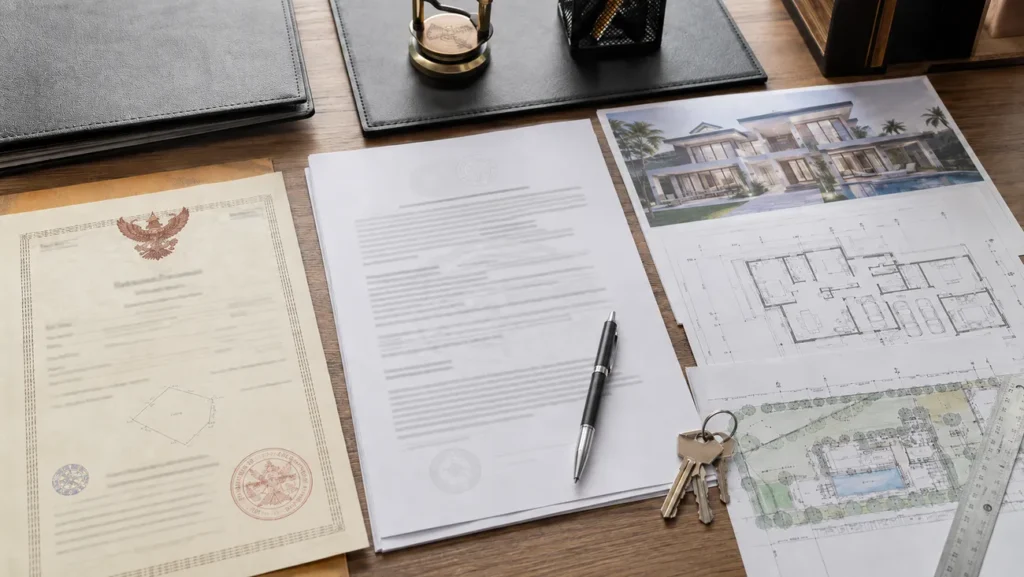
A registered long-term leasehold grants the tenant the right to possess and use the land parcel within the terms of the agreement. However, ownership of the land remains with the landowner. If the lease term exceeds three years, the agreement must be registered with the Land Department; otherwise, it will not be fully legally valid for the extended term. For foreign buyers, a registered leasehold is most often the basis for a secure ownership structure for a villa.
| What the tenant gets | Yes / No |
|---|---|
| Right to Use the Lot | ✅ |
| The possibility of building a house (with the appropriate structure) | ✅ |
| Option to Register a Leasehold | ✅ |
| Land Ownership Rights | ❌ |
| Automatic renewal for another 30 years | ❌ |
In practice, developers often include provisions in the lease agreement regarding subsequent lease renewals. However, such provisions do not, in and of themselves, mean that renewal is guaranteed by law. Each renewal requires a separate legal procedure in accordance with applicable law.
Superficius
Superficies is a registered real right that allows a person to have buildings, structures, or plantings on another person’s land. The terms of the right are specified in the deed of establishment and are registered with the land administration office.
When purchasing a pre-built villa, you must verify separately which document transfers ownership of the building: Registration of a superficies right does not, in and of itself, always serve as a substitute for a contract or evidence of the acquisition of a building. Superficies establishes the right to have a structure on someone else’s land, but it does not automatically mean that the foreigner has become the owner of a specific, completed villa—these are two distinct legal acts.
A superficies agreement is often combined with a land lease agreement: the lease grants the right to occupy and use the land, while the superficies agreement separately establishes the right to have a structure on someone else’s land in the land administration records. With this combination, it is important to ensure that the terms align: if the lease is for 30 years but the superficies is set for 15, the rights to the building will formally expire before the lease does. Both documents must be reviewed together, comparing the terms, renewal conditions, and termination procedures. The need to combine a lease and a superficies right is determined by the structure of the specific transaction and the recommendations of a lawyer.
When Superficius Is Really Needed
In practice, the right of superficies is most often used when a foreign buyer wishes to legally establish ownership of the specific house that has been built, rather than merely having the right to use the land. This mechanism is particularly in demand when building a villa on a plot of land owned by a spouse, a relative, a Thai company, or another landowner.
The right of superficies alone does not make a foreigner the owner of the land; however, it does allow for the registration of a separate right to the structure erected on the land, subject to the conditions of registration.
| Suitable | Not suitable |
|---|---|
| Building Your Own Home | Purchasing Land as Freehold Property |
| A House on My Spouse's Property | An attempt to circumvent the ban on land ownership |
| Custom Home Construction | Replacement of a Leasehold in All Situations |
Usufruct
Usufruct is a registrable right to possess, use, and derive income from another person’s real property within the terms set forth in the deed establishing the right. The usufructuary has the right to live in the property and derive income from it—however, the ability to enter into lease agreements and their status upon termination of the usufruct depend on the specific terms and require separate analysis.
A right may be established for a term not exceeding 30 years or for the lifetime of the rights holder. A usufruct established in favor of an individual terminates no later than the individual’s death and does not pass to the heirs. A contract cannot convert usufruct into a inheritable property right—to protect heirs, a different legal structure must be considered in advance. This is a significant limitation for buyers who plan to transfer the property to their children or heirs.
Usufruct differs from ownership in that it does not allow the property to be sold or disposed of beyond the scope of the right of use. It differs from a lease in that it is a real right and, if properly registered, is enforceable against subsequent owners of the land. Usufruct does not replace an analysis of the rights to the building itself: it is necessary to determine separately the legal basis on which the building stands and who owns it.
Table 2. Long-Term Leases, Superficies, and Usufruct: A Comparison
| Law | What Does a Foreign Buyer Receive? | Right to the Building | Rental | Term | Inheritance / Transfer | Key Risk |
|---|---|---|---|---|---|---|
| Registered Lease | Right to Use a Land Plot | Through separate building permits | It depends on the terms of the contract | Up to 30 years (+ negotiable extension options) | Permitted only if expressly provided for in the contract and with the landlord's consent | Dispute over extension; change in land ownership; an unregistered contract is not enforceable beyond 3 years |
| Superficius | The right to own a building on someone else's land; the purchase of a ready-built villa is confirmed separately | To be established by a separate act | It depends on the circumstances | For a specified term or for the lifetime of the landowner or the holder of the right—depending on the registered deed. | It is possible if the act does not impose restrictions and is not limited to a specific lifetime | Discrepancy between the term and the lease; the need for separate confirmation of rights to the building |
| Usufruct | The right to use the property and enjoy its benefits | No (use only) | It is possible, but it depends on the terms of the agreement and the impact analysis | Up to 30 years or life imprisonment | Not inheritable; terminates upon death | Termination upon death; cannot be sold; does not replace the right to the building |
Practical conclusion: Each of these instruments serves a specific purpose. A lease secures the right to occupy a plot of land. A superficies separately secures a foreigner’s right to have a structure on someone else’s land in the land administration records. Usufruct grants the right to use the property and derive income from it during the lifetime of the right holder. In some transactions, a land lease is supplemented by a superficies to separately secure this right. The need for such a combination is determined by the structure of the specific transaction and the lawyer’s recommendations.
Not sure which design scheme is right for you?
The choice depends not only on the buyer’s citizenship, but also on the title documents for the land and villa, the length of ownership, and plans for renting, reselling, and inheritance. Send us a link to the property or describe your situation—we’ll help you get a preliminary understanding of the available options and arrange a consultation with a specialist in the field. Discuss the purchase plan
Main Limitations of Usufruct
| Feature | What does this mean in practice? |
|---|---|
| Right of Use | It is possible to live there and use the property |
| Land does not become property | Yes |
| It could be for life | Yes |
| Inherited automatically | No |
| It terminates upon the death of the rights holder | Yes |
It is precisely the fact that usufruct cannot be inherited that is one of its key characteristics. Therefore, this arrangement is by no means always suitable for buyers who plan in advance to transfer the property to their children or other heirs.
Check out the top projects in Phuket:
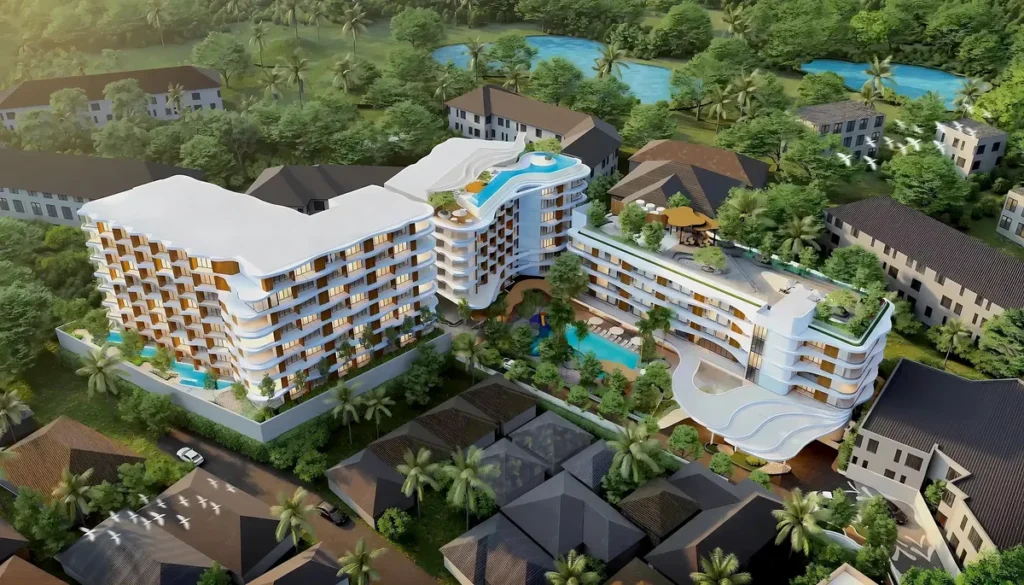
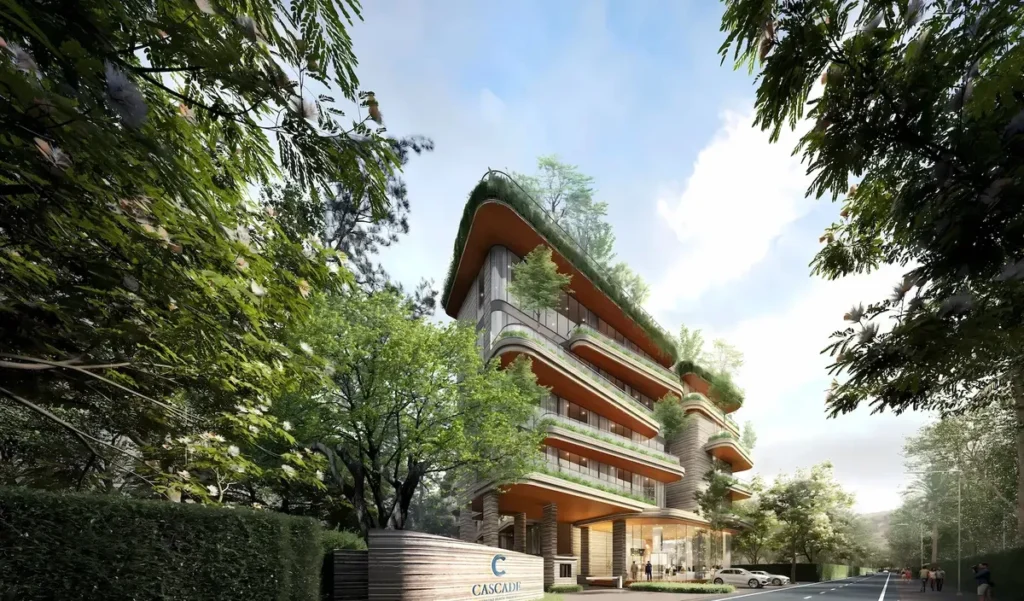

 Phuket, Bang Tao
 starting at 108 m²
 Phuket, Rawaistarting at 38.3 m²
The Company and Her Thai Husband
Thai company
A Thai company may own land only if it has a lawful ownership and operational structure. A formal majority of Thai shareholders is not enough: Thai participants must not be nominal holders, and the financing, management, and distribution of economic benefits must not indicate hidden foreign ownership of the land. The Land Department analyzes the source of funding, the authenticity of Thai participation, actual control, and the economic substance of the structure.
Under this arrangement, a foreigner does not acquire the land personally—he owns a stake in the legal entity that owns the land and the building. This is a fundamental difference: if problems arise with the company (corporate conflict, debts, claims by regulators), the asset is at risk. At the same time, the scope of the foreign national’s corporate rights must not indicate circumvention of land restrictions—excessive de facto control by the foreign national could serve as grounds for claims by the authorities.
Annual corporate expenses include accounting, auditing, taxes, and administrative fees. If a company ceases operations, is liquidated, or becomes the subject of a legal dispute, the real estate it owns may be frozen. The structure involving a Thai company requires a personalized assessment by a Thai corporate and real estate attorney—not as an option, but as a mandatory preliminary step.
When Purchasing Through a Company Is Truly Justified
Using a Thai company makes sense primarily when real estate is purchased for commercial purposes: the hotel business, a real estate development project, long-term rental management, or other lawful business activities.
However, if the sole purpose is to purchase a single villa for personal residence, a corporate structure is by no means always the most rational solution. Using a company solely to circumvent land ownership restrictions can lead to serious legal risks; therefore, the structure must have an independent business purpose.
| The Situation | What to Consider |
|---|---|
| One villa for personal use | A corporate structure often results in disproportionate costs and risks |
| A Real Estate Development Project | A review of land, corporate, and licensing requirements is required |
| The Hotel Industry | Real-world activities and applicable permits are required |
| Managing Multiple Objects | The structure may serve a business purpose, but it requires legal and tax review |
| Passive land ownership through nominal owners | unacceptable |
Thai husband
Thai citizens have the right to own land without any restrictions based on nationality. If the spouse of a foreign buyer is a Thai citizen, the land can be registered in the spouse’s name.
In this case, the foreign spouse does not automatically become a co-owner of the land. When registering land in the name of a Thai spouse, the Land Department typically requests written confirmation from the foreign spouse stating that the funds used to purchase the land are the Thai spouse’s personal property and not joint marital property. Such a statement significantly limits the foreign spouse’s ability to subsequently claim rights to the land as joint property. The family and inheritance implications must be assessed separately with a Thai lawyer.
Family agreements do not replace registered rights. To protect the interests of a foreign spouse, it makes sense to consider additional legal instruments: a land lease, a right of superficies, or a usufruct, all established in favor of the foreign national and registered with the land registry. The consequences of divorce, the death of a Thai spouse, and the inheritance of land by third-party heirs require a separate legal assessment. Trusting a partner does not eliminate the need to verify documents and register rights — especially when large sums of money are involved.
The Most Common Mistakes When Choosing a Design Scheme
| Error | Why Is This Dangerous? |
|---|---|
| Select a diagram before inspecting the facility | Different types of properties require different legal solutions |
| Rely solely on the salesperson's advice | There may be a conflict of interest |
| Consider the renewal of a leasehold to be automatically guaranteed | The law does not provide for automatic renewal |
| Use a company for non-commercial purposes | May raise questions from regulatory authorities |
| Do not register the right with the land department | Some rights will not have the necessary legal protection over the long term |
It is best to decide on the property’s registration structure at the same time as conducting a legal review of the property. The same solution may be ideal for one villa but completely unsuitable for another, even if they are located in the same neighborhood.
How to Inspect a Villa
What Does a Comprehensive Villa Inspection Include?
A comprehensive villa inspection consists of at least two separate parts: a legal review and a technical inspection. A lawyer verifies the rights to the land and building, the seller, any restrictions, permits, and contracts. An engineer or relevant specialist assesses the structure, utilities, equipment, and the actual condition of the property.
For a completed villa, the list of inspections is typically more extensive than for an apartment, since it is also necessary to verify the legality of the construction, the existence of the required permits, the conformity of the actual property boundaries with the documents, and the absence of any obstacles to the property’s use.

What a lawyer checks versus what an engineer checks
| Verification | Lead Specialist |
|---|---|
| Owner and the Seller's Authority | lawyer |
| Land Title and Encumbrances | lawyer |
| Lease, Superficies, Usufruct | lawyer |
| Building Permit | a lawyer working in collaboration with an architect or engineer |
| Conformity of the Completed Project with the Plans | engineer or architect |
| Foundation, Walls, and Roof | engineer |
| Electrical and Water Systems | specialist in a specific technical field |
| Swimming Pool and Equipment | specialized inspector |
| Money Transfer Terms and Conditions | bank and lawyer |
| Tax Calculation | tax advisor or lawyer |
The opinion of a single expert does not confirm that the facility has been inspected in all respects.
A Practical Checklist for a Comprehensive Villa Inspection:
- Identity and Authority of the Seller — a passport or articles of incorporation; a power of attorney, if the seller is acting through a representative.
- The seller's right to dispose of the land and the building — confirmation that the seller is the rightful copyright holder.
- Original land title document — Obtain and verify the document in person or through an attorney directly at the land administration office; do not accept copies as sufficient proof.
- Type of Title Document — Chanot (Nor Sor 4 Jor) is the most comprehensive title deed with precisely surveyed boundaries; other types differ in terms of registration procedures and potential transactions—each requires a separate assessment.
- Coincidence of Boundaries and Area — Compare the site plan with the actual boundaries on-site.
- Encumbrances — mortgages, liens, registered leases, easements, and other encumbrances listed in the land title document.
- Legal access to the property — Make sure that the road to the villa either belongs to the property or is secured by a registered easement; agreements regarding access across someone else’s land without a registered right do not provide reliable legal protection.
- Building Permit — verify its existence, ensure it corresponds to the actual structure, and confirm that there are no violations.
- Compliance of the Building with the Permit and Plans — Compare the completed structure with the approved plans; unauthorized additions can create problems when selling or renting the property.
- Utility Connections — Water, electricity, and sewer service; check whose name the contracts are in and whether there are any outstanding balances.
- Zoning Restrictions — Some zones impose restrictions on the height, use, or commercial use of a structure.
- Legal Disputes and Debts — Through a Thai attorney, review the available information regarding the seller’s legal proceedings and request documents confirming that there are no outstanding tax, utility, or contractual debts related to the property. The scope of the available information depends on the seller’s status and the type of debt.
- Legal Status of the Developer — For new projects, verify their registration status, financial condition, and track record of project completion.
- Permissions and Payment Protection Mechanisms for a Project Under Construction — The presence of a building permit and an independent payment protection mechanism: a bank guarantee, phased payments following confirmation of construction, or a refund policy. A regulated escrow account is not required for every project—you should verify exactly what the developer is offering.
- Terms and Conditions for Operating the Complex — the amount and method of calculating common expenses; the rights of the management company; the procedure for replacing the property manager.
- Before purchasing a villa for daily or other short-term rentals, you must verify whether the Hotel Law applies, whether the operator holds a license, or whether a specific exemption provided for by law applies. Additionally, you should take into account the complex’s rules, the management agreement, tax obligations, and requirements for registering the stay of foreign guests.
Table 3. Documents for Legal Due Diligence: What to Review and What Risks They Cover
| Document | What Is Being Checked | What risk does it cover? |
|---|---|---|
| Chanot or another title document | Document type, authenticity, area, owner, boundary survey status | The Risk of an Invalid or Incomplete Land Right |
| Statement of Encumbrances | Mortgages, Leases, Easements, Liens | Purchase with Third-Party Liabilities |
| Land Lease Agreement | Term, Conditions for Renewal, Transfer, and Succession | Loss of the right to use the land parcel |
| Contract for the Sale and Purchase / Transfer of a Building | Building Description, Price, Warranties, Liability | Disputes Regarding the Subject Matter and Terms of the Transaction |
| Building Permit | Correspondence to the Actual Object | Unauthorized construction; registration issues |
| Building Plans | Area, layout, additions | Discrepancy between the actual object and the documentation |
| House Registry (Tabien Baan) | Address and Registration Information | Confirmation that a house exists as a specific property; this does not constitute proof of ownership |
| Seller's Documents | Personhood, Authority, Legal Capacity | A Transaction with an Unauthorized Person |
| Corporate Documents | Articles of Incorporation, shareholder registry, resolutions, authenticity of the corporate structure | Hidden Corporate Risks When Purchasing Through a Company |
| Management Agreement | Expenses, Rights of the Parties, Term, Termination | Uncontrolled expenses; an imposed manager |
| Documents for Roads and Utilities | Right of Way, Contracts, Debts | Lack of access to the site or facility |
The House Registration Book (Thai: Tabien Baan) deserves special attention. This document confirms the address registration of a building and is used for administrative purposes, but does not constitute independent proof of ownership of the building and does not confirm the legality of its construction.
The legal review must be completed before the non-refundable deposit is made, or the contract must include a clause providing for a refund if the legal review yields a negative result.
Steps in the Purchase Process
Buying a villa in Thailand is a multi-step process in which the sequence of actions has legal implications. Making non-refundable payments before conducting due diligence is one of the mistakes that can lead to significant financial losses.
- Determine the purpose of the purchase and your budget. Residential use, rental, investment, or a combination of these—the choice of structure, region, and property type depends on this.
- Select a region and villa type. Phuket, Koh Samui, Pattaya, and Bangkok offer different formats, price ranges, and operating conditions.
- Please clarify the proposed design layout. Before viewing specific properties, it’s important to understand the legal basis on which the land and building will be registered.
- Request a set of documents. At the initial stage: the land title document, the building permit, the site plan, and information about the seller.
- Conduct a legal and technical review. The legal inspection is conducted by an independent Thai attorney; the technical inspection is conducted by an independent qualified engineer or a technical specialist in the relevant field who possesses the qualifications required for that type of work. You should not rely on an inspection arranged by the seller.
- Agree on the booking terms. The amount of the reservation deposit should be minimal or refundable if the verification results are negative. You may not transfer a large non-refundable deposit until the legal review is complete.
- Review and sign the main contracts. The land lease agreement, the agreement transferring rights to a building, and any agreements regarding superficies or usufruct (if applicable) must be mutually agreed upon, signed in both Thai and a foreign language, and verified for consistency.
- Arrange a money transfer. Before making the transfer, consult with the Thai bank and your attorney to agree on the exact wording of the payment description and the list of supporting documents required for the chosen transaction structure.
- Register the lease, rights to the building, and any additional rights with the land administration office. Registration is conducted in person by the parties or by a power of attorney.
- Sign the acceptance and transfer form. For a completed villa—after a technical inspection and the correction of any identified defects.
- Obtain the original documents, keys, and access to utilities. Verify that all documents are in accordance with those previously agreed upon.
- Organize the management, insurance, and payment of operating expenses. This is especially important when the owner is out of the country for most of the year.
A reservation agreement and a master agreement are fundamentally different documents. A reservation agreement sets forth the parties’ intent but should not contain irrevocable terms until the due diligence process is complete. The main contract governs all material terms of the transaction: the subject matter, price, terms, liability, and termination procedures.
The transaction can be conducted remotely—using a specially drafted power of attorney. However, The power of attorney must comply with the specific requirements of the land registry office where the registration will take place and with the type of right being registered. For a remote transaction, you may need certified copies of documents, a special power of attorney, translation, and legalization—the exact set of documents must be agreed upon in advance with the relevant office. When purchasing a villa under construction, you must specify the warranty periods and the procedure for rectifying defects before signing the contract with the developer.
Are you looking for a villa that fits your budget and purchase goals? Take a short Real Estate Search in Thailand. The Thaicost team will suggest suitable options in Pattaya, Samui, Phuket, or Bangkok and help you compare the terms and conditions.
Documents and Translations
Buyer's Documents
The standard kit includes:
- Valid passport — When registering in person at the land office, the original document is usually required;
- proof of address or residency—if required for a specific procedure or by a bank;
- marriage certificate—if the terms of the transaction affect a spouse’s property rights;
- a specially drafted power of attorney — for remote registration; the set of documents required for it and the formatting requirements must be agreed upon in advance with the relevant land administration office;
- bank documents confirming the transfer of funds from abroad;
- Proof of the source of funds—if requested by the servicing bank as part of AML/KYC procedures; the land registry’s requirements in this regard depend on the structure of the specific transaction;
- Translation into Thai, notarization, or consular legalization of foreign documents—the specific requirements depend on the country of issuance, the type of document, and the requirements of the receiving authority; these must be clarified before processing.
Documents for the property
Complete set of documents required to close the deal:
- land title document (the original Chanot or other title document);
- documents confirming ownership rights to the building and the basis for those rights;
- building permit;
- house register;
- approved building plans;
- land and building contracts (all versions, including amendments);
- information on encumbrances and their removal;
- corporate documents of the seller (a legal entity);
- the complex's rules and the agreement with the management company.
Money Transfer
International wire transfers for the purchase of real estate in Thailand are regulated by the Bank of Thailand. Under current foreign exchange control regulations, all foreign exchange transactions must be conducted through authorized financial institutions. For more information on the current requirements, visit the official website. Bank of Thailand.
All foreign currency transactions must be conducted through organizations that hold the appropriate foreign exchange license. Requirements regarding supporting documents and the payment purpose should be coordinated with the receiving bank before sending the funds.
Practical recommendations:
- Before making the transfer, consult with the Thai bank and a lawyer to agree on the exact wording of the payment description and the list of required documents For the selected transaction structure, the requirements depend on the type of transaction and the bank;
- Keep SWIFT confirmations and exchange rate statements;
- Check with the receiving bank to find out what types of transfer confirmations it issues and for which subsequent transactions they may be required;
- Do not artificially split the payment in order to circumvent banking compliance;
- Check the recipient's details in the contract—they must match the actual recipient of the transfer.
The requirements for transferring funds when purchasing a villa differ from those for purchasing an apartment in a registered condominium under the foreign quota. These rules should not be automatically applied to a villa transaction.
Buyer's Expenses
The cost of owning a villa consists of one-time expenses at the time of purchase and recurring expenses during its use. The exact allocation of these expenses between the seller and the buyer must be specified in the contract—it is not standardized and may vary.
Table 4. Government Fees and Taxes
| Payment | Size | Basis for Calculation | Who usually pays? |
|---|---|---|---|
| Registration fee for the transfer of ownership | 2% | Appraised Value by the Department of Lands | As specified in the agreement between the parties |
| Lease Registration Fee | 1% | Total amount of rent and other payments for the entire term | As specified in the contract |
| Stamp duty on a lease agreement | 0,1% | Total rent and key money for the entire term | Under the terms of the contract |
| Stamp Duty on the Transfer of Real Estate | 0,5% | The higher of the contract price or the appraised value | Usually considered a seller's expense; is not levied concurrently with the SBT |
| Specific Business Tax | 3,3% | The higher of the contract price or the appraised value | Usually, the seller, if the tax applies |
| Withholding Tax on Sales by a Legal Entity | 1% | The higher of the contract price or the appraised value | Salesperson |
| Withholding Tax on Sales by Individuals | Calculated on a case-by-case basis | Appraised Value, Length of Ownership, and Tax Bracket | Salesperson |
| Registration of a Superficie, Usufruct, or Easement | 1% | Estimated value of the right being registered | As agreed by the parties |
The actual calculation depends on the type of transaction, the seller, the length of ownership, the appraised value determined by the land department, and the contract price. The allocation of many expenses between the seller and the buyer must be explicitly stipulated in the contract.
From July 1, 2026, through June 30, 2027, a reduced registration fee is in effect in Thailand 0,01% when transferring or mortgaging individual residential properties with a value and appraised value not exceeding 7 million THB. However, the tax exemption applies only to transactions that meet the conditions set by the government, including purchases by Thai citizens. For a standard villa purchase by a foreign buyer, the exemption cannot be automatically factored into the budget.
Table 5. Example of a Government Expenditure Calculation
Example: A registered lease for 30 years
Let's say:
- A lump-sum rent payment for the entire term — 9,000,000 THB;
- There are no additional charges included in the base rent.
| Consumption | Calculation | Amount |
|---|---|---|
| Rental Registration | 9,000,000 × 1% | 90,000 THB |
| Stamp Duty | 9,000,000 × 0.1% | 9,000 THB |
| Total Government Payments | 99,000 THB |
This example does not include legal services, document translation, registration of additional rights, bank fees, or technical inspections.
Example: Transfer of an asset valued at 10 million THB
Let's say:
- Department of Lands appraised value — 8,000,000 THB;
- negotiated price — 10,000,000 THB;
- The Specific Business Tax applies.
| Payment | Calculation | Amount |
|---|---|---|
| Registration Fee | 8,000,000 × 2% | 160,000 THB |
| Specific Business Tax | 10,000,000 × 3.3% | 330,000 THB |
| Stamp Duty | Do not use simultaneously with SBT | 0 THB |
| Withholding Tax | Calculated separately | On an individual basis |
This is not a breakdown of expenses for a specific foreign buyer: in the case of a villa, it must be determined separately exactly what is being transferred—the land, the building, a lease, or a registered real property right.
Table 6. Recurring Expenses
| Consumption | Official Guideline | What to Consider |
|---|---|---|
| Electricity consumption exceeding 150 kWh per month | 3.2484 THB/kWh for the first 150 kWh; 4.2218 THB for 151–400 kWh; 4.4217 THB more than 400 kWh | A service fee, Ft, and VAT are also applied. |
| Fuel Adjustment Ft, May–August 2026 | 0.1623 THB/kWh | The rate changes periodically |
| Water Supply | Based on actual consumption and subscriber category | A service fee and VAT will be added |
| Land and Construction Tax | It depends on the intended use, the owner, and the appraised value | Calculated by the municipality |
| Insurance | Custom Rate Plan | It depends on the building's value, coverage, and risks |
| Complex Amenities | Under a specific project contract | Checked before purchase |
| Pool and Garden | Under the actual service agreement | It depends on the area and the frequency of service |
| Lease Management | Under the management company's contract | It can be fixed or based on a percentage |
For the PEA residential rate plan, when monthly consumption exceeds 150 kWh, the base rate is 3.2484 THB for the first 150 kWh, 4.2218 THB for the 151–400 kWh range, and 4.4217 THB for consumption above 400 kWh. A service fee, the Ft adjustment, and VAT are added to the rate.
PWA bills for water based on actual consumption; the bill includes the water charge, a service fee, and VAT.
Select a region
Phuket, Koh Samui, Pattaya, and Bangkok are the four main destinations for buying villas, each with its own target audience, property types, and due diligence considerations.
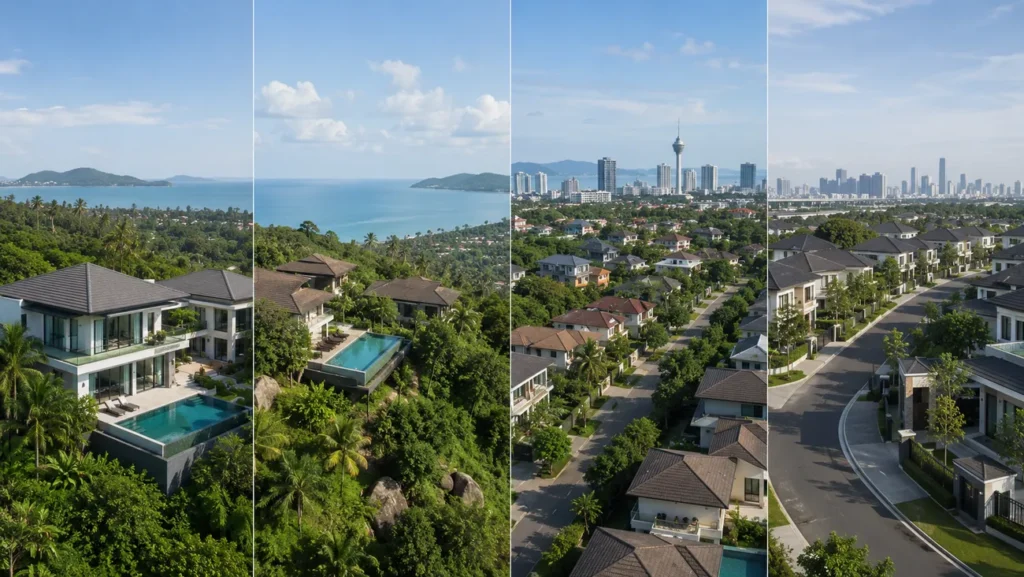
Table 7. Comparison of Regions for Buying a Villa
| Region | Typical Reasons for Purchasing | Common Formats | What to Check in Particular | Operational Features | Who is it for? |
|---|---|---|---|---|---|
| Phuket | Seasonal Accommodations, Rentals, Investments | Villas in managed complexes, standalone residences | Terms of the contract with the management company, transportation access, seasonal demand, and rental permits | Well-developed infrastructure; pronounced seasonality; a wide selection of property management companies | First-time villa buyers; those who view renting as part of their usage model |
| Samui | Permanent or seasonal residence, rental | Villas in the hills, by the water, and in small complexes | Type of land title document, topography, access road, water supply, permits | It is important to have a reliable water supply and legal access; air service may vary by season | Buyers looking for a peaceful environment and long-term residency |
| Pattaya | Permanent residence, long-term lease | Homes in gated communities, detached villas, and townhouses | Location relative to the city, transportation infrastructure, actual demand for rentals | Demand may be less seasonal than at island resorts; dependence on location | Buyers planning to live there permanently or rent long-term |
| Bangkok and the Suburbs | Permanent residence, family use | City homes in gated communities (muniban), townhouses | Zoning, land use, settlement layout, transportation accessibility | Urban Environment; Dependence on Transportation Infrastructure | Families planning a long-term stay |
In Phuket, there is a wide selection of villas located within managed complexes that feature established infrastructure and a rental income program. It is particularly important here to carefully review the terms of the agreement with the management company: the commission rate, the distribution of income, the right to change management companies, and the terms governing the owner’s use of the property.
On Koh Samui, the issue of land title documents warrants special attention. The terrain and the legal status of the access road often determine a property’s practical suitability just as much as its price. The type of title document and the water supply must be verified on a case-by-case basis.
In Pattaya, a home in a gated community is a popular choice among buyers looking for a permanent residence. The key factor is location: proximity to the city, schools, and medical facilities significantly affects both the quality of life and the property’s resale value.
In Bangkok and its suburbs, single-family homes are most often located in organized communities with a management structure. Zoning and land use within city limits require a separate review.
Key Risks
Most problems that arise when buying a villa in Thailand stem not from the legal impossibility of the transaction, but from errors in preparation and documentation.
Common mistakes made by buyers:
- Non-refundable deposit until the verification process is complete.
- The contracting parties and the payee are not the same.
- Discrepancy between land and building rights.
- Unrecorded changes to the villa.
- No legal access.
- Restrictions on transfer, assignment, or conveyance.
- Unrealistic returns that do not take expenses into account.
- The building's uncertain future after the lease expires.
Red Flags in the Seller's Offer
The following circumstances deserve special attention:
- a verbal promise of extensions not specified in the contract;
- a proposal to register land in the name of a third party without explaining the reasons;
- refusal to provide the original title document for verification at the land administration office;
- pressure to make an urgent, non-refundable deposit;
- discrepancies between the parties in contracts and payment details;
- the absence of a separate description of the rights to the land and the building;
- a promise of guaranteed income without a financial model or terms and conditions;
- the buyer's lack of the right to terminate the contract following a negative result of the legal review.
If the seller cannot clearly explain exactly which rights are being transferred to the buyer, the transaction cannot be evaluated based solely on the term “freehold” used in advertising.
Questions for the Seller Before Making a Deposit
- Who is registered as the owner of the land?
- What type of land title document is on file for the lot?
- Are there any mortgages, leases, easements, or other restrictions?
- On what grounds does the seller own the villa?
- Does the completed structure conform to the permit and the approved plans?
- Who owns the access road?
- What mandatory payments are required by the complex?
- Is it possible to change the management company?
- Are long-term or short-term leases allowed?
- What defects and renovations has the property undergone?
- What exactly is included in the price: furniture, appliances, a pool, and equipment?
- Is the deposit refunded if the due diligence results are negative?
- Who pays the registration fees and taxes?
- What happens to the villa once the land lease expires?
- Is it possible to transfer the contract and rights to a new buyer?
How to Choose a Circuit Diagram
The choice of structure depends not on general recommendations, but on the buyer's specific situation.
Which purchase plan is right for you?
| Purpose | What to Consider When Choosing a Structure |
|---|---|
| Permanent residence | the term of the registered rights, the fate of the building upon expiration of the term, and the possibility of transferring the rights |
| Seasonal Use | Right of Lease, Complex Rules, Management Fees |
| Rental income | The legality of the lease model, taxes, and the management company's authority |
| Building Your Own Villa | land rights, building permit, need for a superficies right |
| Transfer to Heirs | The transferability of each right and the terms of the contracts |
| Resale | the option to assign the lease and transfer rights to the building |
You cannot choose a specific structure based solely on the purpose of the purchase. You must review the documents for the specific property and consult with an independent Thai lawyer to finalize the structure.
There is no one-size-fits-all structure that works for every buyer. The optimal structure depends on whether you plan to live in the villa yourself, generate rental income, resell the property in the future, or pass it on to your heirs. That is why the legal structure is usually determined before signing the contract, rather than after selecting the property.
For permanent residence
The main priorities here are long-term security, reliable control over the property, and clear terms of inheritance. It is important that the rights be registered, that the term of the lease or usufruct cover the planned period of residence, and that the ability to transfer the property to family members be legally formalized in advance. Since usufruct terminates upon the death of the holder and is not inheritable, a lease or superficies agreement with clear terms of succession may be more suitable for permanent residence with the intention of transferring the property in the future.
For seasonal use
For seasonal use, the focus shifts to managing the property in the owner’s absence, the ability to rent it out during the owner’s absence, and liquidity in the event of a sale. It is necessary to assess the extent to which the management company’s contract meets these needs: the terms of the owner’s use of the property, the notification procedure, and restrictions on the duration of the owner’s personal occupancy.
For Rent
Commercial use requires a separate review: verification of the necessary permits, taking into account the applicability of the Hotel Law; an understanding of the taxation of rental income; an assessment of actual management expenses; and a realistic estimate of occupancy rates. Advertised yield promises are a marketing guide, not a guarantee. The contract with the management company must clearly regulate the distribution of income, the reporting procedures, and the right to change the manager.
To purchase during the construction phase
Buying directly from a developer adds additional steps to the standard due diligence process. You must verify that the land on which the project is to be built belongs to the developer or that the developer holds the appropriate rights; that a building permit has been issued and complies with the project plans; the payment schedule is tied to actual construction milestones; and the contract includes mechanisms to protect payments or the right to a refund in the event of a significant delay. Special attention should be paid to the procedure for transferring rights: specifically, when and on what basis the rights to the building are transferred to the buyer.
Algorithm for selecting a circuit:
- Determine the purpose of the purchase—to live in, to rent out, or as an investment.
- Determine who owns the land and what type of document is associated with it.
- Check how ownership rights to the building are registered.
- Compare the available registered rights—lease, superficies, and usufruct.
- Assess the duration of ownership, the possibility of succession, and the potential for a subsequent sale.
- Conduct a legal review of the land, the building, the seller, and the developer.
- Only then should you sign the contract and transfer the money.
What Buyers Need to Keep in Mind
Foreigners can legally acquire ownership rights to villas in Thailand; however, the structure of each transaction is determined by the land rights, the building’s title documents, and the chosen method of registration. Buying a villa and registering ownership of the property is an achievable goal with proper preparation.
The building and the land must be considered as two separate entities that require separate registration and separate inspection. The structure is chosen based on the property, the purpose of ownership, and the results of the legal review—there is no one-size-fits-all option. A contractual promise is not equivalent to a registered right: only entries in the land registry regarding specific real rights—such as leases exceeding three years, superficies, and usufruct—provide protection against third parties.
Before signing any contract with non-refundable terms, it is necessary to conduct a legal review of the land title, the building, the seller, and the transaction structure. After the purchase, the terms governing the management, operation, and subsequent transfer of the property—whether through sale, succession, or the expiration of the lease term—must be agreed upon.
This material is provided for general informational purposes only. Ownership structure, contracts, and current registration requirements must be verified with respect to the specific property and the buyer’s circumstances.
The Thaicost team helps you find villas in Pattaya, Koh Samui, Phuket, and Bangkok, compare purchase terms, and coordinate with independent lawyers and technical specialists. Contact us to discuss a specific property or to begin your search based on your goals and budget.
 Real estate in Georgia
 Real estate in Cyprus
 Real estate in UAE
 Real estate in Bali
 Real estate in Montenegro
 Real Estate in Spain
 Real Estate in Saudi Arabia
 Real Estate in Turkey
 Real Estate in Zanzibar
 +66 98 432 7651
 hello@thaicost.com
 Boat Lagoon Marina, 22/1 Moo 2, Thepkasattri Rd, Koh Kaew, Phuket 83000, Thailand



 Get TOP-7 catalog of objects