
 +66 98 432 7651


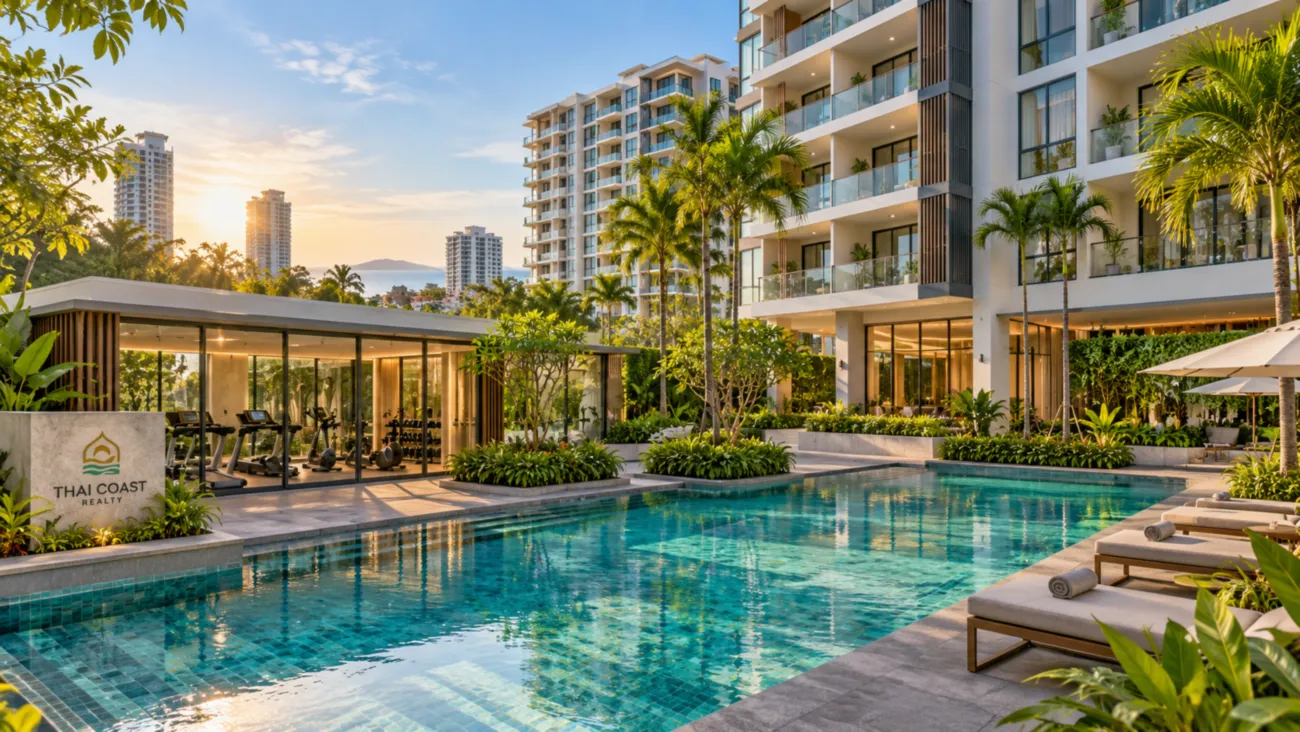
Utility costs in a Thai condominium are divided into two fundamentally different categories. The first is— fee for the maintenance of the building's common areas (common area maintenance fee, or CAM): security, elevators, the pool, cleaning of common areas, and everything else that each owner pays for, even if the apartment has been vacant for months. The second is— Individual bills for resources consumed: electricity and water based on the submeter readings.
In addition to these two components, there are initial and irregular payments that arise at the time of purchase and at various stages in the complex’s life cycle—a contribution to the sinking fund and possible special assessments for major repairs.
A hypothetical example for a 45-square-meter apartment in a mid-range complex: CAM at a rate of 60 baht/square meter/month = 2,700 baht, electricity at a consumption of 380 kWh—about 1,535 baht under the current residential rate plan, water—about 144 baht, and internet—500 baht. Total amount— about 4,880 baht per month. The actual bill depends on the electricity service category, the rate for the specific complex, and actual consumption.
Utility Bills in Thailand: Key Figures
| Payment | How much should I set aside? | Frequency |
|---|---|---|
| CAM — Common Area Maintenance | Approximately 30–120+ baht/m² | Monthly, often with prepayment |
| Electricity | In the projected scenarios: approximately 703–2,353 baht for 200–550 kWh | By consumption |
| Water | It depends on the complex's internal rate and consumption | By consumption |
| Internet | In the budget examples: 500–600 baht | Usually once a month |
| Sinking fund | Estimated price range: 200–700 baht/m² | Usually, the down payment when buying |
| Additional fee for repairs | In accordance with the approved budget and the complex's rules | If necessary |
| CAM Prepayment | Monthly CAM × number of paid months | Under the terms of the complex |
| Connecting or Re-registering Meters | According to the terms of the supplier, developer, or legal entity | When connecting or transferring |
For a 45 m² apartment with a CAM of 60 baht/m² and the selected consumption plan, the budget is approximately 4,880 baht per month. In the year of purchase, you may also be required to make an initial contribution to the sinking fund, an advance payment for CAM, and connection fees. These are examples for planning purposes and are not fixed government rates.
How much does a communal apartment cost?
There is no single amount—it consists of several components, each calculated according to different rules. In everyday language, “utility bills” often refer to all of them together. Legally and for accounting purposes, CAM, electricity, water, and the sinking fund are distinct categories of obligations with different due dates, payers, and bases for calculation. The table below shows the structure before we break down each component in detail.
Breakdown of Utility Bills in a Condominium
| Component | How is it calculated? | Who usually pays? | Charged when the apartment is vacant |
|---|---|---|---|
| CAM (Common Area Maintenance) | BAT/m² × area, monthly or in advance | Owner | Yes |
| Electricity | According to the apartment's submeter, kWh | Resident (tenant under a lease agreement) | Variable portion—none; fixed charges may apply |
| Water | According to the submeter, m³ | Resident | Variable portion — none; a minimum payment is possible |
| Internet | Fixed-rate plan from the provider | Who entered into the contract? | It depends on the terms of the contract |
| Sinking fund | Down payment upon purchase; additional fees may apply according to the complex's rules | Buyer | Applies only at the time of payment |
| Parking, Additional Services | According to the complex's rules | Under the contract | According to the rules |
CAM is charged regardless of whether anyone lives in the apartment. Even if there is zero water and electricity usage, the bill for common area maintenance continues to arrive.
Condominium Management
CAM—short for common area maintenance fee, also known as the common fee or maintenance fee—is a monthly fee for the upkeep of a building’s common areas. The rate is specified in batakh per square meter of apartment space per month (baht/m²/month). The amount and payment procedure for common expenses are determined in accordance with Thailand’s Condominium Act (B.E. 2522), the complex’s registered bylaws, and the decisions of the authorized management bodies. The specific rate must be verified in the documents of the condominium legal entity.
Formula: Monthly CAM = rate (baht/m²/month) × apartment area (m²).
Examples based on an illustrative rate of 60 baht/m²/month:
| Area | CAM per month | CAM for the Year |
|---|---|---|
| 30 m² | 1,800 baht | 21,600 baht |
| 45 m² | 2,700 baht | 32,400 baht |
| 60 m² | 3,600 baht | 43,200 baht |
The rate of 60 baht/m²/month is not an official standard, but rather a figure provided for illustrative purposes. CAM rates can vary significantly across different projects. The approximate range is from 30 to 120+ baht/m²/month, depending on the complex’s class, infrastructure, and city; the figures provided are merely examples for comparison and do not constitute official market statistics.
What will the CAM be based on market listings in 2026?
Source: Brinkman Data — Condo Maintenance Fees per m² in Thailand, 2026. The sample includes 10,131 listings in 765 buildings in Phuket, Pattaya, Hua Hin, and Chiang Mai. These are median prices from the listings, not official statistics. Before purchasing, you must confirm that the condominium’s legal entity has a valid CAM.
| City | Median CAM, bat/m²/month | Annual CAM for a 45 m² apartment |
|---|---|---|
| Pattaya | 45 | 24,300 baht |
| Phuket | 60 | 32,400 baht |
| Hua Hin | 50 | 27,000 baht |
| Chiang Mai | 45 | 24,300 baht |
Source: Brinkman Data, Thailand Condo Maintenance Fees per m², 2026. The sample does not include comparable data for Bangkok and Koh Samui. Figures from listings must be verified with the legal entity responsible for the specific building.
The CAM rate may also depend on the age of the complex, the number of elevators and swimming pools, the number of staff members, and the range of services included. For properties of equal size, a lower CAM does not necessarily mean more cost-effective ownership: savings on maintenance may come at the expense of insufficient funding for repairs.
What is typically funded through CAM:
- Elevators — maintenance, inspections, a contract with a specialized company.
- Security — 24-hour access control, video surveillance.
- Cleaning — entrance areas, hallways, lobbies, stairwells, parking lot.
- Swimming pool — chlorination, purification, and maintenance of pumping equipment.
- Gym and Relaxation Areas — ongoing maintenance, inventory.
- Electricity and Water in Common Areas — Lighting for the parking lot and lobbies, and watering the gardens.
- Management and Administration — Office staff of a legal entity, accounting department.
- Ongoing Maintenance — Plumbing and electrical work for common-area systems.
Electricity and water for the individual unit are not included in the CAM: these are billed via separate submeters and separate bills. In many condominiums, CAM is paid in advance for 3, 6, or 12 months—the prepayment schedule is specified in the legal entity’s bylaws, which the buyer has the right to request prior to the transaction.
The "bat/m² per year" rate is not the same as "bat/m² per month." Before comparing projects, make sure to check the time period for which the figure is given.
Can the management company increase the CAM?
Yes, the CAM rate is not fixed for the entire period of apartment ownership. The complex’s expenses may increase due to rising costs for electricity in common areas, elevator and pump maintenance, staff salaries, equipment repairs, and changes to the building’s budget.
Any change in the amount of dues must comply with the applicable provisions of the Condominium Act and the complex’s registered rules. The approval process depends on the nature of the expenses and the required decision by the governing bodies.
Before making a purchase, it is advisable to request CAM's rate history for the past few years and find out whether a rate increase is being discussed for the upcoming budget period.
For example, if the rate for a 45-square-meter apartment increases from 60 to 70 baht per square meter per month, the monthly expenses will rise from 2,700 to 3,150 baht, or by 5,400 baht per year.
Be sure to check not only the current rate, but also when it was last adjusted. A low CAM, combined with a chronic shortage of funds for maintenance, may indicate a risk of a future rate increase or an additional fee.
Apartments in Thailand with Transparent Maintenance Fees

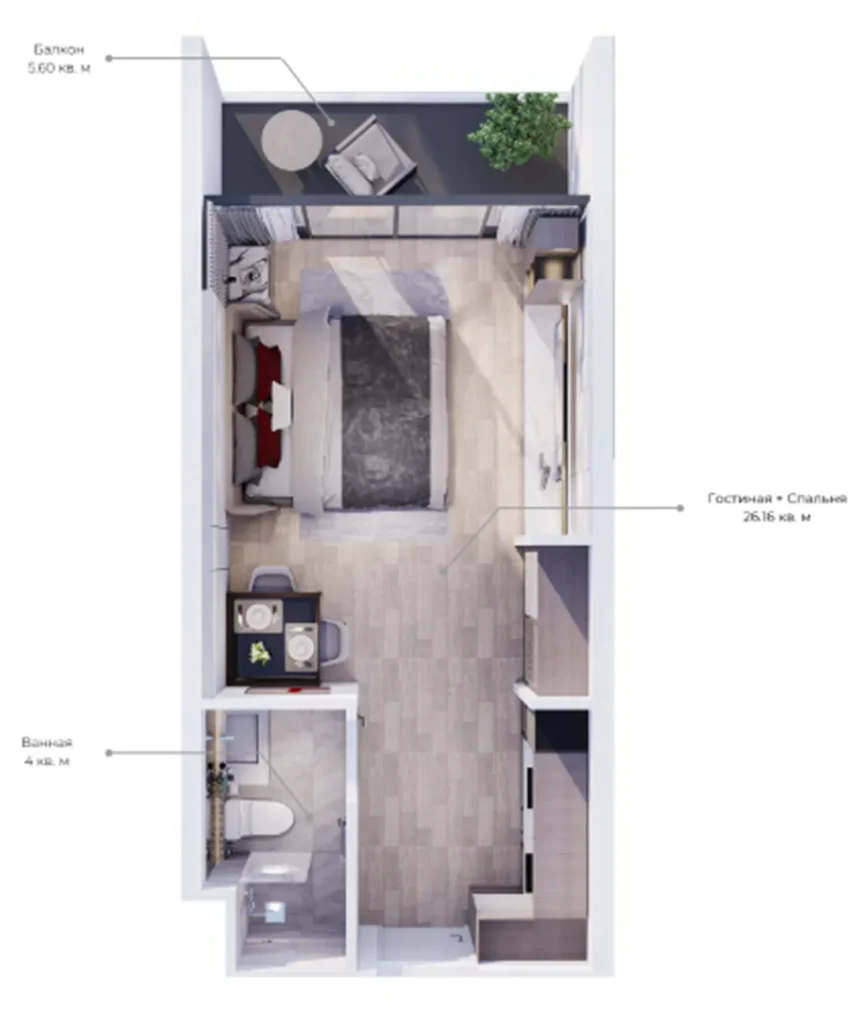
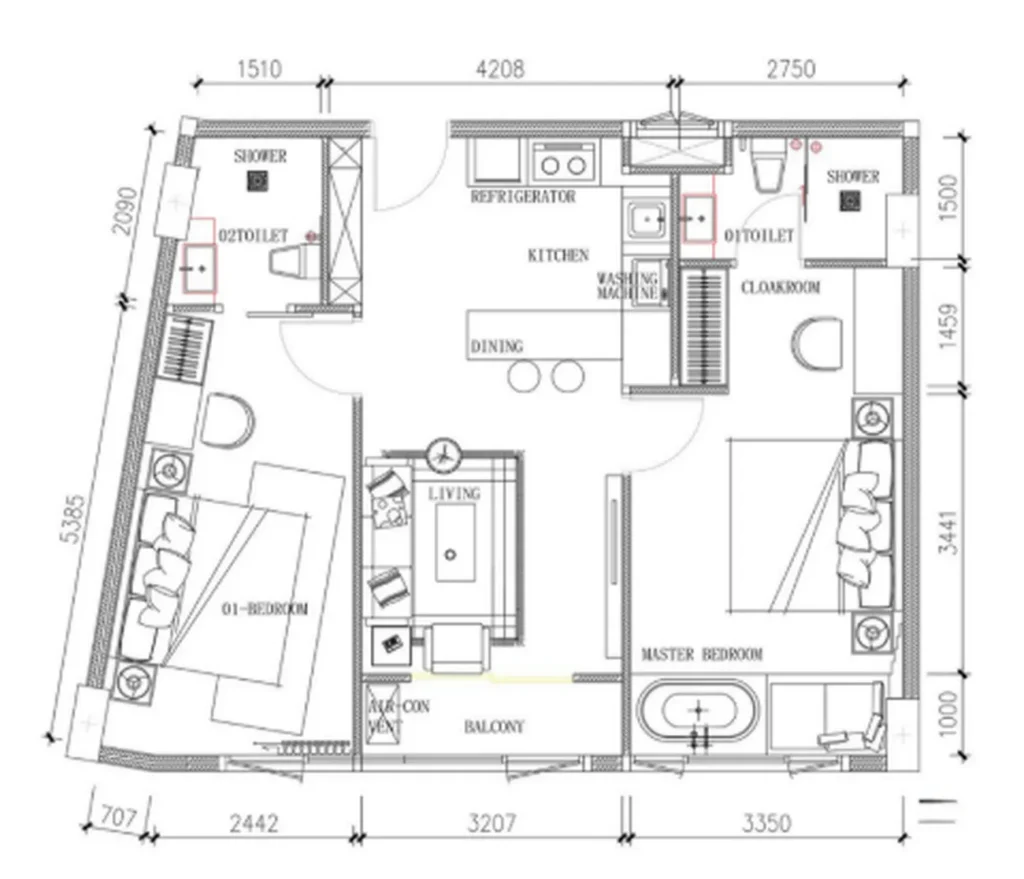
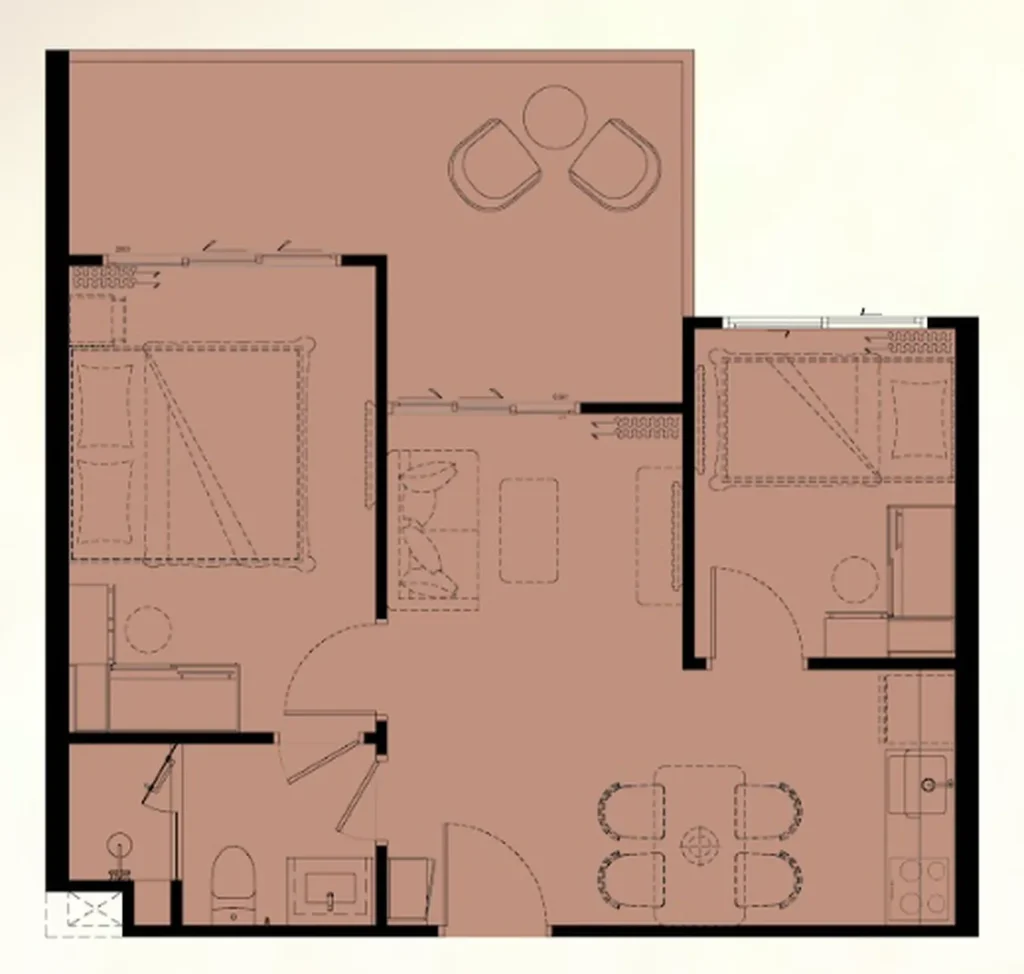
 LOVE IT Wongamat Beach


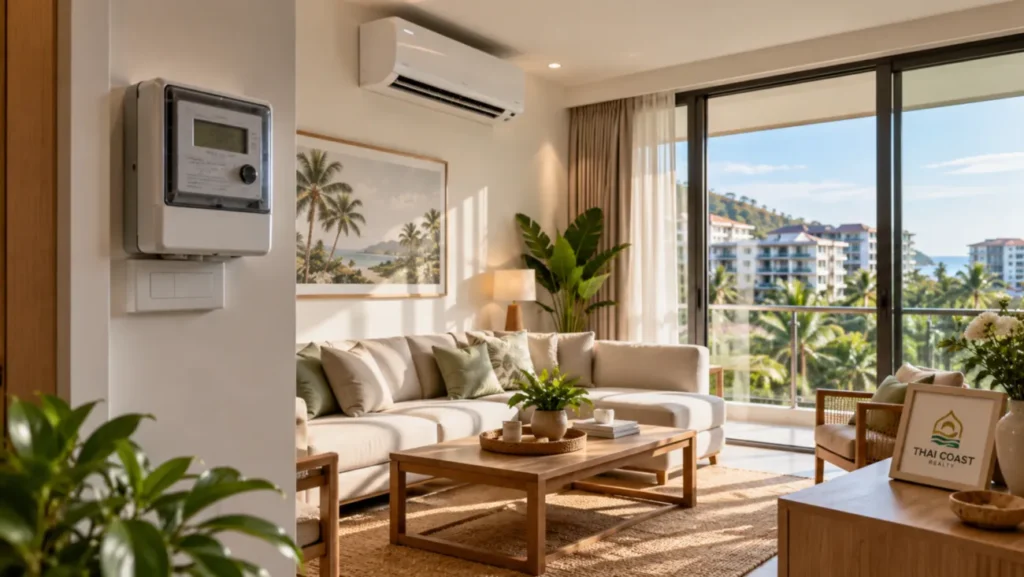
Electricity and Air Conditioning
How the bill is calculated
Electricity is the most unpredictable expense, especially if you have an air conditioner running in your apartment. The bill consists of several components, and understanding each one helps explain why the final amount is often surprising.
PEA (Provincial Electricity Authority) Bill Breakdown — a provider serving most regions of Thailand outside of Bangkok. Rates are valid for the corresponding residential service category; before calculating your actual bill, you should verify your service category and the provider’s current terms and conditions.
- Electricity Component of the Rate — a progressive rate schedule. Starting in September 2026, for PEA residential connections in category 1.1.2 and MEA categories 1.2 The following electricity rates apply. To determine whether these rates apply to a specific apartment, you must check the connection category listed on the supplier’s bill:
- First 200 kWh: 3.0000 baht/kWh
- From 201 to 400 kWh: 4.1584 baht/kWh
- Over 400 kWh: 4.3583 baht/kWh
- Service Fee — 24.62 baht/month (Category 1.2 according to the ERC rate schedule).
- Ft (Fuel Adjustment Charge) — an adjustment factor reviewed by the ERC every four months. For the period from September through December 2026, Ft is 0.1623 baht/kWh. Ft is a surcharge added to the tariff rate, not a separate tariff.
- VAT 7% — is calculated based on the sum of all components.
Where to check current rates
Electricity rates in Thailand are subject to change, so you should check the current rate category and billing period before calculating your expenses.
- PEA — Official Information on Rates. This page also includes the rate structure effective as of September 2026.
- PEA — Explanation of Changes to Household Rates in 2026.
- ERC — History and Current Values (Ft).
From September through December 2026, the Ft rate is 16.23 satang, or 0.1623 baht/kWh. For residential PEA Category 1.1.2 connections, the rates are 3.0000, 4.1584, and 4.3583 baht/kWh. These rates apply to the electricity component only, not to the total bill amount.
If an apartment receives electricity through the condominium's internal billing system, the calculation based on the published PEA residential rate may not necessarily match the complex's bill.
In Bangkok and the surrounding areas, electricity is supplied by the MEA (Metropolitan Electricity Authority). Both providers operate under a regulated rate system, but the specific calculation depends on the connection category. Current rates should be checked on the official website PEA or MEA; rates are reviewed periodically.
Estimated calculation for 200 kWh (PEA 1.1.2 / MEA 1.2, Ft Sep–Dec 2026):
- Energy: 200 × 3.0000 = 600.00 baht
- Service fee: 24.62 baht
- Ft: 200 × 0.1623 = 32.46 baht
- Total before tax: 657.08 baht
- VAT 7%: 46.00 baht
- Total: ~703 baht
Estimated calculation for 400 kWh:
- Energy: 200 × 3.0000 + 200 × 4.1584 = 600.00 + 831.68 = 1,431.68 baht
- Service fee: 24.62 baht
- Ft: 400 × 0.1623 = 64.92 baht
- Total before tax: 1,521.22 baht
- VAT 7%: 106.49 baht
- Total: ~1,628 baht
These calculations are a mathematical illustration, not a guarantee of the actual bill amount. Many condominiums charge internal accounts Through a legal entity: The management organization receives a single bill from the supplier for the entire building and then allocates the cost to individual apartments using submeters. If electricity is billed through a condominium legal entity, the rate per kWh may differ from a direct residential bill from PEA or MEA. When verifying the bill, it is necessary to determine the rate category of the main connection, the method of allocating consumption, the presence of additional charges, and their legal basis. The mere existence of an internal bill does not confirm the legality of any additional surcharge.
When you divide the total payment amount by the number of kWh listed on the bill, you get effective rate, rather than the base rate. This is important when comparing bills from different periods.
An electricity bill from a condominium is not the same as a direct bill from PEA or MEA. The source, connection category, and billing method are important for verifying the rate.
How much power does the air conditioner use?
An air conditioner is the main source of electricity consumption in a Thai apartment. For a preliminary estimate: power (kW) × hours of operation per day × number of days. For example, a 1.5-metric-ton cooling unit with a rated power consumption of ~1.5–2.0 kW, operating 10 hours a day, results in 15–20 kWh/day, or 450–600 kWh per month.
An inverter air conditioner adjusts the compressor’s power output based on the cooling load, so average power consumption may be lower than the calculated value based on the rated power. The result depends on the set temperature, sunlight exposure, the apartment’s orientation, the floor level, wall insulation, and the number of units in operation. When choosing a model, compare the energy efficiency ratings (EER or COP) rather than just the nominal cooling capacity.
Water, Internet, and Other Services
Water In many condominiums, payments are made through the condominium’s legal entity: the management company receives an invoice from the utility provider—PWA (Provincial Waterworks Authority) outside Bangkok or the MWA in the capital—and then allocates the costs among the apartments based on the readings of individual meters.
PWA applies rates that vary by region, connection category, and consumption volume; separate regional groups are established for certain areas, including Phuket and Samui. Within a condominium, owners may be billed based on a submeter, and the calculation may not necessarily match the direct bill from PWA. Before purchasing, it is advisable to request the rate for the specific building and examples of actual charges.
On Koh Samui, Phuket, and in a number of resort areas, some complexes use their own wells or water supply systems—in such cases, the cost and quality of water may differ significantly from standard municipal conditions.
Typical consumption: studio apartment—3–6 m³/month; apartment for a couple—10–15 m³/month. With municipal rates, water is rarely the biggest expense, but in the event of unexpected leaks, the bill can rise without you even noticing.
Internet In most complexes, internet service is set up through a separate contract with the provider. The cost depends on the plan and the provider; some complexes include internet in the CAM fee—in which case there is no separate bill. It’s worth clarifying this before you buy: there’s no need to overpay for a second connection.
Other recurring expenses: Air conditioner cleaning—the cost depends on the city, the type of equipment, and the number of units; check with service companies for details; trash removal (if not included in the CAM); parking fees in some complexes—listed as a separate item. Daily apartment cleaning, dry cleaning, and laundry—these are optional services and are not included in the mandatory utility payments.
Reserve Fund and Additional Fees
Sinking fund — this isn't a monthly payment, but lump-sum payment, which is typically paid when purchasing an apartment in a new condominium. The funds go into a reserve fund to finance major repairs: replacement of elevators, the roof, the facade, and utility systems. Subsequently, the fund may be replenished through additional fees, if provided for by the rules and relevant decisions of the authorized management bodies.
No refund is given upon sale; when reselling a pre-owned apartment, practices vary: some complexes require a new payment from the buyer, while others do not. This must be verified in the rules of the specific legal entity.
The typical down payment ranges from approximately 200 to 700 baht per square meter, depending on the building’s class and policies. Example: assuming 500 baht per square meter for a 45-square-meter apartment— 22,500 baht as a lump-sum payment. Do not confuse this amount with the monthly CAM: they relate to different obligations.
If the accumulated reserve fund is insufficient to cover the necessary work, the general meeting of owners may decide to special assessment — an additional special-purpose fee. Major repairs to elevators, the roof, or building systems may require significant expenses; the amount depends on the building’s technical condition and the cost estimate for the specific work. The expenses are allocated proportionally among the owners.
A low monthly CAM with a nearly empty reserve fund is a warning sign: additional repair fees may be required in the future.
When making a purchase, it’s worth finding out: what the fund’s balance is, whether special assessments were discussed at recent meetings, and how worn out the building’s main equipment is.
How much money will I need when I get an apartment?
When purchasing a new-construction property in Thailand, the owner may be required to pay not only the cost of the apartment and the fees for registering the title, but also the initial fees for the condominium itself.
Let's consider a hypothetical apartment with an area of 45 m², where the CAM is set at 60 baht/m² per month and the initial sinking fund is 500 baht/m².
| Payment | Calculation | Amount |
|---|---|---|
| Sinking fund | 45 × 500 baht | 22,500 baht |
| CAM in Its First Year | 45 × 60 × 12 months | 32,400 baht |
| Total Initial Payments to the Complex | 54,900 baht | |
| Connection, installation, or re-registration of meters | Based on the documents for a specific project | In addition, if provided for |
| Registration Fees and Taxes on Purchase | Under the terms of the transaction | Not included |
In this example, the buyer must set aside 54,900 baht for the sinking fund and the annual CAM prepayment. This is not an additional second year of CAM: the 32,400 baht already covers the first 12 months of maintenance, if such a period is specified in the contract.
If the complex collects CAM six months in advance, the advance payment under the same terms will be 16,200 baht instead of 32,400 baht. When purchasing a resale property, the initial contribution to the sinking fund may not be collected again.
Before making a payment, you should request from the developer or legal entity a written list of payments due as of the date of apartment transfer, the period for which the CAM has been paid, and confirmation of what is already included in the contract price.
Find out the total cost of buying an apartment in Thailand
The cost of an apartment is only part of the expenses. When choosing an apartment, it’s important to consider CAM, the sinking fund, the advance payment for maintenance, and closing costs.
Take a short quiz to get a selection of properties based on your budget, city, and reason for buying.
Find an apartment that fits your budget
Pattaya, Koh Samui, Bangkok, Phuket
Comparing regions helps explain where the differences come from—but the final cost is determined by the specific project, not just the city. A full-service resort condominium in Pattaya may cost more than a basic residential complex in Bangkok.
Comparison of Regions by Key Indicators
| Indicator | Pattaya | Samui | Bangkok | Phuket |
|---|---|---|---|---|
| CAM benchmark, baht/m²/month | 30–80+ | 50–100+ | 50–120+ | 60–120+ |
| Electricity Provider | PEA | PEA | MEA | PEA |
| Water Supply | PWA, sometimes private schemes | Private systems; quality varies | MWA | PWA + custom features in a number of projects |
| Distinctive Infrastructure | Diverse: Old and New Collections | Small resort complexes | High-Rise Urban Buildings | Resort Projects with Large Pools |
| What to Check First | Age of the building, condition of the building stock | Water source, autonomy | Connection category, administrative expenses | Seasonal demand, service cost |
The CAM ranges listed here are approximate examples, not the results of a representative study. The rate for a specific property must be confirmed by a current notice or documents from the management organization.
Pattaya. The market is diverse: buildings from the late 1990s with minimal amenities stand side by side with modern complexes offering full infrastructure. CAM in budget projects starts at 30–40 baht/m²/month, while in serviced apartment complexes it can exceed 80–100 baht/m²/month. The age of the building affects the condition of its utility systems and, consequently, the likelihood of special assessments in the future.
Koh Samui. Island conditions have an impact: centralized utility networks are less developed, and some complexes rely on their own wells. This can affect water quality and maintenance costs. The range of infrastructure, the technical complexity of the building, and the organization of maintenance services can all increase CAM. Before purchasing, it’s worth clarifying exactly how the water supply system is set up in a specific building and comparing rates based on project documents.
Bangkok. High-rise condominiums with concierge services, coworking spaces, and multiple swimming pools incur high management costs. MEA is the electricity provider for the capital and surrounding areas; the specific bill amount depends on the building’s connection category. The range of infrastructure, the building’s technical complexity, and the maintenance arrangements can increase CAM. The actual rate must be compared based on the documentation for specific projects.
Phuket. Resort complexes with multiple pools, gardens, and perimeter security incur high operating costs, which are directly reflected in the CAM rate. A number of projects are characterized by pronounced seasonality: during the off-season, maintenance continues even with fewer residents, which does not reduce the CAM. Technical maintenance of resort-level facilities is more expensive than that of standard urban housing.
Conclusion: The city sets the context, not the sum. The building's class, year of construction, infrastructure, and quality of management have a greater impact on expenses than the city in which it is located.
Compare not only apartment prices, but also the cost of maintaining them
Two apartments with the same square footage may have different CAM rates, prepayment terms, and additional fees.
Please specify the city, your budget, and the purpose of your purchase—we'll help you find suitable properties and determine their operating costs.
Check out condominiums in Thailand
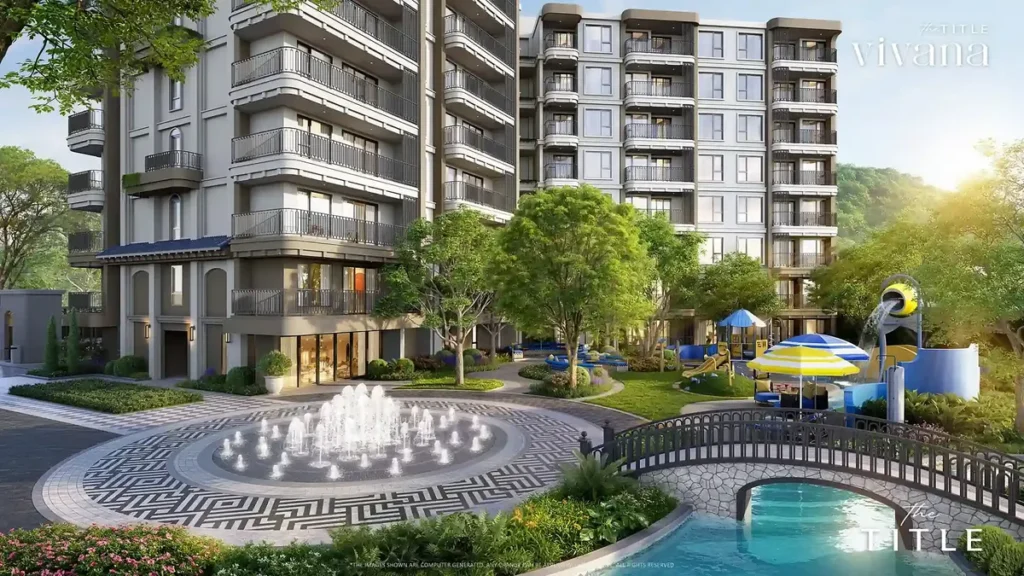


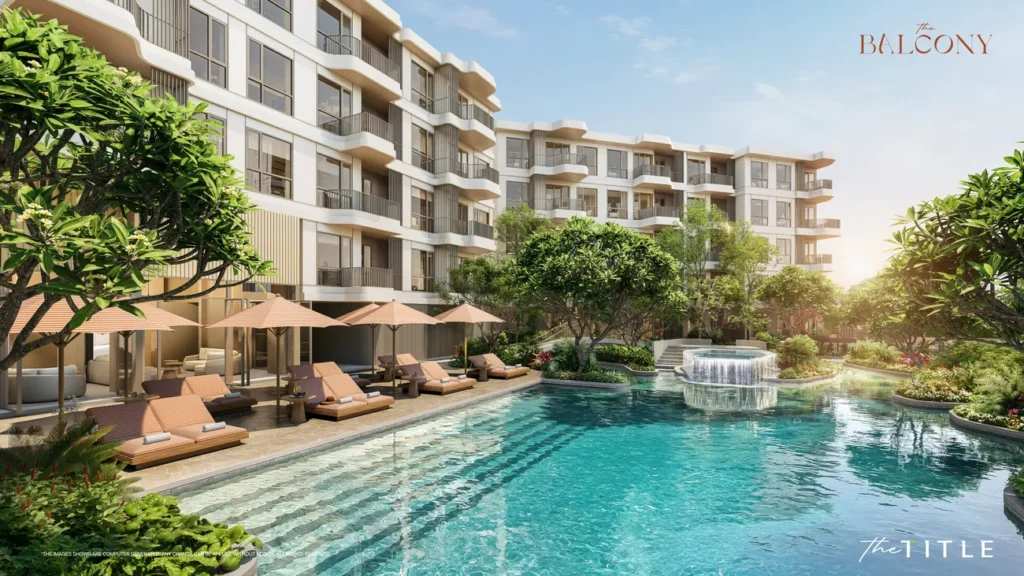
 Phuket, Rawai
 from 30m²

Examples of Monthly and Annual Expenses
The three hypothetical scenarios are based on the same methodology. Electricity is calculated using the residential rates PEA 1.1.2 / MEA 1.2, effective as of September 2026, at Ft 0.1623 baht/kWh and VAT 7%. Water is calculated at a hypothetical internal condominium rate of ~12 baht/m³ (for scenario purposes only). CAM rates are illustrative. Actual amounts depend on the specific project, time period, and the juristic person’s tariff policy.
Three hypothetical scenarios: a month and a year
| String | A: 30 m² studio, moderately | B: 45 m², permanent, two people | Area: 60 m², high-intensity AC |
|---|---|---|---|
| CAM rate, baht/m²/month | 50 | 60 | 70 |
| CAM per month | 1 500 | 2 700 | 4 200 |
| Electricity, kWh/month | 200 | 380 | 550 |
| Electricity bill | ~703 | ~1 535 | ~2 353 |
| Water, m³/month | 5 | 12 | 20 |
| Water bill | ~60 | ~144 | ~240 |
| Internet | 500 | 500 | 600 |
| Total per month | ~2 763 | ~4 879 | ~7 393 |
| Total per year | ~33 156 | ~58 548 | ~88 716 |
| Reserve for apartment repairs (optional) | - | ~500–1,000 | ~1,000–2,000 |
A repair reserve fund is a personal decision made by the owner, not a mandatory payment.
Assumptions and calculations of electricity consumption by scenario:
Scenario A — 200 kWh: 200 × 3.0000 = 600.00 + service fee 24.62 + Ft 32.46 = 657.08 + VAT 7% = ~703 baht/month.
Scenario B — 380 kWh: 200 × 3.0000 + 180 × 4.1584 = 600.00 + 748.51 = 1,348.51 + 24.62 + 61.67 = 1,434.80 + VAT 7% = ~1,535 baht/month.
Scenario B — 550 kWh: 200 × 3.0000 + 200 × 4.1584 + 150 × 4.3583 = 600.00 + 831.68 + 653.75 = 2,085.43 + 24.62 + 89.27 = 2,199.32 + VAT 7% = ~2,353 baht/month.
All three amounts are calculated based on the selected residential rate model (PEA 1.1.2 / MEA 1.2), effective from September through December 2026, and do not replace a review of the condominium’s actual rate.
Formula for the owner's annual recurring expenses:
Annual expenses = Annual CAM + Annual electricity + Annual water + Annual internet
 + Other actual recurring payments
In the year of purchase, any initial contribution to the sinking fund is also taken into account, if provided for in the project terms. Any additional fees for major repairs are calculated separately based on decisions approved by the legal entity. The owner’s personal reserve for future expenses is not a mandatory payment to the complex.
How CAM Affects Expenses Over Five Years
Suppose a buyer is choosing between two apartments of the same size—45 m². The purchase price and the amount of electricity consumed by the owner are the same, but the CAM rates differ.
| Indicator | Complex A | Complex B |
|---|---|---|
| Apartment size | 45 m² | 45 m² |
| CAM, bat/m²/month | 45 | 90 |
| CAM per month | 2,025 baht | 4,050 baht |
| CAM for the Year | 24,300 baht | 48,600 baht |
| CAM Over 5 Years | 121,500 baht | 243,000 baht |
| The difference over 5 years | - | +121,500 baht |
The calculation assumes that CAM rates will remain constant for five years and does not take into account inflation, additional fees, or changes to the complex's rules.
Thus, assuming the apartments cost the same, the difference in maintenance costs alone over five years could amount to 121,500 baht.
However, it is incorrect to choose a project based solely on the lowest CAM. You need to weigh this difference against the condition of the building, the infrastructure, the quality of management, and the adequacy of the reserve fund.
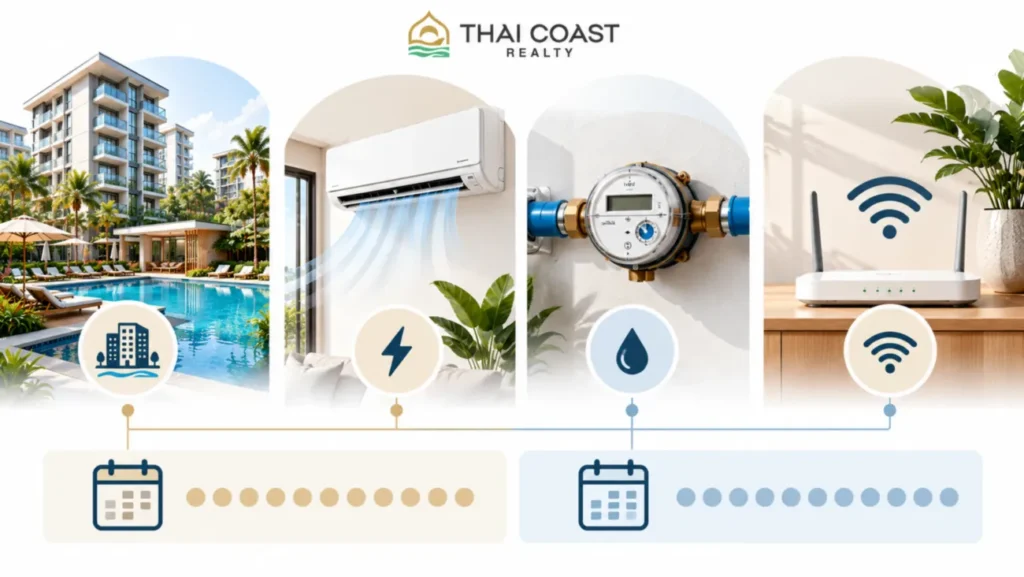
If the apartment is vacant
CAM, as a rule, continues to be charged even when the apartment is vacant: Maintenance of common property does not depend on the tenant’s presence. Expenses are allocated among the co-owners in accordance with Thailand’s Condominium Act and the complex’s registered rules. In practice, the rate is often calculated per square meter of the apartment’s floor area; however, the legal basis for the calculation should be verified in the documents specific to that building.
If consumption is zero, there is no variable portion of the electricity and water bill; however, service, minimum, or contractual fees may still apply according to the rules of the specific complex. It’s a good idea to check the terms with the property management company before purchasing. Internet: If the contract is active, billing continues; if the provider allows you to suspend service, you can save money.
In addition to CAM, the actual expenses incurred by a vacant property owner include: Periodic air conditioning of the apartment to prevent mold and odors; routine inspections of plumbing; prompt repair of leaks; and, if necessary, property insurance. These aren’t utility bills in the strict sense, but practical costs associated with maintaining a home. Read more about the total cost of ownership in this article "How Much Does It Cost to Maintain a Property in Thailand?".
How much does an apartment cost if you only come for two months a year?
Let's take a 45-square-meter apartment with a CAM of 60 baht per square meter per month. The owner lives there for two months a year, and it stands empty for the remaining ten months.
| Consumption | Condition | Total for the year |
|---|---|---|
| CAM | 2,700 × 12 | 32,400 baht |
| Electricity Bills for the Months of Residence | 1,535 × 2 | 3,070 baht |
| Water during the months of residence | 144 × 2 | 288 baht |
| Internet | 500 × 12, unless the contract has been suspended | 6,000 baht |
| Total for the selected model | 41,758 baht |
This is a hypothetical minimum budget based on the selected categories, not a projection of the actual cost of ownership. It assumes zero water and electricity consumption during the ten-month period of absence and does not include potential fixed charges, ventilation, periodic air conditioning, inspections, insurance, repairs, and other expenses.
Even if the owner lives there for only two months, they still have to pay CAM for the entire year. That is why, when purchasing a home for seasonal use, it is important to calculate the annual budget, rather than just the cost of utilities during the months you are on vacation.
How to Pay Utility Bills While Abroad
If an apartment is used seasonally or rented out, it is important for the owner to arrange for utility payments in advance without having to be present in person. The method depends on who issues the bill: a government utility provider or the condominium’s legal entity.
Procedure:
- Please specify which invoices are issued directly by the PEA or MEA, and which are issued through a legal entity.
- Get your account number, the contact information for the managing office, and payment instructions for each service.
- Ask if the supplier accepts payment through a banking app, an official online channel, or another available method.
- If CAM is paid annually, make a note of the date of the next payment and request a notification with the amount in advance.
- If you're renting out an apartment, specify in the lease agreement who is responsible for paying for electricity, water, and internet, and what meter readings are recorded at the time of move-in.
- Save your electronic receipts and periodically request a statement of account from the legal entity.
You should not automatically assume that any foreign bank card will be accepted for payment. You must check with the specific provider to confirm the available payment methods and requirements for the payment instrument.
In the event of a prolonged absence, the owner may arrange with the management company to receive notifications via email or through the complex’s official communication channel.
If you're renting out an apartment
When long-term lease The standard practice is as follows: the tenant pays for electricity and water based on their own consumption, while the landlord covers the CAM. This is a common arrangement, not a legal requirement—the specific terms are set forth in the lease agreement.
Who Usually Pays What When Renting?
| Payment | Long-term lease | Short-term rental (daily) |
|---|---|---|
| CAM | Owner | Owner |
| Electricity | Tenant (under the lease agreement) | Owner (included in the price) |
| Water | Tenant (under the lease agreement) | Owner (included in the price) |
| Internet | Under the contract | Owner |
| Obligation to a legal entity | Owner | Owner |
The owner's obligation to pay common expenses to the condominium legal entity remains in effect regardless of any agreement with the tenant. Other individual payments are allocated in accordance with the terms of the contracts and the connection rules.
Required steps upon check-in and check-out: record the submeter readings (photo with date and time), specify the rate per kWh and m³ in the contract. In the case of internal billing by the condominium, the tenant must know the applicable rate in advance.
How CAM Affects Returns. If an apartment is rented out for 12,000 baht per month and the CAM is 2,700 baht per month, with full occupancy, after deducting only the CAM, 9,300 baht per month remains—or 111,600 baht per year. With two months of vacancy, the rental income amounts to 120,000 baht over ten months, while the CAM for the full year is 32,400 baht. The difference is— 87,600 baht per year, before taxes, agent commissions, repairs, and other owner expenses. This figure does not represent net profit or return on investment. For more details on the rental financial model, see the article "Renting Out an Apartment in Thailand on a Daily Basis".
Verifying Payments Before Purchase
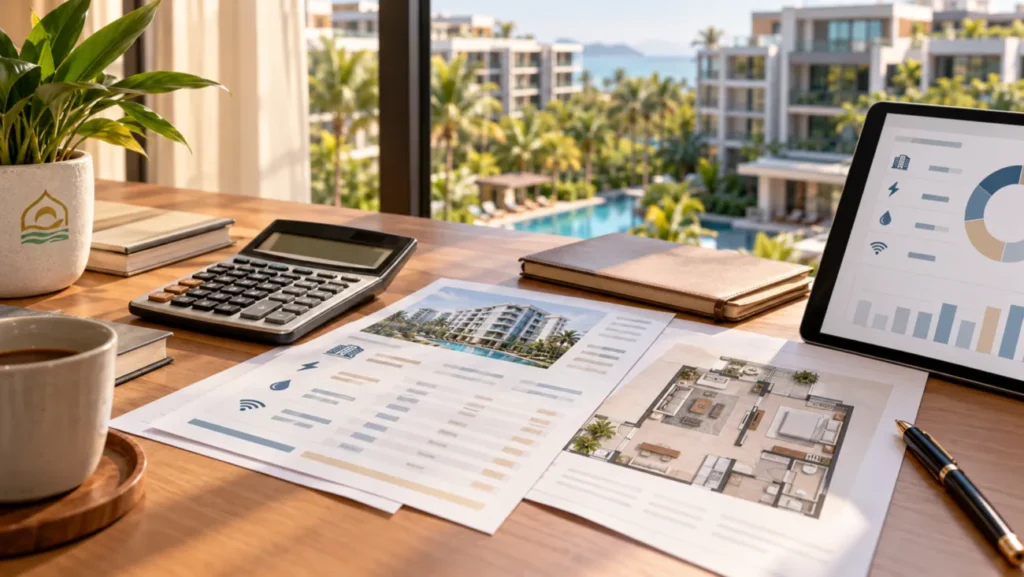
Before signing a purchase agreement, request the following documents and information from the seller or legal entity. This is part of the comprehensive audit described in the guide to real estate due diligence.
Essential Checks Before Making a Purchase
- Current CAM Rate — specifying the time period and unit of measurement (bat/m²/month or bat/m²/year; this is important).
- Receipts for the past 6–12 months — electricity, water, CAM; make sure there are no outstanding bills.
- Approved Budget for the Complex for the current year and, if available, for the next year.
- Certification of No Outstanding General Expenses — a debt-free certificate issued by the condominium’s legal entity. The Thai Condominium Act requires this certificate for the registration of the transfer of ownership of a unit. The buyer should verify in advance whether the seller has any outstanding debts and whether the certificate can be issued in a timely manner.
- Reserve Fund Balance and the minutes of general meetings from the past 2–3 years: whether a special assessment or major repairs were discussed.
- Rules for Legal Entities — billing procedures, penalties, rental rules, and building access policies.
- Water and Electricity Billing Schedule — the supplier’s direct invoice or an internal invoice; connection category. If there are additional charges on the internal invoice, request a written explanation and supporting documentation.
- Charges for an Unoccupied Apartment — Whether there are minimum or subscription fees, and the amount of those fees.
- Complete List of Paid Services — parking, storage, cleaning services.
Would you like to estimate the costs before buying an apartment?
When selecting a property, it is important to find out in advance the CAM rate, the amount of the sinking fund, the billing procedure, and any possible additional fees.
Take the quiz to find apartment options in Thailand that match your requirements and your planned living expenses.
How to Check Your Electricity Bill: An Example
Suppose the receipt from the condominium legal entity states:
| Indicator | Meaning |
|---|---|
| Previous meter reading | 8,250 kWh |
| Current reading | 8,630 kWh |
| Monthly Expenses | 380 kWh |
| Charged for electricity | 2,280 baht |
| Effective rate | 6.00 baht/kWh |
| Calculation based on the illustrative household model from the article | About 1,535 baht |
| The Difference | About 745 baht |
In this example, the condominium’s internal bill is higher than the calculation based on the selected residential rate. However, this discrepancy alone does not prove a violation: the building’s main service connection may fall under a different rate category, and the internal bill may include additional charges.
The buyer or owner must request from the legal entity information regarding the main service connection category, a detailed bill, the rules for allocating expenses among the apartments, and the basis for any additional charges.
After that, you can compare the charges with the relevant supplier's documents and the complex's rules.
Note: The amounts of 2,280 and 6.00 baht are used solely as an illustrative example of a receipt and do not represent a confirmed rate for a specific building.
What to Do If You Receive a Suspicious Receipt:
- Request a breakdown of your bill—including the time period, the number of kWh or m³, the applicable rate, the service charge, and the Ft—listed separately.
- Compare the submeter readings at the beginning and end of the period—they should match the specified consumption.
- Compare the calculation with the rate for the relevant provider and connection category. If there are additional charges on the internal bill, request a written explanation and supporting documentation.
- Check to see if the consumption from a neighboring unit has been included in the bill by mistake (this can happen when submeter numbers are changed).
- If the discrepancy is confirmed, contact the legal office with a written calculation and request a reconciliation statement or a recalculation.
What payments should you check when transferring ownership of an apartment?
Before signing the acceptance certificate or finalizing the transfer of the apartment from the developer, clarify these five financial issues.
| What to Check | What kind of confirmation should I get? |
|---|---|
| Initial sinking fund | Amount, basis for calculation, proof of payment |
| Prepaid CAM | Rate, billing period, and next payment date |
| Electricity and Water Meters | Meter numbers, initial readings, connection status |
| Additional connection fees | Breakdown of Payments, Contractual Basis |
| Contact a legal entity | Payment Information and Instructions for Obtaining Receipts |
Be sure to check separately whether any amounts already paid under the purchase agreement are duplicated on the final bill. Keep the receipts for the initial payments along with the documents for the apartment.
This inspection does not replace the legal acceptance and registration of ownership, but it helps avoid disputes over utility bills during the first month of ownership.
How to Reduce Expenses
Lower utility bills are the result of concrete actions, not some magical percentage.
Practical Measures
- Air conditioner with a high inverter rating — when purchasing or replacing a unit. Over the long term, the difference in energy consumption between an inefficient model and a modern one is significant.
- Regular Filter Cleaning — once every 4–8 weeks in a tropical climate. A dirty filter increases energy consumption without improving cooling performance.
- Set temperature: 25–26 °C Instead of 18–20 °C: every degree increase reduces the load on the compressor.
- Leak Detection — A faucet or toilet that drips slowly can imperceptibly add several cubic meters to your water bill.
- Internet — When you buy it, check to see if it's included in the CAM. There's no point in setting up a duplicate connection.
- Estimating the Cost of a Building Before Purchase — Under comparable conditions, a sufficient reserve fund and a transparent budget reduce the risk of unexpected additional charges, although they do not in and of themselves guarantee a lower total cost of ownership.
- Monitoring Submeter Readings When a tenant moves out, this protects you from other people's debts and billing errors.
You cannot unilaterally refuse to pay the mandatory CAM. Delays in payment may result in additional charges, and if the debt is six months or more overdue, Section 18/1 of the Condominium Act allows for restrictions on the use of certain common services and property in accordance with the complex’s rules, as well as restrictions on voting rights at general meetings.
What Property Owners Should Keep in Mind
Utility costs in a Thai condominium aren't just one line item in the budget—they're at least four: Fixed CAM, variable utility bills (electricity and water), internet, and periodic contributions toward major repairs. Each one is calculated according to its own logic and changes independently.
Four things to check for any property before purchasing: the current CAM rate and its history over the past few years; the billing structure for individual submeters—whether direct or internal—and its legal status; advance payment terms; the balance of the reserve fund; and the existence of any special assessments under discussion.
Ask the seller or the condominium's legal entity written confirmation of current rates and the calculation method. Access to certain internal documents depends on the applicant's status and the complex's rules, so it's best to request them well in advance.
Thaicost helps clients compare properties in Pattaya, Bangkok, Koh Samui, and Phuket, taking into account not only the price per square meter but also the actual operating costs of the complex—as part of a comprehensive analysis of the purchase. For more information on taxes and fees involved in closing a transaction, see the article "Taxes and Fees When Buying Real Estate in Thailand".
 Real estate in Georgia
 Real estate in Cyprus
 Real estate in UAE
 Real estate in Bali
 Real estate in Montenegro
 Real Estate in Spain
 Real Estate in Saudi Arabia
 Real Estate in Turkey
 Real Estate in Zanzibar
 +66 98 432 7651
 hello@thaicost.com
 Boat Lagoon Marina, 22/1 Moo 2, Thepkasattri Rd, Koh Kaew, Phuket 83000, Thailand



 Get TOP-7 catalog of objects