
 +66 98 432 7651


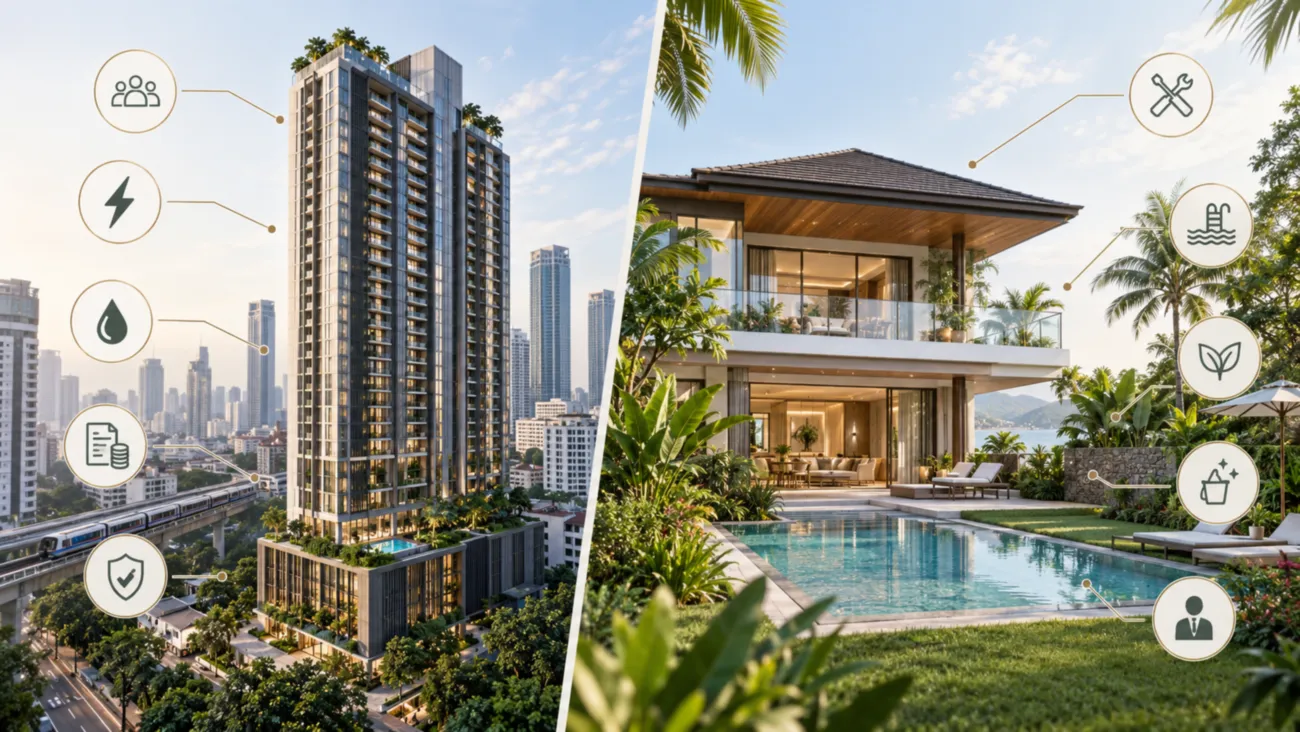
The purchase price of the property is just the first item on the owner’s budget. Once the contract is signed, another list begins: monthly fees for building maintenance, utility bills, technical inspections, insurance, periodic repairs, and taxes. For many buyers, this list comes as an unpleasant surprise—not because the expenses are enormous, but because no one explained them in advance.
An apartment in a condominium and a villa with a private pool represent fundamentally different cost structures. In the first case, the complex’s management company handles most of the maintenance, and you pay a single monthly fee. In the second case, each expense is billed separately: the pool, the garden, security, technical maintenance of utility systems, and cleaning. The difference in cost can be several times greater—but that doesn’t mean one is always cheaper than the other.
Expenses also depend heavily on the specific project and on how you use the property: whether you live there year-round, visit seasonally, or rent it out. Therefore, there is no one-size-fits-all figure for “maintenance costs in Thailand amount to X baht per month.”
This article will outline the breakdown of expenses for different types of real estate, provide approximate ranges by month and year, compare four key regions, and offer a practical step-by-step guide for calculating a budget before making a purchase.
How Much to Budget for Living Expenses: A Quick Answer
For a preliminary budget, you can use the following scenarios as a guide:
| Object | Monthly target | Annual benchmark |
|---|---|---|
| Studio, 25–35 m² | 3,000–6,000 THB | 36,000–72,000 THB |
| Apartment, 50–70 m² | 6,000–12,000 THB | 72,000–145,000 THB |
| Luxury apartment, 80–120 m² | 12,000–25,000 THB | 145,000–300,000 THB |
| Compact Villa | 15,000–30,000 THB | 180,000–360,000 THB |
| 3–4-Bedroom Villa with a Pool | 30,000–65,000 THB | 360,000–780,000 THB |
| A Large, Luxury Villa | 60,000–150,000+ THB | 720,000–1,800,000+ THB |
These are not average market rates, but rather indicative scenarios. For a specific property, the budget must be recalculated based on the CAM statement, actual utility bills, service contracts, and management terms.
How Much Does It Cost to Maintain a Property: Guidelines by Scenario
In the examples below, the monthly budget ranges from a few thousand baht for a small apartment to tens of thousands or more than 100,000 baht for a large villa with staff and full-service amenities. This is not the market norm: The costs for a specific facility are calculated based on its documentation and invoices—the region, infrastructure mix, and usage scenario can drastically change the final figure.
The numbers in the table below These are not market statistics and are provided solely as illustrative examples of budget structure. To calculate the budget for a specific project, you should request the actual project documents and invoices.
Table 1. What the Budget Consists Of
| Article | Apartment | Villa |
|---|---|---|
| Common Fee / CAM | Usually there is | Maybe in the village |
| Electricity | By consumption | By consumption; usually more equipment |
| Water | By consumption | House + Garden + Pool |
| Internet | According to the provider's rates | According to the provider's rates |
| Private pool | Usually not | Separate expense |
| Private Garden | Usually not | Separate expense |
| Property Maintenance | As needed | This is especially true when the owner is absent |
| Insurance | Depending on your preference/loan terms | Depending on your preference/loan terms |
| Repairs | Inside the apartment | House + On-Site Utilities |
| Land and Buildings Tax | In accordance with the applicable rules | In accordance with the applicable rules |
Apartments in Thailand with Transparent Maintenance Costs
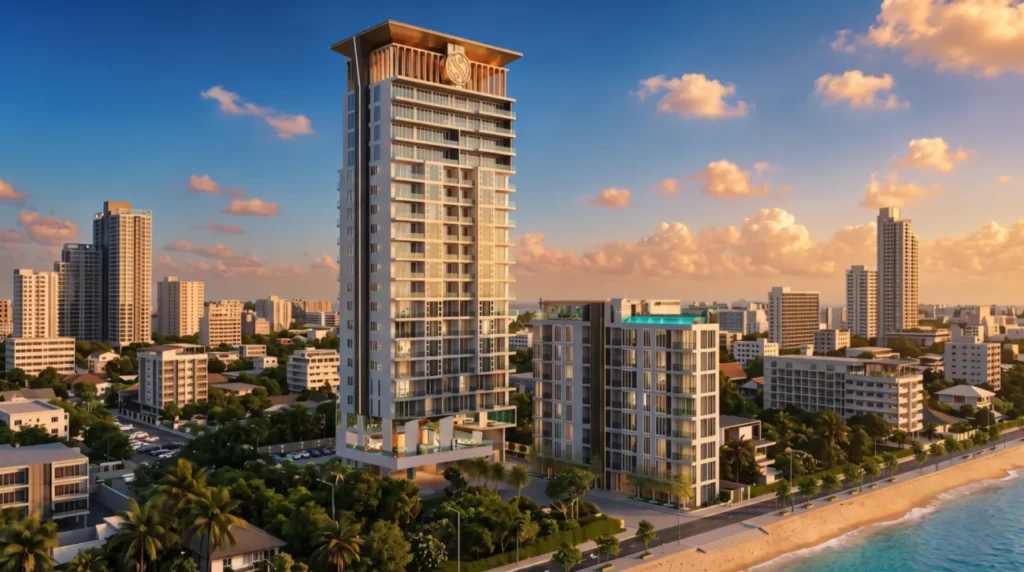

 Pattaya, Pratamnak
 starting at 34.5 m²

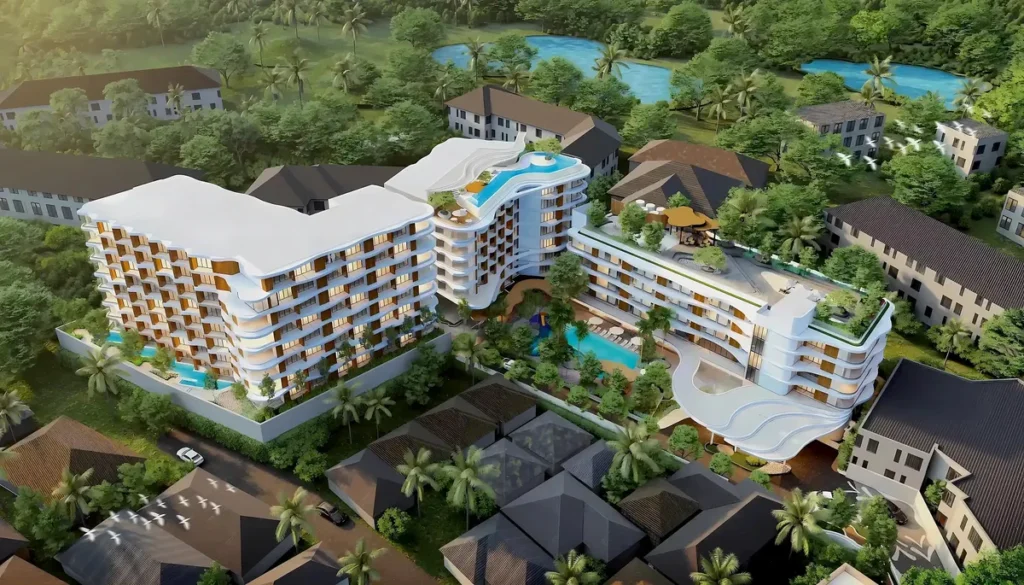

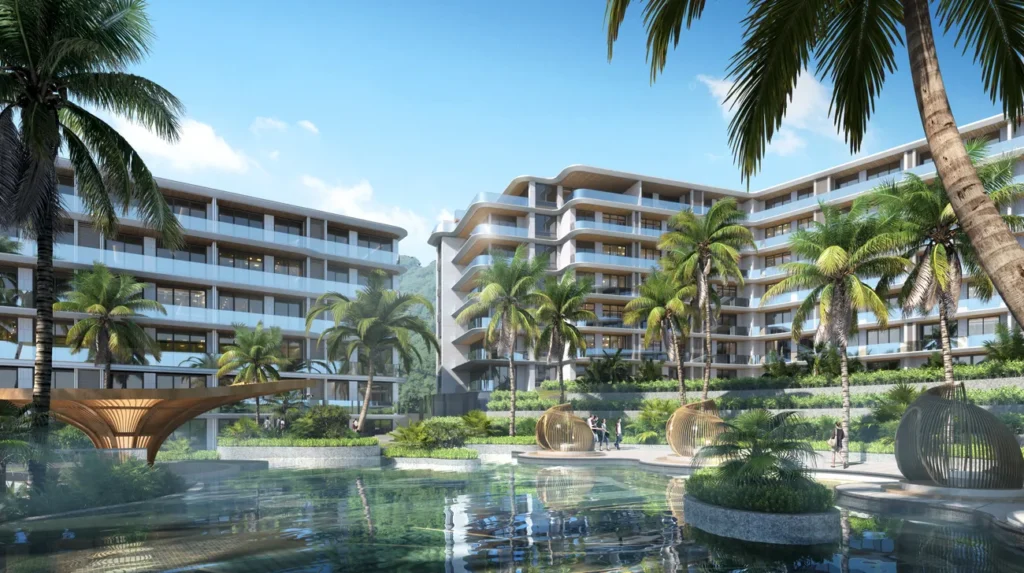 Phuket, Bang Taofrom 43.95m²
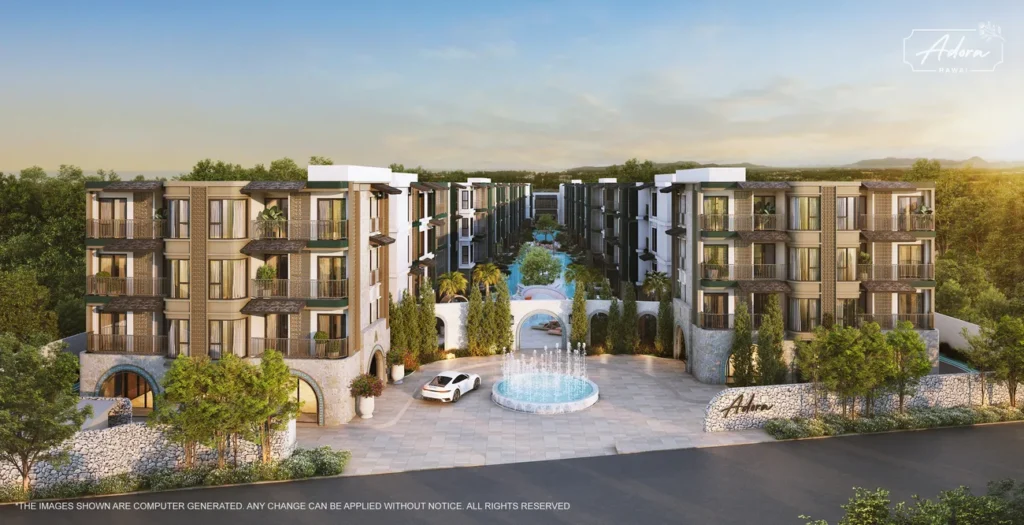 Phuket, Rawaifrom 30m²
Highlights in a Minute
- CAM and sinking fund—fundamentally different payments: The first covers routine maintenance, and the second covers the capital repair reserve.
- A villa has higher individual expenses...unlike an apartment: the pool, garden, and utilities are covered by your personal budget, not the complex's CAM.
- Electricity is one of the most variable expenses: Air conditioning in the tropics can result in significant energy consumption, and the rate charged by the complex may differ from the government-set rate.
- An empty property does not mean zero expenses: Mandatory common expenses remain the same, while insurance, utility, and service charges depend on the property, existing contracts, and the services subscribed to.
- Actual bills for a specific property over several months more useful than any market average.
- The region matters: Bangkok — MEA and city-style condos; Phuket and Koh Samui — villas with individual utility bills; Pattaya — a broad condo market with varying CAM structures.
Not sure whether to choose an apartment or a villa?
Please answer a few questions about your budget, your goals for the purchase, and how long you plan to live there. We’ll find options for you and help you estimate not only the purchase price but also future maintenance costs in advance.
What Makes Up an Owner's Expenses
It is convenient to divide a property owner’s expenses into four categories—they are fundamentally different in nature and behavior.
Regular mandatory — those that do not depend on your presence: CAM/common fee, basic taxes, insurance (if required by the loan terms or project rules), and an Internet service fee if the contract is in the owner's name.
Consumption-dependent — electricity, water, and gas. When the facility is vacant, these costs are minimal but not zero: the meters are still running, and the systems need to be started up periodically to prevent them from deteriorating.
Periodicals — Air conditioner repairs, replacing pool filters, painting, and replacing plumbing fixtures. These aren't paid for every month, but they account for a significant portion of the annual budget.
Expenses Related to Renting Out a Property or a Prolonged Absence — Services provided by a property management company, including property management, cleaning, property inspections, and minor routine repairs. Short-term rentals of condo units—especially daily rentals—may be subject to the Hotel Act and the condominium’s own restrictions. Thai authorities impose penalties for unlicensed daily rentals of apartments; the feasibility of a specific model must be verified before calculating returns and planned management expenses.
It is crucial to distinguish between three different aspects of an object’s life: purchase costs, holding costs, and selling costs — These are three separate expenses, and they shouldn’t be confused. The transfer fee, stamp duty, agent’s commission, and legal fees for the transaction—all of these are one-time expenses associated with the purchase. For more details, see the article on Taxes and Fees When Buying Real Estate in Thailand.
The following charges continue to apply even if you do not live in the property:
- CAM / common fee — the obligation to contribute to common expenses remains; the specific amount and frequency are determined by the condominium’s documents
- Minimum electricity bills (standby loads, refrigerator, security systems)
- Internet subscription fee, if a contract has been signed
- Insurance Policy
- Tax on Land and Buildings (where applicable)
- Pool Maintenance at the Villa — A filled pool that is temporarily not in use still requires circulation, water monitoring, and maintenance
- Property care or security services, if provided
An empty apartment or villa almost never means zero expenses.
What Expenses Are Easy to Overlook
Buyers should check the following items separately:
- parking and additional parking spaces;
- maintenance or rental of a storage room, if provided for;
- additional services provided by the complex that are not included in the common fee;
- garbage collection or municipal fees, if billed separately;
- pest control for a villa;
- maintenance of pumps, tanks, and water supply systems;
- repair and replacement of household appliances;
- expenses incurred by tenants;
- additional fees for legal entities, approved in accordance with established procedures;
- Property inspection during the owner's extended absence.
Maintenance of an Apartment in a Condominium
An apartment owner in a condominium deals with a relatively structured system of expenses. Most of the maintenance of common areas is centralized—which is both a convenience and a limitation.

Common Fee and CAM
A common fee (often referred to as CAM—Common Area Maintenance fee—in business documents) is a fee that co-owners of an apartment pay to the condominium’s legal entity (Juristic Person) toward the general expenses for maintaining the property. The obligation to contribute to these expenses is established by the Condominium Act; the specific amount, frequency of charges, and scope of services are determined by the registered condominium rules and decisions made in accordance with the law. There is no single national rate — The rate is determined for each specific complex.
Market offers typically range from approximately 30–50 THB/m² per month for simpler projects to 80–150+ THB/m² for premium and resort-style complexes. This is not an official rate nor a universal standard: the actual rate is determined by the specific project’s documentation.
The common fee rate is determined by the rules of the specific condominium and its budget. On the market, it is often listed in baht per square meter per month, but the range should be confirmed by the specific project’s documentation. A complex with well-developed amenities—such as a pool, gym, security, and garden—increases the building’s operating expenses, which is reflected in the rate. However, a high CAM rate alone does not guarantee the quality of management; it is important to compare the project’s budget, list of services, and financial statements.
The components of the common fee depend on the specific project. Typically, it includes:
- Security and Access Control System
- Reception and administrative staff
- Cleaning and maintenance of common areas
- Lighting for hallways, lobbies, and outdoor areas
- Pool and gym maintenance (if applicable)
- Garden and Landscaping Maintenance
- Elevator Maintenance
- Maintenance of general building systems (ventilation, fire suppression)
- Administrative and accounting expenses of a legal entity
The scope of services must be verified on a project-by-project basis — The range of expenses covered by the common fee is determined by the documents and budget of the specific condominium; additional services may be paid for separately. This directly affects the actual cost of ownership.
Hypothetical example: a 55 m² apartment with a CAM rate of 60 baht/m² per month → monthly fee of 3,300 baht; annually, approximately 39,600 baht. At a rate of 100 baht/m², the same unit would yield 5,500 baht per month and 66,000 baht per year. This A sample calculation to illustrate the method, rather than the market rate.
How Does CAM Affect an Apartment's Budget?
| Area | 40 THB/m² | 60 THB/m² | 100 THB/m² |
|---|---|---|---|
| 30 m² | 1,200 THB/month | 1,800 THB/month | 3,000 THB/month |
| 50 m² | 2,000 THB/month | 3,000 THB/month | 5,000 THB/month |
| 75 м² | 3,000 THB/month | 4,500 THB/month | 7,500 THB/month |
| 100 m² | 4,000 THB/month | 6,000 THB/month | 10,000 THB/month |
The table shows only the mathematical calculation of the CAM. It does not include electricity, water, internet, insurance, repairs, or additional services.
A low CAM does not necessarily mean low cost of ownership. A complex with a CAM of 40 baht/m², where the pool, cleaning, and security are billed separately, may end up being more expensive than a complex with a CAM of 90 baht/m², where everything is included.
Sinking fund
A sinking fund is non-monthly utility bill, and it cannot simply be added to the CAM as a second recurring payment. This is a reserve fund for major building repairs: replacing elevators, repairing the roof, upgrading pump stations, and replacing the exterior glass.
In new projects, the initial sinking fund amount is often specified as a rate per square meter. Market listings typically range from approximately 300 to 1,200+ THB/m², depending on the project’s class. This is not a government-set rate: the exact amount and the procedure for subsequent contributions must be verified in the specific condominium’s documents.
For example, at a rate of 600 THB/m², the down payment for a 50 m² apartment would be 30,000 THB.
In many projects, a separate contribution to the reserve fund is required upon the initial transfer of a unit. In the secondary market, it is important to verify whether such a contribution was paid previously and whether additional fees are stipulated by the rules or resolutions of the owners’ meeting. If the accumulated reserve is insufficient to cover upcoming work, the general meeting may decide to impose additional contributions—for buyers of resale properties, this poses a risk of unplanned expenses.
It is critically important to check the status of the sinking fund before making a purchase. This is one of the key points. Real Estate Due Diligence before signing the contract.
The sinking fund and the common fee serve different purposes and should not simply be added together as two monthly payments.
New Construction vs. Resale: Where the Costs Differ
In the new project It is especially important to find out the initial common fee, the sinking fund, the list of included services, and the terms for their future revision.
On the secondary market In addition, you need to check the current owner’s outstanding debt, the financial condition of the legal entity, the accumulated sinking fund, the history of major repairs, and any future work that has already been approved.
Table 2. Major Payments Made by a Condo Unit Owner
| Payment | What is covered | Frequency | What does it depend on? | What to Check |
|---|---|---|---|---|
| Common Fee / CAM | Maintenance of common areas, staff, and infrastructure | As specified in the condominium bylaws | Rate, Scope of Services, Project Budget | List of Included Services, Accounts Receivable, Financial Statements |
| Sinking fund | Major renovation of the building, replacement of equipment | Initially, upon transfer of the unit, plus any additional contributions as determined by the meeting | Fund Status, Meeting Resolutions | Fund Balance, Planned Work |
| Electricity | Electricity Usage in the Apartment | Monthly | Space, air conditioning, equipment, billing plan | Who issues the bill: PEA/MEA or the building management, and what formula is used? |
| Water | Electricity Usage in the Apartment | Monthly | Power Consumption, Wiring Diagram, PWA Rate Schedule | Supplier, rate, calculation formula |
| Internet | Home Internet Connection | Monthly (subscription) | Internet Service Provider, Speed, Contract | Available service providers in the complex |
| Insurance | Apartment Property, Finishing, Personal Liability | Every year | Value of the property, type of policy | What the Policy Covers, Exclusions |
Check out these condominiums in Phuket
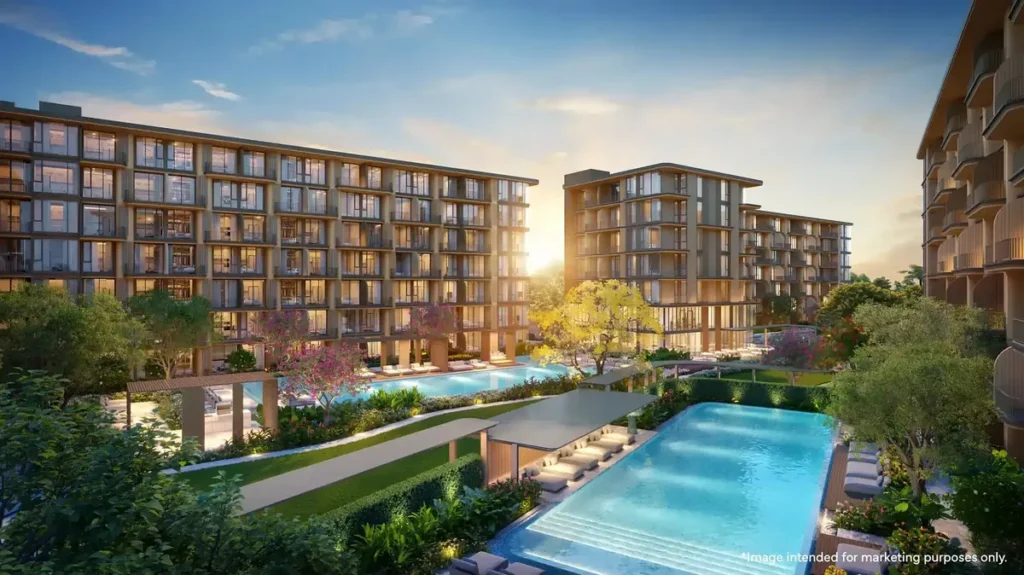 Phuket, Bang Taostarting at 45 m²


Sample Calculation for a 50 m² Apartment
Let's say an apartment has an area of 50 m², and the CAM is 60 THB/m² per month.
| Consumption | Calculation Example |
|---|---|
| CAM | 3,000 THB/month |
| Electricity | based on actual consumption |
| Water | based on actual consumption |
| Internet | at the rate of the selected provider |
| Insurance | if it has been processed |
| Repairs | The reserve is calculated separately |
| Tax | depends on the appraised value, use, and applicable exemptions |
In this example, the CAM alone amounts to 36,000 THB per year. Therefore, two apartments of the same purchase price may differ significantly in terms of ownership costs due to their square footage, amenities, and the rules of the specific development.
How much does it cost to maintain a villa?
The expense structure for a villa owner differs fundamentally from that of a condominium: most expenses here are personal, rather than shared among co-owners. While the costs for a condominium’s shared pool are covered by the common fee, the maintenance of a villa’s private pool is typically paid for separately by the owner.

A typical breakdown of a villa owner's expenses includes:
Required regular: CAM for the villa community (if the property is part of a protected development), electricity, water, and internet.
Personalized service: Pool maintenance (chemicals, circulation, cleaning—usually weekly or several times a week), garden and landscaping maintenance (trimming, watering, treatment), cleaning, air conditioner maintenance in accordance with the manufacturer’s recommendations and the frequency of use (including system diagnostics when necessary), maintenance of pumps and water systems, and pest control (particularly relevant in Thailand).
Periodical: repair and replacement of equipment, painting the facade (weather accelerates wear and tear), roof repair, and replacement of mechanical components.
Security and Management: If the villa is not located in a gated community—private security or security systems; property management or property care—if the owner does not live there full-time.
As for CAM in Villa Projects: It works differently than in a condominium. You shouldn't automatically assume that it's calculated based on the home's square footage. In different projects, the basis for calculation may be the lot area, the house area, a fixed monthly rate for home ownership, or a combined formula. Before buying, you should request a specific calculation and understand exactly what CAM covers in that community—entrance security, cleaning of common roads, lighting, or something else.
A hypothetical example of the monthly budget for a villa with a pool (3 bedrooms, ~250 m²) — this is not data on average prices in Phuket, but an illustrative example of the method:
- CAM for a village: 5,000–10,000 baht (depending on the project)
- Pool maintenance: 3,000–6,000 baht
- Gardener (2–3 visits per week): 3,000–5,000 baht
- Electricity: 8,000–20,000 baht (wide range—depends on air conditioning and a pool)
- Water: 1,000–3,000 baht
- Internet: 700–1,500 baht
- Property maintenance / technical inspection: 3,000–8,000 baht
Total nominal range: 23,700–53,500 baht per month — This is an illustrative scenario for a single type of property, not an average market figure.
For more details on the specifics of purchasing villas, see the article “How a Foreigner Can Buy a Villa in Thailand".
What expenses do villa owners most often underestimate:
- The cost of regular pool maintenance isn't a one-time expense, but rather an ongoing weekly expense
- Garden care in a tropical climate: plants grow quickly, so pruning is needed often
- Accelerated wear and tear on air conditioners: The frequency of maintenance depends on the manufacturer, the load, and operating conditions, but in a tropical climate, it is higher than is commonly believed.
- Termite and other pest control—the frequency of preventive treatments depends on the property, the technology used, and the pest control company's recommendations
- Property management expenses during periods when the owner is away
- Unplanned repairs: roofing, pumps, electrical work—for the villa, these are personal expenses, not part of the complex's CAM
- Higher electricity bills due to the large living area and a separate pool pump
Villas in Thailand — Compare Costs Along with Prices

 Ayana Soluna Villas



Electricity, Water, Internet, and Gas
Electricity
Electricity is one of the most variable expenses in a homeowner’s budget. The main factor is: If you live there regularly, the air conditioning can be used for a significant portion of the year, and in hot climates, it is often one of the largest sources of electricity consumption. The share of air conditioning in a given utility bill depends heavily on the facility’s usage patterns, its floor area, and the specifications of the equipment.
For a condo unit, the monthly bill is determined by actual consumption in kWh, the current rate, and the billing method. For a villa with multiple air-conditioned zones and a pool pump, total electricity consumption is significantly higher. The most reliable way to assess a specific property is to request utility bills for the past 3–6 months.
Electricity in Thailand is supplied by two main providers: MEA (Metropolitan Electricity Authority) serves Bangkok, Nonthaburi, and Samut Prakan; PEA (Provincial Electricity Authority) — other provincial territories, including Pattaya, Phuket, and Koh Samui.
An important point to note: the rate at which the condominium association bills you, is not necessarily equal to the PEA or MEA residential rate. In some projects, the bill is issued not directly by PEA/MEA, but by the building management. Before making a purchase, it is important to clarify who the supplier is under the contract, what formula is used to calculate the fee, and whether it is possible to verify it against the original invoices.
Starting in September 2026, PEA will implement an updated residential rate structure with progressive tiers. In addition to the base rate, the bill will include Ft (fuel adjustment charge) — a variable component of the rate that reflects changes in fuel costs, electricity procurement costs, and certain other expenses of the power system. For September–December 2026, Ft is 0.1623 baht/kWh. Ft is revised every four months, so before calculating the expenses for a specific property, you should check the current rate on the website PEA.
When calculating a budget, actual expense reports for a specific property over several months are more useful than the average figure for Thailand.
Water
Water rates in Thailand depend on the provider and the connection plan. Most regions outside Bangkok are served by the PWA (Provincial Waterworks Authority), which publishes tiered rates for residential customers. However, PWA uses separate rate schedules for a number of zones with private investment participation—Pattaya is among them. This means that rates must be checked based on the specific branch and consumer category. The current rate tables are available on the official website PWA.
The water bill is calculated based on consumption volume, customer category, and the rate schedule of the specific branch. To estimate the budget, it’s more reliable to use the property’s actual bills than to rely on average ranges. In some condominiums, water bills are also billed through the management company—the process is similar to that for electricity: this issue should be clarified when selecting a property.
Internet
The residential internet market in Thailand is well-developed. Most modern condominiums already have connections from major providers. In remote villa developments, the selection may be limited—it’s worth checking this in advance. For exact figures on monthly subscription fees, it is recommended to check the providers’ current rates, as they are updated regularly. Internet service accounts for a small but fixed portion of the owner’s overall budget.
Gas
Mains gas is not a standard utility service for residential properties in Thailand. Depending on the property, the kitchen may be all-electric or use LPG. Before purchasing a villa or apartment, it is advisable to clarify the type of kitchen equipment and the maintenance procedures for gas appliances, if any are included.
How to Pay Expenses If the Owner Does Not Live in Thailand
The payment method depends on the provider and the project. Utility bills can be paid directly to the provider, through available banking channels, or through the administration or management company, if provided for in the specific property’s payment plan.
If you live outside Thailand for most of the year, be sure to find out in advance:
- who receives the bills;
- Is it possible to set up remote payment?;
- Who monitors late payments;
- who reads the meters;
- Who checks the apartment or villa after the electricity or water has been shut off?;
- How much does Property Care cost?
Taxes, Insurance, and Repairs
Tax on Land and Buildings
The outdated claim that “there is no annual property tax in Thailand” has long since become obsolete. The Land and Buildings Tax Act B.E. 2562 (2019) has been in effect in Thailand since 2020., which applies to residential real estate, including private condo units; however, the common property of a condominium has a separate exemption. The official text of the law is available at the Fiscal Policy Office / Ministry of Finance website.
The amount of the tax depends on several factors:
- official appraised value the value of the property as determined by the government (not the market purchase price);
- real estate use — residential, commercial, agricultural, or vacant;
- actual category of use and compliance with the conditions for benefits, including requirements regarding the owner's registered place of residence;
- Applicable thresholds and exemptions, as prescribed by law.
You shouldn't automatically apply the maximum statutory rate to every property—the actual tax liability for a specific owner may vary significantly. To ensure an accurate calculation, it is recommended that you consult with a local attorney or tax advisor before making a purchase.
Tax on Rental Income
If a property is rented out, tax obligations arise on the income. For individuals, income from renting real estate in Thailand is generally classified as income under Section 40(5) of the Revenue Code. This separate tax, unrelated to the Land and Buildings Tax; the final amount depends on the taxpayer’s status, applicable expenses and deductions, as well as other circumstances. This issue requires a separate review in light of the specific circumstances.
Insurance
Property insurance is not universally required for every property owner. When financing a property with a mortgage, a specific bank may require a certain level of coverage as part of the loan terms—this depends on the lender and the loan product, and is not a universal legal requirement. The cost of the policy must be calculated based on the specific insured amount and the range of risks; to determine an accurate budget, it is recommended to request current quotes from insurers.
Repairs and Spare Parts
Repair costs—an expense that is most often not factored into the budget in advance. A tropical climate accelerates wear and tear: Paint fades and peels, sealants dry out, tiles crack, and plumbing fixtures wear out faster. It is best to determine the size of the repair reserve based on the property’s age, the condition of its systems, its repair history, and planned replacements. There is no universal percentage of the property’s value, as is standard in Thailand.
Condominium or villa: which is cheaper to maintain?
| Condominium | Villa | |
|---|---|---|
| Predictability of Expenses | Usually higher | Usually lower |
| General Infrastructure | Through the common fee | Through the town's CAM or separately |
| Private pool | Usually missing | Frequent individual consumption |
| Garden | Usually, the general | Private |
| Engineering | A significant portion of the total | Primarily the owner's responsibility |
| Monitoring in the Absence of | Simpler | Property care is especially important |
| The Risk of Major Home Renovations | Below, for general systems | Above |
| Suitable for an owner living abroad | Easier to manage | Requires greater oversight |
An apartment isn't always cheaper than a villa, but its ongoing expenses are typically more centralized. With a villa, more costs and risks fall directly on the owner.
Pattaya, Phuket, Koh Samui, or Bangkok
This is one of the sections that is rarely covered in detail in competing materials. There is no single “cheap” or “expensive” option that applies across all regions—there are structural differences that affect the components of your budget.

Table 3. Factors Affecting Expenses in Different Regions
| Region | Typical Objects | Major Expense Categories | Infrastructure Features | What's Important to Check |
|---|---|---|---|---|
| Pattaya | Condominiums in various price ranges, including the budget segment | CAM, electricity, water | PEA; PWA uses a separate rate schedule for this zone | CAM, taking into account the infrastructure, the presence of a pool in the complex, and the electricity billing plan |
| Phuket | A significant proportion of villas and resort-style condos | CAM villas/community, pool, garden, property care | PEA; water supply via PWA or private providers | Pool and garden budget, property management costs, infrastructure in remote areas |
| Samui | Villas, single-family homes, small condos | Swimming pool, garden, utilities, water, electricity | Electricity Supply — PEA; PEA is modernizing the island grid | Wiring diagrams, backup power for the project, actual bills—island infrastructure can affect the reliability of the power supply |
| Bangkok | Urban condominiums, apartments | CAM, electricity, internet | MEA (not PEA) serves Bangkok, Nonthaburi, and Samut Prakan | MEA Rate, Parking Fees, and CAM Compared to the Service Package |
On Samui PEA continues to modernize and provide backup power for the island grid. It is more important for a buyer to check the actual history of power outages in a specific area, the project’s backup power supply, and the utility bills for a specific property.
In Pattaya A large condominium market with a wide range of CAM rates—from budget projects with minimal infrastructure to complexes with well-developed sports and recreational facilities. The difference in CAM rates here often reflects the difference in the actual range of services provided.
In Phuket Villas and resort complexes play a significant role, which is why individual maintenance costs are a major factor for many properties: lower common fees, but higher personal expenses—such as the pool, garden, and property care. Property management is particularly in demand here if the owner spends only part of the year on the island.
In Bangkok A significant portion of the housing supply consists of urban condominiums, where expenses for common areas are typically managed through a legal entity and a common fee. MEA, as an electricity provider, serves Bangkok, Nonthaburi, and Samut Prakan and has its own rate structure, which differs from that of PEA.
Not sure which region fits your budget?
Please tell us how you plan to use the property. We’ll select projects in suitable regions and show you what recurring expenses you should take into account.
Three Budget Scenarios for the Owner
The cost of maintaining the same property can vary significantly depending on how you use it.
Table 4. Permanent Residency vs. Seasonal Use vs. Rental
| Expense Item | Permanent residence | Seasonal use (3–6 months per year) | Rental |
|---|---|---|---|
| CAM / common fee | Standard Rate | Standard rate (always applicable) | Standard rate (usually the owner) |
| Electricity | Total consumption | Minimum balance upon departure + full balance upon arrival | Under the lease agreement |
| Water | Standard consumption | Minimum / Standard | Under the lease agreement |
| Internet | Subscription | Permanent or temporary | As specified in the contract |
| Cleaning | On your own or periodically | Before/After Arrival | Regular maintenance—paid for by the owner; terms depend on the contract |
| Pool / Garden (villa) | Regular Maintenance | Regular (even without an owner) | Regular + Increased Workload |
| Technical Inspection | Independent | Property Care During Absences | Property Management |
| Management | Not required | It's partly necessary | Management Company: Contractual % based on income or a fixed rate |
| Repair Reserve | Include in the budget | Include in the budget | Increased Reserve (Depreciation for Lease) |
| Insurance | Basic Policy | Base + Risks During Absence | Policy Providing Coverage for Rental Activities |
| Taxes | Land and Buildings Tax | Land and Buildings Tax | Additional Tax on Rental Income |
Zero accommodation costs do not mean zero expenses. An owner who visits once a year continues to be responsible for common expenses regardless of whether they are staying there, pays for pool maintenance, covers insurance costs, and often hires a property care specialist who periodically inspects the property, starts up the systems, and reports on its condition.
When renting out a property, additional expenses arise: management company fees, a higher rate of depreciation, and more frequent maintenance costs. The terms of the contract with the property management company vary: the commission may be a fixed amount or a percentage of income—the specific figures depend on the management model and the contract. Before launching a rental model, you must verify that the chosen model is permitted for the specific property. Short-term daily rentals of a condo unit without the required permit violate the Hotel Act; Thai authorities have documented such violations and held operators accountable. It is best to verify the legality of a specific arrangement with a Thai lawyer before calculating the property’s financial viability.
If a property is being rented out: Who Pays for What?
It usually remains with the owner: Common expenses/CAM, owner's taxes, owner's insurance, major repairs and a significant portion of routine maintenance, property management.
Under the terms of the agreement, the tenant may pay: electricity, water, internet, and some household services.
In the short-term model The cost structure varies: the owner or management company typically arranges for additional services such as cleaning, linen changes, check-in/check-out, and property maintenance. However, the permissibility of short-term rentals must be verified in advance in accordance with the Hotel Act, as well as the permits and rules of the specific condominium.
What expenses occur every month, every year, and from time to time?
| Frequency | What to Consider |
|---|---|
| Monthly / as billed | electricity, water, internet |
| According to the project schedule | CAM/Common Expenses |
| Regularly | pool, garden, property maintenance |
| Every year | taxes, insurance—if applicable |
| From time to time | air conditioners, pumps, pest control, minor repairs |
| Irregularly | additional contribution to the sinking fund, major repairs, replacement of equipment |
How to Calculate Expenses Before Making a Purchase
A responsible approach to budgeting involves requesting actual figures for a specific project, rather than relying solely on advertising estimates.

Practical Algorithm:
- Find out the current CAM rate — in bats per square meter per month and the total amount for a specific unit.
- Determine the basis for the calculation — apartment size, lot size, or a fixed rate (depending on the project).
- Request the latest electricity bills Over 3–6 months—this will show actual consumption, rather than a marketing estimate.
- Request Water Bills during the same period.
- Determine the amount and status of the sinking fund — How much has been saved, and are there any major projects planned?
- Check for any additional fees — parking, storage, and additional services offered by the complex.
- For the villa: Find out the cost of pool and garden maintenance — Ask the current owner or property manager.
- Find out the cost of management — if you plan to rent out the property or be away for an extended period.
- Check whether insurance is included in CAM, or a separate policy is required.
- Establish a reserve fund for routine repairs — based on the facility's age, engineering condition, and maintenance history.
- Calculate taxes separately — based on the appraised value and use category of the property.
- Include everything in the annual budget — to compare objects correctly.
Cost of ownership per 1 m²
Annual cost of ownership per 1 m² = total annual expenses of the owner ÷ property area.
For example, if a 50 m² apartment costs 90,000 THB per year to maintain, the cost of ownership is:
90,000 ÷ 50 = 1,800 THB/m² per year.
This makes it possible to compare apartments of different sizes and prices not only based on CAM, but also based on total operating costs.
Ratio of expenses to the property's price = annual expenses ÷ purchase price × 100%.
Example: The property costs 6 million THB, and maintenance costs 90,000 THB per year:
90,000 ÷ 6,000,000 × 100% = 1.5% of the property's value per year.
This is not a measure of profitability or a market benchmark, but a tool for comparing several properties.
Don't want to track project expenses manually? Answer a few questions—Thaicost will help you find real estate in Thailand based on your purchase budget, goals, and future maintenance costs. Find a Property
Red Flags: Costs May Be Higher Than Expected
You should request additional documents if:
- the seller or agent does not show the actual utility bills;
- It is unclear which services are included in CAM;
- The common fee has not been revised for a long time, despite the rise in the complex's expenses;
- The sinking fund is small relative to the planned major repairs;
- The legal entity has significant outstanding debts owed by its owners;
- Repairs to the facade, roof, elevators, or building systems are expected;
- The villa has a large pool, a garden, and a sophisticated engineering system;
- Electricity and water bills are recalculated by the complex's administration, but the calculation formula is not provided;
- The property has been vacant for a long time, and there are no regular maintenance checks.
How to Get Your Budget Right
Common mistakes buyers make when estimating maintenance costs:
- Focus only on the purchase price — Total ownership costs can significantly affect a property's economics.
- Comparing CAM without understanding the basis for the calculation and the scope of services — A low CAM for individually priced services may end up being more expensive than a high CAM with a full package.
- Mixing CAM and the sinking fund — These are different types of payments that vary in nature and frequency.
- Calculate the cost of a villa based on an apartment model — The villa’s private pool and garden usually require separate maintenance and should not automatically be considered part of the community’s CAM; these are significant personal expenses.
- Forget about the pool and the garden — especially when buying a villa in the tropics, where they require constant maintenance.
- Choose an advertising package instead of real accounts — The gap between the "starting at X baht per month" advertised and the actual bill can be significant.
- Do not take the climate into account — If you live there regularly, air conditioning may be used for a significant portion of the year and have a major impact on your electricity bills.
- Consider an empty object to be free — Mandatory common expenses remain in effect; depending on the property and the existing contracts, insurance, utility, and service charges may also continue to apply while the owner is away.
- Do not set aside a reserve for repairs — The tropical climate is harsh on materials and equipment; the size of the reserve depends on the age and condition of the specific facility.
- Estimate rental income before deducting operating expenses — When using a comparable calculation method, the net return after operating expenses is usually lower than the gross return; it is important to determine in advance which expenses are included in the calculation.
When comparing the two forms of property ownership—freehold and leasehold—the structure of maintenance costs is generally similar, but there are legal nuances that are important to understand. For more details, see the article “Freehold and Leasehold in Thailand".
Calculate the total cost of ownership before you buy
The cost of maintaining real estate in Thailand is determined not by the country as a whole, but by the specific property: its type, size, amenities, region, and how exactly you plan to use it. A condo unit with a full range of services provided by the homeowners’ association (CAM) and a villa with a private pool in a remote village require completely different budgets with different cost structures.
The most reliable thing a buyer can do before signing the contract is to request actual electricity and water bills, obtain a CAM statement with a breakdown of services, check the status of the sinking fund, and find out the cost of pool and garden maintenance, if the property is a villa. Advertised price ranges are useful as a general guide, but they are no substitute for the documents specific to a particular property.
Knowing the total cost of ownership before making a purchase isn’t just a formality—it’s the foundation for a sound assessment of your investment. For more details on how the real estate purchase process works in Thailand, see the article “How to Buy Real Estate in Thailand".
 Real estate in Georgia
 Real estate in Cyprus
 Real estate in UAE
 Real estate in Bali
 Real estate in Montenegro
 Real Estate in Spain
 Real Estate in Saudi Arabia
 Real Estate in Turkey
 Real Estate in Zanzibar
 +66 98 432 7651
 hello@thaicost.com
 Boat Lagoon Marina, 22/1 Moo 2, Thepkasattri Rd, Koh Kaew, Phuket 83000, Thailand



 Get TOP-7 catalog of objects