
 +66 98 432 7651


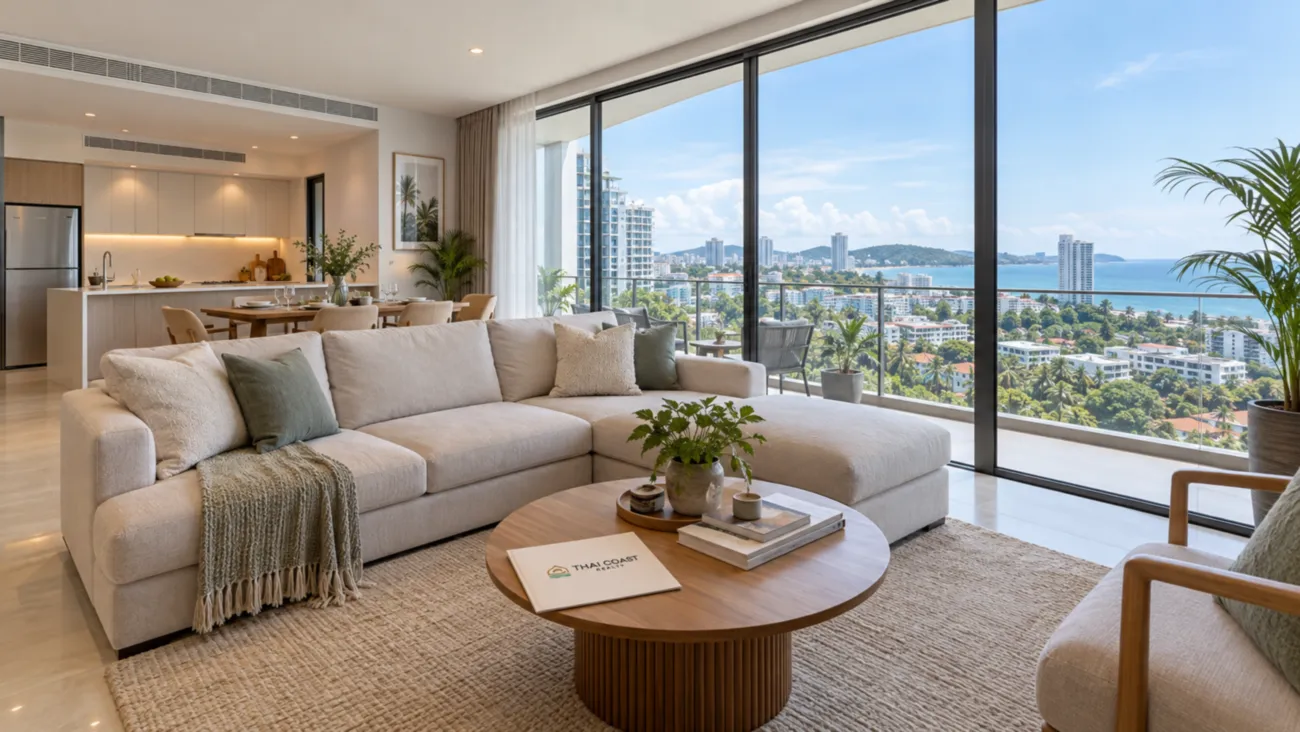
A foreign owner has the right to sell real estate in Thailand that is legally registered in their name. Foreign citizenship alone does not prohibit the sale of a property that legally belongs to the seller. However, citizenship, the status of the parties, and the form of ownership may affect the list of required documents, bank verifications, and certain terms of the transaction. The specific procedure depends on the form of ownership, the type of property, the availability of all necessary documents, and the identity of the buyer. A freehold condominium is sold differently than a leasehold property, and a villa with land requires a separate legal analysis of the ownership structure. This guide walks you through the entire process—from property appraisal and document preparation to transaction registration, receiving payment, and transferring funds abroad.
How to Sell Real Estate in Thailand: A Quick Answer
A foreigner may sell an apartment in Thailand that he or she legally owns. To do so, it is necessary to verify ownership and any encumbrances, determine the price, find a buyer, agree on the contract and payment terms, obtain the necessary documents, and register the transfer of title at the Land Office. If the property is held on a leasehold basis or through a company, the procedure differs.
| What's Important to a Seller | Terms and Guidelines |
|---|---|
| A Foreigner's Right to Sell | Permitted for a property that he legally owns |
| Freehold Registration | At the Land Office |
| Registration Period | Often, just one workday if the documents are ready |
| Time to Find a Buyer | It depends on the property and the market; there is no standard timeframe. |
| Transfer Fee | Standard 2% official appraised value |
| Discounted Transfer Fee | 0.01% through June 30, 2027, provided certain conditions are met |
| Specific Business Tax | 3.3%, typically when sold within five years, barring any exceptions |
| Stamp Duty | 0.5%, when SBT is not applied |
| Withholding Tax | Customized Calculation for an Individual |
| Agency Commission | Determined by contract; there is no single mandatory rate |
| Sale Without an In-Person Visit | This can be done through a representative authorized by a power of attorney accepted by the Land Office |
| Revenue Statement | Through a bank, with documents confirming the basis for the transfer |
The rates listed apply to standard direct real estate sales; leaseholds, transfers of company shares, and non-standard transactions are handled separately. The final amounts and the feasibility of international transfers must be confirmed before signing the contract.
Can a foreigner sell real estate in Thailand?
Thai law guarantees a foreign citizen’s right to sell real estate that he or she owns. An apartment registered as freehold property under the Condominium Act is evidenced by a title document— Chanote with the owner's name. The transfer of title to the new owner is registered with the Land Office in accordance with standard procedures.
It's important to understand what is meant when people talk about restrictions on foreigners. Foreign Ownership Quota for Condominiums — 49%, based on the total area of the building authorized for foreign ownership in aggregate, limits the share of foreign ownership in a specific building. If an apartment is already registered as foreign freehold, its resale to another foreigner does not necessarily require additional available quota: the area of that apartment is already accounted for within the established limit. Before registration, it is necessary to obtain up-to-date confirmation of the foreign ownership share in the condominium, verify the buyer’s eligibility to purchase, and ensure the necessary banking documents are available. If the property is sold to a Thai citizen, the quota status may change. If a foreign buyer is not eligible to register the apartment as their property for other reasons, the parties may consider a legal lease arrangement—however, this requires a separate agreement and distinct legal review. A leasehold is not an automatic substitute for a freehold. The quota mechanism is discussed in detail in the article “Foreign Quota in Thailand".
The situation with a leasehold is fundamentally different. In this case, the seller does not transfer ownership—instead, the seller assigns the contractual lease rights to the buyer for the remaining term. This is a legally distinct transaction: the assignment of contractual rights, rather than a standard sale. It has its own specific registration requirements, documentation, and tax implications.
A villa in Thailand is most often a combination of several legal elements: the building may be owned by a foreigner under certain conditions, while the land may be held under a long-term lease or owned by a Thai company. Selling a villa requires analyzing each of these elements separately.
| Form of Ownership | What Is Transferred to the Buyer | Foreign buyer | Registration | Key Limitations |
|---|---|---|---|---|
| Freehold condo | Full ownership | Yes, provided that the quota conditions and financial requirements are met | Land Office; Standard Procedure | Percentage of foreign ownership in the home; the buyer's bank documents |
| Leasehold property | Contractual Lease Rights for the Remaining Term | It depends on the terms of the lease agreement | It depends on the type of conveyance; often through the Land Office | Lease Term, Assignment Terms, Landlord's Consent |
| Villa (complex structure) | Rights to a building, a land lease agreement, and/or a stake in a company | It depends on the structure | Several instances and stages | Land laws, corporate requirements, and legal due diligence are mandatory |
How to Determine the Selling Price
Starting your preparation for the sale with an appraisal means avoiding a major waste of time. An inflated price keeps the property on the market for months without a single serious inquiry. An undervalued price deprives the seller of the revenue the market was willing to pay.

The market value of a property is determined by comparative analysis. The first step is to review active listings in the same residential complex with similar characteristics: square footage, floor level, view from the window, availability and type of furniture, condition of the unit, and the apartment’s orientation. If there are no such listings, look at neighboring complexes with comparable infrastructure, building age, and transportation accessibility.
Listing prices reflect sellers’ expectations and may differ from the amounts of actual transactions. The extent of potential negotiation depends on location, competition, the condition of the property, and the parties’ motivations—there is no universal percentage that applies to the entire Thai market. Thailand lacks a unified, publicly accessible MLS system with a complete history of actual transaction prices. Therefore, when appraising real estate, one must combine available registration and market data with an analysis of current listings—examining how many similar properties are on the market, how long they have been on the market, and whether prices have been adjusted.
The cost of a specific property is influenced by:
- Floor and view: Upper-floor units with ocean or city views are often valued differently than comparable units on lower floors.
- Condition and furnishings: A move-in-ready property with high-quality furniture is perceived differently by buyers than an empty apartment in identical condition.
- Quota Status: Current confirmation of the foreign share affects the pool of potential buyers.
- Competing listings in the same residential complex: it’s more difficult to sell when there are several similar properties listed in the same building.
- Existing lease agreement: A property with a verified tenant attracts investors but may deter those who want to use the apartment themselves.
- Service fees: The amount owed to the management company is deducted from the total revenue and must be paid in full prior to the transaction.
- The age and condition of the building, renovations to common areas, and the quality of the property management company and infrastructure all influence perceived value.
A hypothetical example comparing three apartments in the same complex illustrates how a property's characteristics can affect its price.
| Parameter | Apartment A | Apartment B | Apartment B |
|---|---|---|---|
| Area | 52 square meters | 52 square meters | 55 square meters |
| Floor / View | 3rd floor, view of the garden | 15th floor, ocean view | 14th floor, pool view |
| Furniture | No | Fully furnished | Partially |
| Asking Price | 3,900,000 THB | 5,200,000 THB | 4,600,000 THB |
In this hypothetical example, Apartment B is listed at a price approximately 33% higher than Apartment A. The difference may be due to the floor level, view, and furnishings; however, without data on actual transactions, it is impossible to determine the exact contribution of each factor. The seller of Apartment B faces competition on two fronts: the buyer can choose either Apartment A (cheaper) or Apartment B (better in a number of respects).
The agency conducts a comparative valuation based on current listing data and an understanding of the specific market. Any valuation remains an estimated guideline, not a guaranteed sale price.
If the ad doesn't generate any views in the first few weeks — It’s worth reviewing your pricing strategy, marketing channels, and the completeness of your ad.
The price listed in an ad is a hypothesis about value that the market either confirms or refutes. One indicator is the number and quality of inquiries during the first few weeks of active promotion.
How to Calculate an Estimated Selling Price on Your Own
To get a preliminary estimate, gather several listings that are as comparable as possible from the same residential complex or similar buildings. Compare not only the price per square meter, but also the view, floor level, condition of the unit, furnishings, ownership status, maintenance costs, and existing lease obligations.
Calculation procedure:
- Find comparable offers and exclude items with significant differences.
- Calculate the asking price per square meter for each comparable property.
- Determine the price range and the median of comparable listings.
- Adjust the guideline to reflect the specific characteristics of your apartment, without applying arbitrary percentage markups.
- Compare the calculation with current market conditions and the length of time similar products have been on the market.
Hypothetical example:
| Equivalent | Area | Ad Price | Price per m² |
|---|---|---|---|
| Apartment 1 | 50 m² | 4,000,000 THB | 80,000 THB |
| Apartment 2 | 50 m² | 4,250,000 THB | 85,000 THB |
| Apartment 3 | 50 m² | 4,500,000 THB | 90,000 THB |
| Median | 85,000 THB |
If your apartment is 52 m² in size, the median price is approximately 4,420,000 THB.
This is strictly a hypothetical calculation based on fictional properties and does not constitute a market valuation of Phuket, Pattaya, or any other region. The actual transaction price may differ from the listed price.
Compare your property with current listings in Thailand




 Phangan
 starting at 34.58 m²


Are you planning to sell an apartment in Thailand?
Compare listings in your residential complex and discuss the potential price, costs, and sales process with the Thaicost team. The appraisal does not guarantee a specific transaction price.
Discuss the sale of real estate
Step-by-Step Guide to Selling Real Estate
The sale of a condominium in Freehold takes place in seven stages.
Checklist for Selling an Apartment in Thailand
| Stage | What a salesperson does | What Needs to Be Ready |
|---|---|---|
| Before publishing the ad | Checks the title, mortgage, outstanding debts, lease agreement, and price | Set of documents, preliminary cost estimate |
| After the customer contacts us | Checks the purchase terms and whether registration is possible | Agreed-upon price, understanding of the source of funding |
| Before the reservation deposit | Agrees on the terms and conditions for cancellation and refunds | Written Agreement |
| Prior to the main contract | Verifies the buyer, payment readiness, taxes, and cost allocation | Draft contract, net revenue calculation |
| Before Registration | Obtains documentation, coordinates mortgage repayment, and handles bank settlements | Confirmations, original documents, payment instructions |
| On the day of registration | Verifies payment, signs documents, and pays the assessed fees | Registered transfer of title, receipts |
| After registration | Transfers the property and settles accounts with the management company and the bank | Transfer Deed, Financial Documentation for the Transaction |
This is a sequence of steps to follow, not a mandatory timeline. Some steps are carried out simultaneously, and the documents and payment procedures depend on the specific transaction.

1. Verification of the owner's documents and rights
Before entering the market, make sure that the title document (Chanote or another title deed) is registered in your name and contains accurate information. Check with the Land Office to ensure there are no encumbrances: mortgages, liens, or pledges. Make sure there are no outstanding debts to the property management company or utility bills. Any of these factors could delay or block the registration at the most inopportune moment—when a buyer has already been found.
2. Market Valuation and Property Preparation
Conduct a comparative analysis (see Section 2) and set a realistic asking price. At the same time, prepare the property for showings: professional photos taken in natural light, an up-to-date floor plan, and a list of furniture and appliances. Even minimal pre-sale preparation can significantly influence a buyer’s first impression.
3. Preparing the listing and finding buyers
The listing is posted on niche portals, through agencies with access to international buyer networks, and in specialized communities. Specify the property’s legal status, exact square footage, floor level, type, furnishings, annual maintenance fee, and distance to key locations (beach, transportation hub, shopping centers). If working with an agency, clarify in advance the marketing channels and the terms of the exclusive agreement.
4. Presentations, Negotiations, and Agreement on Terms
Arrange viewings—either in person or through a representative. Once you receive a price offer, evaluate not only the amount but also the terms of the deal: payment schedule, the buyer’s willingness to undergo a legal due diligence review, and the source of financing. A buyer with a slightly smaller budget but a transparent payment plan is often more reliable than a buyer offering a high price but with vague terms.
5. Reservation and Confirmation of Terms
Once the price has been agreed upon, the parties may stipulate a reservation deposit. The amount of the deposit is specified in the contract and depends on the value of the property and the terms of the transaction. The written agreement must specify the recipient of the funds, the purpose of the payment, the deadline for entering into the main contract, and the conditions for the return or retention of the deposit. The legal consequences are determined by applicable Thai law and the specific terms of the agreement—do not sign it without reading every clause.
What Must Be Specified in a Sales Contract
Before signing the main contract or a reservation agreement, you should review the following provisions:
- Parties and Property: full names, identification information for the seller and buyer, apartment ID, square footage, and type of ownership.
- Price and Currency: The agreed-upon amount and payment terms, including currency conversion, if applicable.
- Deposit: amount, payee, payment purpose, refund and withholding terms.
- Registration period: the date or the procedure for determining it, and the conditions for renewal.
- Taxes and Fees: What Payments Are Required of Each Party.
- Encumbrances: the obligation to repay the mortgage and other registered encumbrances.
- Transfer of Property: List of furniture, appliances, keys, access cards, and documents.
- Failure to Comply with the Terms: Consequences of Withdrawal from the Transaction, Delayed Payment, or Inability to Register.
- Representation: Signatory Authority and the Procedure for Verifying a Power of Attorney.
- Final settlement: an agreed-upon sequence of payment and registration.
6. Preparation of the final set of documents and calculations
Before the registration date, obtain a current certificate of no outstanding debts from the property management company—check with the Land Office and the property management company regarding the requirements for the date of issuance and the valid period of use for this document. If there is a mortgage, confirm the final amount with the bank. Check with the Land Office to determine which taxes will apply to your specific transaction. If the seller is acting through a representative under a power of attorney, make sure in advance that the document has been properly executed, translated, and accepted.
Is it possible to sell an apartment in Thailand if it has a mortgage?
Having a mortgage does not always prevent a sale; however, the transfer of title must be coordinated with the lending bank, and the lien must be removed.
Prior to signing the final payment terms:
- Ask the bank for the current total repayment amount as of the expected registration date.
- Please inquire about any early repayment fees and the documents required to release the lien.
- Agree on what portion of the sale price will go to the creditor.
- Determine the order in which the debt should be repaid, the mortgage discharged, and the transfer of title registered.
- Please verify that the remaining proceeds will be transferred to the seller in accordance with the contract.
You should not promise a buyer a property that is free of a mortgage until the bank has confirmed the repayment process and the removal of the registered encumbrance.
7. Registration of the transfer of title, payments, and transfer of the property
The seller and buyer (or their representatives) go to the Land Office where the property is located. An inspector reviews the documents and calculates the taxes and fees. After all assessed payments are made, the transfer of ownership is registered in the Chanote. If the documents are prepared in advance, the payments have been agreed upon, and there are no encumbrances or additional verifications required, the procedure can often be completed within one business day. If there is a mortgage, a power of attorney, discrepancies in the documents, or other complications, the process may take longer. The handover of keys, utility meters, and documents for appliances takes place on the day of registration or via a separate handover certificate.
On your own or through an agency
The law does not require sellers to work through an agency. Selling on your own is possible and saves on commission if the owner has a good understanding of the market and is willing to handle listings, showings, and negotiations.
The agency’s actual role is marketing and reaching the target audience: listing properties in professional directories, accessing international partner networks, organizing showings, conducting negotiations, and coordinating documentation leading up to closing day. For complex transactions—involving villas, leasehold properties, corporate structures, or remote sellers— Independent legal counsel is strongly recommended regardless of whether the agency is involved.
If you are signing an agency agreement, be sure to clarify the following: the amount and timing of the commission, the exclusivity period (or lack thereof), the agency’s promotional obligations, and the termination procedure. All of this must be set forth in writing.
What to Check in a Contract with a Real Estate Agency
| Condition | What to Record |
|---|---|
| Commission | Rate, whether VAT is included (if applicable), list of additional expenses |
| When Is the Right to a Commission Established? | Signing the contract, receiving the deposit, or the actual completion of the transaction |
| Exclusivity | Can a property owner sell the property on their own or through other agents? |
| Term of the contract | Start Date, End Date, and Renewal Conditions |
| Advertisement | Where will the property be located, and who will pay for the photos and marketing? |
| Working with Partners | Opportunities for joint sales with other agencies and commission sharing |
| Price Change | Can an agent lower the price without the owner's written consent? |
| Buyer's Deposit | Who is eligible to receive money, and under what conditions? |
| Termination | Notice, Potential Expenses, and Obligations Following Termination of the Contract |
Before signing, clarify whether a commission is due if the owner finds a buyer on their own, and whether the obligation to pay the commission remains in effect after the agency agreement ends with respect to buyers previously referred by the agency.
Documents for Sale
The full package depends on the type of property and the form of ownership. The table below outlines the standard set of documents for the sale of a freehold condominium, with the necessary notes for other forms of ownership.

| Document | What is it for? | Where to get or check | When to Prepare |
|---|---|---|---|
| Passport (original + copies of the pages required by the Land Office) | Seller's ID during registration | The owner's | Before Launch |
| Title Deed for a Condominium Unit (Condominium Unit Title Deed, Form No. 2) | Confirms the registered ownership of a specific unit; verify the owner's information and any encumbrances at the Land Office before signing the contract | Land Office | Before signing any contracts |
| Foreign Ownership Quota Certificate | Required when registering the purchase of an apartment by a foreign buyer | Condominium Legal Entity (Condominium Juristic Person) | Before Registration |
| Initial Purchase Agreement / SPA | History of Rights, Terms of the Initial Transaction | The owner's | For review by the buyer and the attorney |
| Certificate from the management company confirming the absence of outstanding fees | Proof of Payment for the Common Area Fee and Sinking Fund | The complex's management company | Shortly before registration; check with the Land Office for the permitted period of use |
| Information on the Decommissioning of Utility Meters | Confirmation of final readings and the absence of outstanding balances | Management company or service provider | Before registration / transfer deed |
| Documents related to mortgages or other encumbrances | Information for the buyer: The mortgage must be paid off before or on the date of the transaction. | Lending Bank | In advance |
| Notarized Power of Attorney with Legalization and Translation | Powers of a Representative in a Remote Transaction | Notary + legalization as required by the Land Office + certified translation into Thai | Well in advance, allowing time for approval and delivery |
| Bank documents verifying the source of funds (if necessary) | A bank account may be required for the subsequent international transfer of proceeds | The bank through which the payments were processed | Find and save in advance |
For Leasehold Properties You will also need: the original lease agreement, the landlord’s consent (if necessary), and documents confirming the terms of the assignment. For villas owned by a corporation, you will need the company’s articles of incorporation and proof of the signatory’s authority.
Required Documents The Land Office at the property's location determines which office to use for registration; additional documents are required from the buyer for legal due diligence and from the bank for the subsequent transfer of funds. These are different processes with different lists of required documents.
What additional documents may be required
| The Situation | What to Check in Advance |
|---|---|
| The apartment has several owners | Who must be involved in the registration process, and what consents are required? |
| The seller is married | Is a spouse's consent required, taking into account marital status and the nature of the property? |
| Inherited real estate | Has the heir's right been registered? Are court or probate documents required? |
| The owner has changed their first or last name | Is there any documentation confirming the change to personal information? |
| The seller is located abroad | Will the Land Office accept a power of attorney, and what are the requirements for its certification and legalization? |
| The property belongs to the company | The Director's Authority, Corporate Decisions, and Company Documents |
| The apartment is rented out | Tenant Rights, Lease Agreement, Security Deposit, and Procedures for Vacating the Premises |
Additional documents are not required in all cases. You should confirm the list of required documents with a lawyer or the relevant Land Office before signing any agreements with the buyer.
Check the Chanote before you start looking for a buyer, not at the last minute. Discrepancies in the data, outstanding encumbrances, or technical errors in the document can delay registration for weeks—even after a buyer has been found.
Taxes and Expenses on Sale
The financial outcome of a transaction is determined not only by the contract price, but also by the amount spent on government fees, the agent’s commission, legal services, and the repayment of outstanding debts. Let’s examine each item separately.
What taxes and fees apply?
When transferring ownership in Thailand, there are up to four possible government fees. Not all of them apply at the same time.
Transfer Fee (registration fee) — The standard rate is 2% of the official appraised value of the property, as determined by the Land Department. This is neither a negotiated price nor a market value, but a separate calculated value assigned by the government. From July 1, 2026, through June 30, 2027, a temporary exemption is in effect— 0,01% For eligible categories of real estate, provided that the following conditions are met: the buyer is a Thai citizen (an individual), and both the transaction price and the official appraised value do not exceed 7 million THB each. This exemption does not apply to foreign buyers. The current rules for calculating the tax are published at the Department of Lands website. The fee is paid at the time of registration; by mutual agreement, the parties often split it evenly.
Specific Business Tax, SBT (Special Business Tax) — As a rule, this applies to the sale of real estate by an individual if, since the registration of ownership, less than five years. The typical effective rate is 3,3%: 3% in base tax plus 0.3% in local surcharge. The law provides for exemptions: specifically, for certain transactions involving inherited property and for properties used as a primary residence, provided that residency is registered. The tax base is calculated according to applicable rules; for companies and commercial transactions, the calculation method may differ. The applicability of SBT and any specific exceptions must be verified based on the terms of your transaction. General Tax Rules — on this page Revenue Department.
Stamp Duty (stamp tax) - 0,5% based on the contract price or the official appraised value (whichever is higher). As a rule, the following applies: instead of SBT in cases where SBT is not levied. In a standard direct sale, SBT and Stamp Duty are not cumulative: only one of the two is paid.
Withholding Tax, WHT (withholding tax) — applies to the direct sale of real estate by an individual. The calculation is based on the official appraised value, the applicable tax deduction for expenses, and the number of years of ownership as specified by tax law. Special rules for calculating by calendar years, including partial periods, are applied; for calculation purposes, the period is limited ten years. The final amount varies for each transaction. A different mechanism applies to legal entities. You should request an exact calculation from the Land Office or consult a tax specialist before the transaction.
The tax rules governing the direct sale of real estate cannot be automatically applied to the assignment of a lease or the sale of company shares—these are different legal transactions with different consequences. The tax consequences of receiving the proceeds in the seller’s country of tax residence are determined by the laws of that country.
How much money will the seller have left?
Below is an illustrative calculation for a hypothetical transaction. All figures are provided solely as examples.; the actual amounts depend on the specific property's characteristics, the length of ownership, the parties' agreements, and applicable tax breaks.
Example parameters:
- Negotiable price: 5,000,000 THB
- Official Appraised Value: 4,500,000 THB
- Agent's commission: 3% of the contract price (hypothetical example; the actual amount is negotiated on a case-by-case basis)
- Legal services: 30,000 THB (for illustrative purposes only)
- In this example, the buyer is a foreign national, so the Transfer Fee exemption of 0.01% does not apply; the calculation is based on the standard rate of 2%. The contract price of 5,000,000 THB and the appraised value of 4,500,000 THB do not, in and of themselves, exceed the thresholds for the exemption; however, the buyer’s citizenship precludes its application in this case.
| Expense Item | Scenario A — SBT applies (up to 5 years of ownership, with no exceptions) | Scenario B — Stamp Duty (SBT does not apply) | Who is responsible for the expenses? |
|---|---|---|---|
| Transfer Fee 2% × 4,500,000 THB | 90,000 THB | 90,000 THB | As agreed; for a 50/50 split, the seller's share is 45,000 THB |
| SBT 3.3% × 5,000,000 THB (whichever is greater) | 165,000 THB | - | Salesperson |
| Stamp Duty 0.5% × 5,000,000 THB | - | 25,000 THB | Salesperson |
| Withholding Tax | It is calculated individually using a set formula | It is calculated individually using a set formula | Salesperson |
| Brokerage commission: 3% × 5,000,000 THB | 150,000 THB | 150,000 THB | Salesperson |
| Legal Support (for illustrative purposes) | 30,000 THB | 30,000 THB | Salesperson |
| Total seller expenses excluding WHT, including the 50% Transfer Fee | 390,000 THB | 250,000 THB |
If the buyer is a Thai citizen—an individual—the property falls under the category of real estate eligible for the tax exemption, and both the contract price and the official appraised value do not exceed 7 million THB each, the transfer fee may be calculated at a preferential rate of 0.01%. In this example, that amounts to 450 THB—compared to 90,000 THB at the standard rate.
Formula for a seller's net revenue:
Net Proceeds = Sale Price − Transfer Fee − SBT or Stamp Duty − Withholding Tax − Brokerage Commission − Legal Fees − Debt Owed to the Management Company − Bank and Conversion Fees
Expenses that are often taken into account at the last minute: outstanding balances for the Common Area Fee and Sinking Fund, bank fees for SWIFT transfers, currency conversion losses, and mortgage repayment costs.
The parties agree on the transfer fee on their own. SBT, Stamp Duty, and WHT are taxes payable by the seller, which are assessed and paid to the Land Office upon registration.
Does the length of ownership affect the profitability of a sale?
| Condition | What to Check |
|---|---|
| The property has been owned for less than five years | Applicability of SBT 3.3% and the Exceptions Therein |
| The five-year period is coming to an end | How Does the Exact Date of Sale Registration Affect Taxes? |
| The property was inherited | Applicability of Special Exceptions |
| The property was used as a primary residence | Have the conditions for the relevant SBT exemption been met? |
| The property belongs to the company | Corporate Tax Implications and the Structure of the Sale |
| The plan is to sell the property after the lease term ends | Comparison of the expected price, maintenance costs, rent, and taxes |
Delaying a sale is not necessarily advantageous. Any potential tax savings must be weighed against maintenance costs, market risk, exchange rates, and the terms of the contract with the buyer.
How much will you have left after selling your apartment?
Before selecting a new property, determine the estimated net proceeds: the sale price minus taxes, commissions, outstanding debts, and bank fees.
Find a property that fits my budget
Freehold, Leasehold, and Villa Sales
The legal form of ownership determines not only the procedure, but also the pool of potential buyers, the tax base, and the risks.
Freehold Apartment
A freehold condominium is the scenario that is easiest for a foreign seller to understand. Ownership is confirmed by a Chanote bearing the owner’s name; upon completion of the transaction, ownership is transferred directly to the buyer through the Land Office.
Before selling, you must obtain up-to-date confirmation of the foreign ownership share in the condominium and verify whether a specific buyer can register the apartment in their name. If the apartment is already registered as foreign-owned, its square footage is counted toward the 49 percent limit, and upon resale to another foreigner, an additional available quota may not be required—but this must be confirmed using the condominium’s current records. A foreign buyer is also required to provide bank documents verifying the source of funds. If the property is sold to a Thai citizen, the status of the foreign ownership share within the quota will change.
What to Check If the Buyer Is a Foreigner
Selling an apartment to another foreigner requires verifying not only the seller's documents but also the new buyer's right to register the property in their name.
| Verification | Foreign buyer | The buyer is a Thai citizen |
|---|---|---|
| The Right to Register a Freehold | Compliance with legal requirements is being verified | The foreign quota does not restrict Thai buyers |
| Quota Information | You must verify the applicable status and registration requirements | It is not usually required to prove ownership rights within the foreign quota |
| Source of Funds | The required documents are determined by the legal basis for the purchase and the bank's procedures | Bank verification depends on the payment method |
| Tax and Registration Expenses | Verified for a specific transaction | These are verified for a specific transaction, including any applicable benefits |
| Payment on the day of registration | According to a prearranged banking scheme | According to a prearranged banking scheme |
If a buyer is purchasing an apartment under the Foreign Freehold program, coordinate in advance with the buyer’s bank, attorney, and the Land Office regarding the necessary documentation for the receipt of funds. As a general rule, foreign currency must be transferred from abroad; however, exceptions provided for by law require separate verification.
It is advisable to complete the verification of the buyer’s eligibility and the bank documents before signing the unconditional deposit agreement, to avoid the possibility of being unable to register the transaction after the funds have been received.
Leasehold Property
When a leasehold property is sold, ownership does not transfer. The seller assigns the contractual lease rights to the buyer for the remaining term. Upon a legally valid assignment, the buyer assumes the assigned tenant rights within the scope of the remaining term and the terms of the lease agreement. It is necessary to verify the validity of the assignment, the landlord’s consent, and any registration requirements, if applicable.
As a general rule under Thai civil law, the assignment of a tenant’s rights to a third party is restricted unless the lease agreement provides otherwise. Before listing the property for sale, you must verify the following:
- Does the lease agreement permit the assignment of rights without the lessor's additional consent?
- Has the lease been registered with the Land Office? (This affects the legal validity of the new tenant's rights.)
- Time remaining until expiration: A short remaining term may limit the pool of interested buyers and affect the price of the rights being transferred.
- Does the contract provide for the possibility of an extension, and what is the legal effect of this provision?
Do not assume that a lease renewal is a guaranteed right without verifying the legal validity of the relevant provision. Even an extension provided for in the contract may require the consent of the parties, the execution of a new document, and registration.
Villa and Land Rights
In many cases, a villa in Thailand involves a combination of several legal elements: the building may be owned by a foreigner under certain conditions, while the land may be held under a long-term lease or owned by a Thai company. The sale of a villa is a series of interrelated steps, rather than a single transaction.
If the real estate is registered in the name of a Thai company, the potential transfer of shares in that company and the sale of the real estate itself constitute different legal transactions. The transfer of shares does not automatically result in the registered title to the villa being transferred directly to the buyer. It is necessary to review the shareholder structure, corporate obligations, the legality of land ownership, outstanding debts, tax implications, and the absence of any illegal nominee arrangements. Such a transaction requires a separate opinion from a Thai corporate lawyer.
For more information on land ownership structures, see the article “Can a foreigner buy land in Thailand?" and "How a Foreigner Can Buy a Villa in Thailand".
For a villa, an independent legal review is not an optional extra, but a necessity. The actual ownership structure of a property may differ significantly from what is stated in the listing.
Ready-to-Move-In Apartments and Villas in Thailand: Options for Comparison
 Phuket, Rawaistarting at 38.3 m²

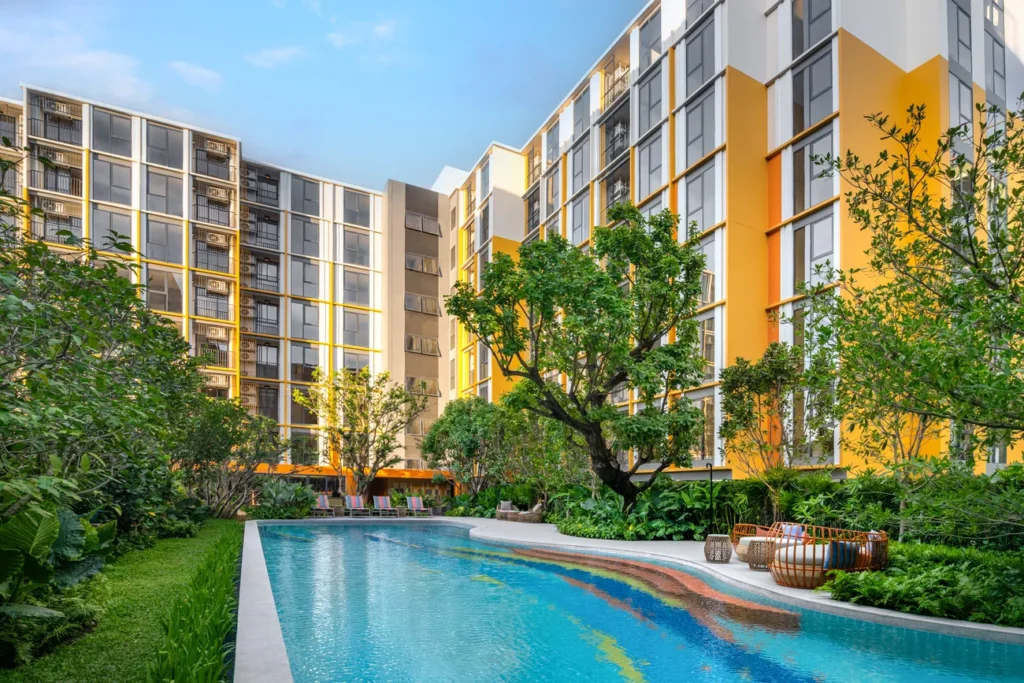 Phuket, Muangfrom 24.75m²
 Phuket, Cherngthalaifrom 39.25m²
 Phuket, Layanfrom 475.10m²
How to Sell Real Estate Remotely
An owner located in Russia, Kazakhstan, another CIS country, or any other country may sell their real estate in Thailand without being physically present. The legal mechanism for doing so is— Notarized Power of Attorney, which grants the authorized representative the right to act on behalf of the seller: to sign contracts, participate in registration, and receive documents.

The specific requirements of a Land Office regarding the form and formatting of a power of attorney may vary by region. A power of attorney issued outside Thailand is not automatically accepted. As of October 2026, depending on the country of issuance, a notarial certification, consular legalization, and a certified translation into Thai may be required. Thailand has acceded to the Hague Apostille Convention; however, its entry into force for the country is scheduled for February 28, 2027 — Until that date, the apostille does not replace the established consular legalization procedure. Before preparing the document, you must coordinate the specific requirements with a Thai lawyer and with the Land Office where the property is located.
Mini Checklist Before Issuing a Power of Attorney:
- Consult a Thai law firm to find out what form of power of attorney the Land Office at the property's location accepts.
- Get a template or a list of content requirements for the document.
- Have the power of attorney notarized and complete the consular legalization procedure required by the issuing country.
- Arrange for a certified translation into Thai.
- Make sure the power of attorney covers all necessary actions: signing contracts, participating in the registration process, and receiving documents.
- Send the original document to Thailand well in advance—taking into account the delivery time and any necessary coordination with the Land Office.
- Verify the representative's identity and qualifications: a power of attorney grants him or her the right to take legally binding actions on your behalf.
In addition to the power of attorney, it is necessary to agree in advance on the payment procedure: which account the payment will be made to, at which bank the account is held, and how the subsequent transfer abroad will be arranged. The handover of keys and documents to the buyer is handled through the same representative or the management company.
What Powers Should Be Limited in a Power of Attorney?
When drafting a power of attorney, consult with a Thai lawyer to determine whether restrictions can be placed on the representative’s authority, such as a specific property, a minimum sale price, the term of the power of attorney, and a list of permitted actions.
The receipt of revenue by a representative and changes to the seller’s bank account information should not be included automatically. If such authorizations are necessary, their implications and the payment confirmation procedure should be reviewed separately.
The content of the power of attorney must comply with the Land Office’s requirements. Excessive restrictions may also prevent registration, so the document should be reviewed and approved before it is notarized and legalized.
Remote sales require more careful coordination than in-person transactions. Each step must be documented, and payment details must be agreed upon directly. Additional aspects of remote processing are discussed in the article “Buying Real Estate in Thailand Remotely".
How to Receive Payment After a Sale
Payments between the seller and the buyer are made in stages: a deposit upon reservation, a possible interim payment, and the final payment on the day of registration. The procedure and timing for each payment must be explicitly specified in the sales contract.
The final settlement procedure must be agreed upon before the transaction is registered. It is preferable to arrange for the funds to be deposited directly into the seller’s bank account and to verify that the funds have actually been credited. If a bank check or other agreed-upon payment instrument is used, its validity and the procedure for receiving the funds should be confirmed with the bank in advance. The registration of the transfer of title and the final settlement must be coordinated so that the seller does not transfer title without reliable confirmation of payment.
Withdrawing Money Abroad
If a seller wants to transfer proceeds from Thailand abroad, they contact the bank where they have an account. The bank verifies the reason for the payment and the source of the funds. Typically, to transfer proceeds from the sale of real estate, the bank requires the purchase and sale agreement and documentary evidence of the registered transfer of title—tax receipts from the Land Office and the Chanote after registration. The bank may request additional documents depending on the amount, the destination of the transfer, and its internal procedures.
Documents regarding the initial inflow of foreign currency upon purchase (FET or equivalent) may be useful for verifying the property’s financing history; however, are not a universal, mandatory document for any transfer of sales revenue. The specific set of documents and the validity of the transaction must be confirmed with the sending bank in advance. If the original transfer document is lost, contact the bank through which the funds were received at the time of purchase: an archived statement or similar confirmation can often be retrieved.
Which banking documents pertain to the buyer, and which to the seller?
| Participant | What Are Documents For? | Key Evidence |
|---|---|---|
| Foreign buyer | Confirmation of the Legal Basis for Obtaining Foreign Freehold Status | Documents evidencing the receipt of funds in accordance with applicable requirements |
| Salesperson | Verification of the Basis for an Outbound Revenue Transfer | Sales contract, proof of transfer of ownership, and additional documents as requested by the bank |
| A seller who has previously transferred money from abroad | Proof of payment history for the initial purchase, if necessary | FET, bank confirmation, or archived documents |
The Bank of Thailand provides separate guidelines on confirming the receipt of funds and the documentation required for remitting proceeds from the sale of real estate abroad.
The possibility of a transfer should not be determined solely by the presence of a FET. The requirements depend on the basis of the transaction, the banking service, the currency, and the destination country.
One example of an outgoing SWIFT transfer is described at Siam Commercial Bank page. Requirements regarding the documentation package, fees, and the availability of specific loan programs vary from bank to bank — The conditions at a single institution are not universal.
Practical considerations that are often overlooked:
- Some routes may be restricted due to the policies of correspondent banks or other regulatory requirements—this is a technical reality that has nothing to do with the legality of your transaction in Thailand.
- Conversions from Thai baht to other currencies are made at the bank's exchange rate, which may differ from the interbank rate.
- Once you receive the funds in your country of residence, consult with a local tax advisor: depending on the jurisdiction and your status, you may have tax obligations.
Agree on the bank transfer route before signing the purchase and sale agreement, not after registration. This is one of the most practical steps in preparing for a transaction.
What to Do After Registering a Sale
After completing the registration and receiving the payment calculation, the seller is advised to:
- Obtain and keep copies of the registration documents and receipts for payment of taxes and fees.
- Sign the property transfer form, specifying the date, the condition of the apartment, and a list of furniture and appliances.
- Record the meter readings and hand over the keys, access cards, and remote controls.
- Notify the condominium's legal entity or management company of the change in ownership.
- Pay utility bills and settle any outstanding maintenance fees.
- Review the terms of existing insurance policies, management agreements, and lease agreements.
- Keep bank statements confirming payments and the transfer of revenue.
- Check whether you are required to file tax returns in Thailand and in your country of tax residency.
Closing the transaction at the Land Office and the termination of all the seller’s contractual obligations are not always the same thing. Certain payments and notifications may still be outstanding after registration.
Where and how to find a buyer faster
The markets in Pattaya, Phuket, Koh Samui, and Bangkok differ significantly in terms of buyer demographics, typical properties, and demand factors. Understanding these differences influences the choice of marketing strategy.
| Location | Typical Objects | Demand Factors | What a Seller Should Keep in Mind |
|---|---|---|---|
| Pattaya | Condos—studios and one-bedroom units, villas in suburban areas | Affordable entry price, proximity to the ocean and amenities, rental potential | High competition in the listings; pricing strategy and ad quality are critical |
| Phuket | Villas and condos in tourist areas (Patong, Kamala, Bang Tao, Surin) | Resort demand, international buyers, views, and rental characteristics may be significant for a number of segments | A wide price range; assess actual demand based on comparable offers |
| Samui | Villas, boutique condos, and properties on the slopes | Lifestyle-oriented consumers; international demand | The customer base may be smaller than at large resorts; access to international retail chains is important |
| Bangkok | Condominiums near BTS/MRT lines, apartments | Local and regional demand, expats, rental investors | Transportation accessibility is a key factor; demand is less dependent on the season |
Even within the same city, two properties that are formally similar can behave very differently on the market. An apartment in a popular complex with a proven rental history and an apartment in the same neighborhood with outdated furnishings and an inconvenient floor level are different products for different audiences.
How to improve your listing and find a buyer faster:
- Take professional photos in natural light—that's the first thing a buyer looks at.
- Please specify the legal status, exact square footage, floor level, type, furnishings, annual maintenance fee, and distance to key locations.
- Identify your target audience: For investors, rental potential is key; for buyers looking for a place to live, peace and quiet, amenities, and a view are important.
- If you’re getting views but no offers, check your pricing, the property’s condition, the terms of the deal, and whether the listing meets your target audience’s expectations. If you’re getting almost no views, check your listing channels and make sure the listing is complete.
Are you planning to sell your property and then choose a new one in Thailand? Proceed Real Estate Selection by Thaicost, to identify suitable options based on budget, location, and the purpose of the purchase.
Mistakes Made by Sellers
Most problems that arise when selling real estate in Thailand are predictable and occur repeatedly for the same reasons.
Setting prices too high without conducting market analysis. The seller bases the price on a purchase price from several years ago or on a desired amount, without comparing it to actual offers. An inflated asking price can prolong the search for a buyer, reduce the number of inquiries, and lead to a subsequent adjustment of the listing. However, lowering the price does not guarantee a sale: it is necessary to take into account competing offers, the condition of the property, and the legal terms of the sale.
Incomplete documents. The seller lists the property without checking the Chanote for encumbrances or technical errors. When a buyer is found, the problem comes to light—and negotiations fall through or are delayed for weeks.
Ignoring expenses. Taxes, brokerage commissions, and debts owed to the management company are deducted from the sale price. If these are not taken into account in advance, the seller faces an unexpected reduction in net proceeds at the time of settlement.
A lack of understanding of leasehold restrictions. The seller promises the buyer something that is not included in the contract: a lease renewal or an assignment of the lease without the landlord’s consent. This leads to disputes after the transaction is completed and carries the risk of legal liability.
A vague deposit agreement. Unclear terms regarding refunds or deductions in the event of a deal falling through can lead to disputes. Always set these terms clearly and in writing; make sure you understand the legal implications under Thai law.
Incorrect order of calculations. Completing the registration process before the full payment has been confirmed as having been credited to the seller’s account poses a serious risk. It is advisable to consult with a lawyer in advance to coordinate the registration and payment procedures.
Contacting the bank at a later time regarding the transfer. The issue of withdrawing revenue often comes up after registration—and that’s when you find out that the bank is requesting additional documents or that the desired transfer destination is technically restricted. Make sure to clarify all of this before signing the contract.
Signing a complex transaction without a legal review. In the case of a leasehold, a villa, a corporate structure, or a remote seller, independent legal counsel is strongly recommended. This applies to both parties.
Conclusion
A safe real estate sale in Thailand is based on four key elements: a realistic market price, verified and complete ownership rights, a preliminary calculation of all expenses, and a clear registration and payment process. Overlooking any one of these elements means risking a prolonged listing period, unexpected expenses on the day of the transaction, or legal complications afterward.
The sale of a freehold condominium and a villa transaction conducted through a corporate structure are fundamentally different procedures. A remote sale adds a step involving a power of attorney and requires more rigorous coordination, including advance planning regarding document legalization requirements. The issue of transferring funds abroad should be addressed before the contract is signed—both in terms of the banking route and the tax implications in the country of residence.
If you’re planning to sell an apartment or villa in Pattaya, Phuket, Koh Samui, or Bangkok, the Thaicost team can help with marketing your property and managing the sale. The specific terms of our partnership and support are discussed on a case-by-case basis.
Start by reviewing the documents and conducting a comparative analysis—these two steps will determine how smoothly the rest of the process leading up to the closing of the deal will go.
 Real estate in Georgia
 Real estate in Cyprus
 Real estate in UAE
 Real estate in Bali
 Real estate in Montenegro
 Real Estate in Spain
 Real Estate in Saudi Arabia
 Real Estate in Turkey
 Real Estate in Zanzibar
 +66 98 432 7651
 hello@thaicost.com
 Boat Lagoon Marina, 22/1 Moo 2, Thepkasattri Rd, Koh Kaew, Phuket 83000, Thailand




 Get TOP-7 catalog of objects