
 +66 98 432 7651


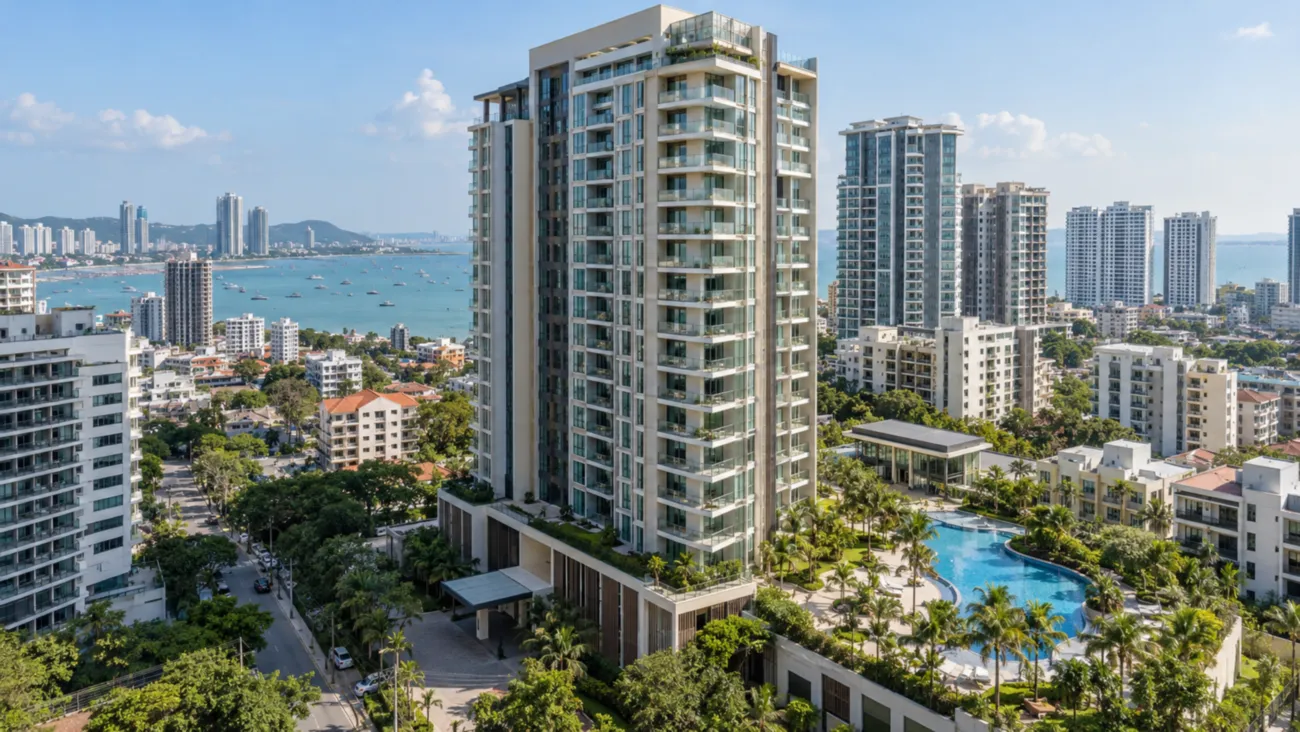
A foreign national may purchase an individual apartment in a registered condominium in Thailand as freehold property—this is expressly provided for in the Condominium Act (B.E. 2522). For most non-resident buyers, the process requires meeting three main conditions: the building must have the status of a registered condominium, a foreign quota must be available within it, and the purchase price must be remitted from abroad in foreign currency and duly confirmed by a bank. Section 19 of the Condominium Act provides for other legal grounds for purchase—for specific categories of buyers—which require a separate set of documents.
This article walks you through the entire process: from selecting a property and verifying its legal status to signing the contract, transferring funds, registering the title, and receiving the keys. It also covers the necessary documents, costs, regional differences, and the most common mistakes that can derail a transaction or result in the loss of a deposit.
The most important thing before making a purchase is to check not only the apartment and the price, but also whether it is possible to register this specific property in the name of a foreign buyer.
Buying a Condo in Thailand: The Essentials in a Minute
A foreign national may register a condominium unit in their own name as freehold property, provided the requirements of the Condominium Act are met. For the average buyer, the most important steps are to verify the building’s registration, check the availability of the foreign ownership quota, and review the documents confirming a legally valid basis for the purchase.
| Question | Short answer |
|---|---|
| Can a foreigner buy an apartment? | Yes, in a registered condominium |
| Foreign Quota | No more than 49% in total area for all units |
| Form of Ownership | Freehold — perpetual ownership |
| The primary payment method for foreigners | Foreign currency receipts from abroad with bank confirmation |
| Where is the right registered? | At the Land Office where the condominium is located |
| Standard transfer fee | 2% of the official appraised value |
| Specific Business Tax | 3.3%, if the sale is subject to this tax |
| Stamp duty | 0.5%, when SBT is not applied |
| Long-term rental instead of ownership | Typically up to age 30, with no automatic renewal guarantee |
| Is a residence permit required? | No |
| Can I apply for this remotely? | Yes, through a representative with a valid power of attorney |
Before making a deposit, obtain confirmation that the property is eligible for foreign registration, verify the title and any encumbrances, and agree on the banking documents and refund terms.
What Is a Condominium in Thailand?
In legal terms, a condominium is a multi-unit building registered in accordance with Thailand’s Condominium Act. Each unit in such a building has a separate title deed— condominium unit title deed (apartment title deed), which should be distinguished from the land title deed (Chanote / Nor Sor 4 Jor) for the plot of land on which the building stands. The owner receives title to a specific unit and a legally established share in the common property of the condominium.
This is a fundamental difference from apartments in a typical residential building, rooms in a hotel complex, and units in serviced residences. Such properties may look identical to a condominium on the outside—featuring a pool, lobby, and concierge service—but they do not provide the buyer with a separate title deed or ownership rights to a specific unit. Often, such complexes are sold on a leasehold basis or through a share in a Thai company, which significantly alters the terms of ownership.
To fully understand a building’s status, it is important to distinguish between two related but separate procedures: registering the building as a condominium and registering condominium as a legal entity — a legal entity responsible for managing the building’s common property. A legal entity is a registered organization with its own bylaws, bank account, and authority; it collects maintenance fees, hires a property manager, and makes decisions regarding common expenses on behalf of all owners.
The term “condo” in marketing materials does not, in and of itself, mean that the building is registered as a condominium. Before purchasing, you must verify the property’s legal status—specifically, whether the building is registered as a condominium, whether you have the documents for the individual unit, and whether the condominium is registered as a legal entity.
Condominiums and Other Types of Housing
| Object Type | Legal Status | Freehold for a Foreigner | Main risk or limitation |
|---|---|---|---|
| Registered Condominium | A separate condominium unit title deed for the unit | Yes, if a quota is available | Foreign quota exhausted |
| Apartments in a residential building that is not a condominium | There is no separate title deed for the unit | No | A foreign national cannot obtain freehold title |
| Serviced apartments / residences | It depends on the building's registration and the terms of the contract; the status is verified based on the documents, not the name | Depends on the actual status | The ownership status is determined by legal documents, not by a marketing designation |
| Hotel Rooms / Serviced Apartments | It depends on the registration and the structure of the contract; status is verified based on the documents | Depends on the actual status | The buyer's rights should be established based on specific documents |
| Private home (villa) | The building is separate; the land is subject to restrictions | The building—yes, the land—no | A foreigner is not entitled to own land |
Can a foreigner buy a condo in Thailand?
Yes, a foreign citizen has the right to own an apartment in a registered condominium on a freehold basis. This right is enshrined in Section 19 of the Condominium Act. However, the law sets forth conditions that the buyer must meet: the building must have the proper legal status as a condominium, the total share of foreign ownership in the building must not exceed the established limit, and the buyer must confirm the legal basis for the purchase in accordance with the applicable provision of Section 19.
Purchasing a condominium does not grant a foreign national a visa, a residence permit, or the right to permanent residence in the country. These are separate matters under immigration law that are not directly related to property ownership.
Freehold and leasehold
Freehold — Perpetual ownership of a specific unit. This is the specific ownership regime available to a foreigner under the condominium’s foreign ownership quota. The owner receives a condominium unit title deed in their name. The sale, gift, or inheritance of a freehold unit to a foreign national requires a separate review of the grounds for acquisition and compliance with the foreign quota—the automatic transfer of rights, as occurs in a purchase for consideration with currency verification, does not take place in these cases.
Leasehold — A long-term lease, typically for 30 years with the possibility of renewal. A leasehold is established through a lease agreement, not through a transfer of ownership. Promises of a “guaranteed” three-time renewal of the lease for a total of 90 years should not be taken as unconditional: Thai law does not provide for automatic lease renewal, and the actual fulfillment of such a promise depends on the terms of the agreement and the will of the parties at the time of each renewal. For more details on the differences between the two regimes, see the article “Freehold and Leasehold in Thailand".
Foreign Quota 49%
Pursuant to Section 19 bis (19 ทวิ) of the Condominium Act, the total area of units owned by foreign citizens and entities treated as such, may not exceed 49% of the total area of all units in the condominium. It is specifically the total area of all units—not the number of apartments and not the vague “living area of the building”—that serves as the basis for calculating the quota.
Confirmation of the quota status is provided by the condominium manager or the condominium’s legal entity. The Land Department verifies compliance with the quota when registering the transaction. This means that you should request information about the quota before signing a binding contract and, certainly, before transferring the deposit.
A common situation: there are unsold apartments in a building, but the foreign quota has already been exhausted. In this case, it is usually not possible to register an additional freehold title in a foreigner’s name. The quota may become available again if the registered ownership structure is modified accordingly; specific details should be clarified with the Land Office.
How the foreign quota is calculated: an example
Suppose the total area of all units in the condominium is 20,000 m². The maximum area that can be owned by foreign nationals under the standard 49% restriction is 9,800 m².
If 9,760 m² has already been registered to foreign owners, the remaining quota is 40 m². A foreign buyer will not be able to register an additional unit with an area of 55 m² within this quota without changing the registered ownership structure.
| Indicator | Area |
|---|---|
| Total area of all units | 20,000 m² |
| Maximum foreign quota: 49% | 9,800 m² |
| Already owned by foreign owners | 9,760 m² |
| Balance | 40 m² |
| Area of the selected apartment | 55 m² |
| Is it possible to register under these conditions? | No |
This is a hypothetical example. The actual area used for the calculation and the current quota must be verified with documents specific to the condominium in question.
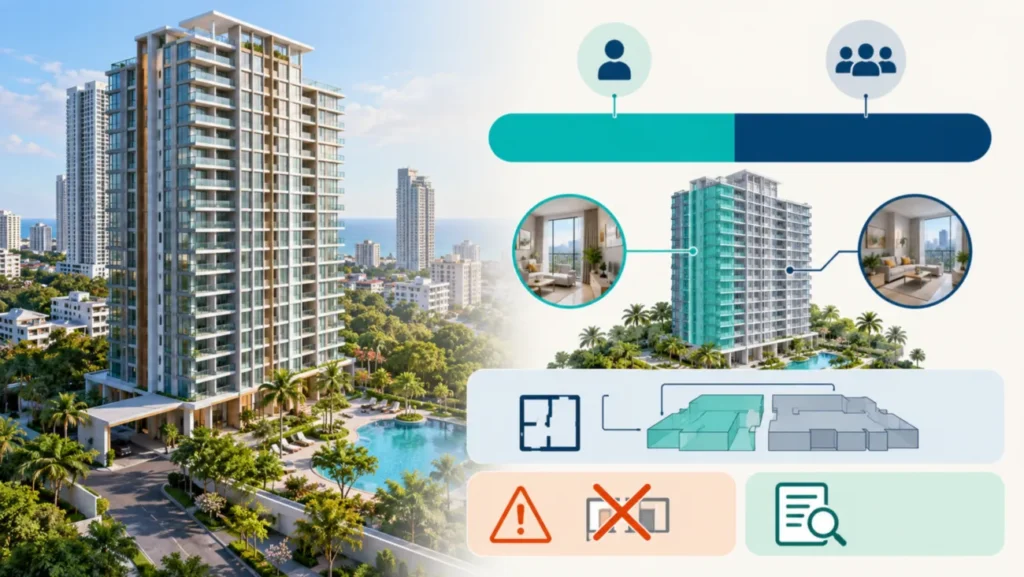
For more information on the calculation and verification process, see the article “Foreign Quota in Thailand".
Condominiums in Thailand for Foreign Buyers


 Phuket, Patong
 starting at 44.77 m²

 Bangkok, Sukhumvitstarting at 164 m²




How to Choose an Apartment to Buy
Before looking at specific properties, it’s a good idea to determine the purpose of your purchase—it influences your choice of neighborhood, building type, floor level, floor plan, and financial model.
For permanent residence Transportation access, proximity to essential infrastructure (schools, clinics, stores), the quality of building management, and noise levels are all important factors. The choice of floor and orientation affects temperature and ventilation—not just the view.
For a seasonal getaway Key considerations include distance from the sea or the city center, the ability to store personal belongings for extended periods, reliable security and service while the owner is away, and flexibility in managing the apartment.
For long-term rentals The key factors include the area’s liquidity, demand from expats or local residents, the type of lease permitted under the condominium rules, and the condition of the apartment in terms of ease of maintenance.
For resale The liquidity of the complex itself is important: how many similar apartments are already on the market, how active is the resale market in the building, and are there prospects for the neighborhood’s development? Promises from the developer or agent about future price increases are not a basis for an investment decision.
Three Scenarios: A Project Under Construction, a Newly Completed Unit, and a Resale Apartment
The three options differ significantly in terms of duration, verifiability, and risks.
Project under construction (off-plan) — You can only view the apartment in the showroom or based on floor plans. The transfer of ownership of the unit is registered after the necessary construction and registration procedures are completed, including the registration of the condominium and the issuance of the title deed for the unit—which can take anywhere from one to several years, depending on the contract and the actual progress of the work. During this period, the buyer makes payments in installments. Sometimes this arrangement results in a price lower than that of comparable completed properties, but this depends on the specific project and market—it is not a universal rule. Risks are associated with the developer’s financial stability, the completion timeline, and whether the finished property meets the advertised specifications.
A new, finished unit from the developer — You can view the apartment before purchasing it; the paperwork is in order, and the quota is being verified for the specific unit. Registration is possible immediately after the legal review is completed and payment is made. The main risks are potential flaws in the finishing work and the fact that the building does not yet have a track record of management.
Resale apartment in a completed building It allows you to assess the actual condition of the property and evaluate the management company’s performance. However, it does not rule out hidden defects, accumulated debts owed to the condominium association, or encumbrances, which require a thorough review.
A project under construction, a newly completed unit, and a pre-owned apartment
| Option | Pros | Restrictions | What to Check | Who is it for? |
|---|---|---|---|---|
| Project under construction (off-plan) | Installment payments, a wide selection of floor plans | You can't view the results; there's a long wait | Building permit, land title documents, the developer's track record, and the terms of the contract | Buyers with plenty of time and a tolerance for construction risks |
| A new, finished unit from the developer | You can inspect the finished unit before purchasing it | A more limited selection of floor plans; no management history; legal status, permits, encumbrances, and documents still need to be verified | Condition of the finishes, management company, quota, documents | Those who move in or rent out a property right away |
| Resale apartment | The actual result is visible, and the building's history is known | There may be hidden defects, outstanding debts, or encumbrances | Documents, outstanding payments to the condominium association, condition of the property | Buyers who value predictability in a property |
Check out the condominiums currently under construction
 Pattaya, Wongamatstarting at 40.5 m²
 Pattaya, Pratamnakstarting at 34.5 m²
 Phuket, Bang Taostarting at 45 m²

Practical criteria for choosing a condominium:
- Legal Status of the Building and Availability of the Foreign Quota
- The reliability and experience of the management organization
- Condition of building systems (elevators, water supply, air conditioning)
- The Size of the Sinking Fund and Its History of Use
- The actual cost of monthly maintenance for common areas
- Condominium Rules (Pets, Subleasing, Renovations)
- Transportation Accessibility and Infrastructure in the Pedestrian Zone
- Liquidity in the secondary market for a similar area
Are you looking for an apartment in Thailand? On Thaicost, you can compare condos in Pattaya, Bangkok, Phuket, and Koh Samui based on your budget, the purpose of your purchase, and the available ownership options. Find suitable options.
Where is the best place to buy a condo?
Pattaya, Bangkok, Phuket, and Koh Samui are four fundamentally different markets. The choice between them depends on your lifestyle, how often you use the apartment, and the practical considerations of managing the property remotely. Liquidity, seasonality, average rental periods, and the availability of foreign ownership quotas should be assessed for a specific area and complex based on current data—generalizations about entire cities without specific statistics provide only a rough guide.
Pattaya It has a well-developed condominium market with a wide selection of properties in various price ranges and extensive infrastructure for foreign buyers. The city caters to both tourists and long-term residents, which creates diverse rental demand. Seasonality is less pronounced than at island resorts.
Bangkok — a market with a deep and diverse supply. There is strong demand here from expats working in the city and buyers looking for long-term rentals. Condominiums near BTS and MRT lines traditionally enjoy strong rental demand. For Bangkok, the seasonal nature of a tourist resort is generally less of a determining factor; however, occupancy rates and demand vary by district, segment, and time of year.
Phuket — the largest island market with high tourist traffic. Seasonality is pronounced: peak demand for rentals occurs from November through April, while activity declines during the monsoon season. The status of the foreign ownership quota in specific complexes must be verified: it depends on the sales history of the building in question and varies across the market.
Samui has its own unique characteristics that must be considered separately. The market is less standardized: it includes villas, small complexes, and non-traditional property types. The legal status of a property on Samui requires particularly thorough verification — The marketing term “condominium” may refer to a property with a different legal status. Airport infrastructure and air service schedules also affect the island’s accessibility.
Choosing a Region to Buy a Condo
| Region | Market Characteristics | A suitable scenario | What to Look For |
|---|---|---|---|
| Pattaya | A wide selection and well-developed infrastructure for foreigners | Housing, Long-Term Rentals, First-Time Home Buyers | Proximity to the sea, the quality of the property management company, and the occupancy rate of a specific building |
| Bangkok | Strong supply, diverse rental demand | Long-term rental, permanent residence | Proximity to transportation hubs, type of rental demand |
| Phuket | High tourist traffic, pronounced seasonality | Vacation Rentals (in accordance with the law) | Quota Status in a Specific Building, Off-Season Management |
| Samui | Mixed market, non-standard formats | Secluded getaways, niche properties | Mandatory Detailed Verification of Legal Status |
What documents should be checked?
This is one of the most important practical steps, which is often underestimated by buyers who are new to the Thai market. The due diligence process must be completed before making any substantial payments, rather than after the contract is signed.
Documents should be reviewed before any non-refundable payments are made, rather than after the contract is signed, when the buyer is already at risk of losing the deposit.
Condominium unit title deed. For an individual unit in a registered condominium, this is the document for a specific apartment—the condominium unit title deed. It should not be confused with the land title deed (Chanote / Nor Sor 4 Jor) for the plot of land on which the building stands: these are different documents relating to different properties. Verify that the document specifies your specific unit with the correct number, square footage, and seller’s information. You can verify the original at the Land Department where the property is located—this is a standard procedure described in official guidelines. Department of Lands.
How to Check an Apartment and Its Documents Yourself at the Thai Land Department
In Thailand, verifying an apartment is different from obtaining an extract from the unified, publicly accessible online registry. The key authority is the Department of Lands (DOL), and information regarding the foreign ownership quota is further confirmed by the condominium’s legal entity. Information from a developer’s website or a listing should not be considered proof of ownership.
Step 1. Obtain the property details. Ask the seller for a copy of the condominium unit title deed, the exact unit number, the name of the condominium, its location, and documents verifying the seller’s identity or authority.
Step 2. Identify the appropriate Land Office. You should contact the Land Office that serves the area where the building is located. You can find the office’s contact information and organizational structure on its official website. Department of Lands.
Step 3. Arrange for a title search. Through an independent Thai attorney or with the owner’s assistance, request a review of the registered owner, the unit’s specifications, mortgages, liens, and other registered encumbrances. Do not assume that any third party without proper documentation will be granted full access to this information.
Step 4. Check the foreign ownership quota separately. Request a letter from the condominium’s legal entity regarding the status of foreign ownership and the eligibility of the specific transaction for registration under 49%. A title search alone does not confirm the availability of unused quota.
Step 5. Check for any outstanding balances. Request a debt-free certificate from the condominium’s legal entity and confirm whether there are any other obligations related to the maintenance of the apartment.
Step 6. Get a written assessment. Before making a non-refundable payment, ask a lawyer to prepare a brief report stating: who the owner is, whether there are any encumbrances, whether it’s possible to register the apartment in a foreigner’s name, which documents are missing, and what needs to be done before registration.
An online appraisal does not replace a legal review of ownership rights. Official government appraisal services are intended to provide estimated information, not to guarantee the absence of encumbrances.
Don't want to figure out dozens of projects on your own?
Answer 4 questions about your budget, the city, and your reason for buying. Get a personalized selection of apartments and a list of questions to ask the seller before putting down a deposit.
Condominium Registration Documents. Make sure the building is registered as a condominium and that the condominium legal entity has been registered separately. Ask the property manager for the relevant certificates and articles of incorporation.
Confirmation of the foreign quota. Ask the condominium manager for a statement regarding the current status of the foreign ownership quota. The document must confirm that the total area of units owned by foreign nationals does not exceed 49% of the total area of all units in the building, and that the purchase of a specific unit will not violate this ratio.
Information about the seller and the seller's authority. The information on the condominium unit title deed must match the seller’s passport information. If the apartment is being sold by a legal entity or a representative acting under a power of attorney, it is necessary to verify the authority and validity of the supporting documents.
Verification of liens and other encumbrances. The existence of a mortgage or other encumbrance is recorded with the Land Office. If a unit is encumbered by a mortgage, the procedure for repayment and removal of the encumbrance must be agreed upon in advance with the bank and the Land Office—including directly at the time of registration of the transfer of title. This is a standard procedure, but it requires coordination in advance, not on the day of the transaction. The procedure for accessing registration records and the documents required for verification are specified by the relevant Land Office. If the buyer is unable to obtain the information independently, the verification should be arranged through the seller and an independent Thai attorney.
Certificate of No Outstanding Balances with the Condominium Association. For a standard registration of a transfer of title to a unit, the Land Office requires certificate of debt-free status A certificate from the condominium’s legal entity confirming that there are no outstanding debts for common expenses as defined by law (Section 29 of the Condominium Act); any such debts must be paid off prior to registration. You should arrange to obtain this document in advance—while the seller’s accumulated debt to the condominium association is the seller’s obligation, it does have a practical impact on the progress of the transaction.
Sales Contract. For registration, the Land Office accepts documents that meet its requirements; documents in a foreign language may need to be translated into Thai and certified. Buyers are advised to obtain a clear, bilingual version of the contract and have it reviewed by an independent attorney.
For the project currently under construction Additionally, the following will be required: documents for the land parcel, the applicable building permit, information about the developer and the project’s contractual structure, as well as EIA approval—if an environmental impact assessment is mandatory for this project. The EIA should not be confused with a permit to sell apartments: it is a separate document under environmental regulations, not a universal requirement for all projects.
A practical list of documents you should request before making any significant payments:
For the finished unit:
- Original condominium unit title deed containing the seller's information
- Certificate of Registration of a Building as a Condominium and as a Condominium Legal Entity
- Report on the Status of the Foreign Quota
- Certificate from the Land Department stating that there are no encumbrances
- Certificate of No Debt issued by the condominium's legal entity (or a person authorized by it)
- Draft Sales and Purchase Agreement (SPA)
- The seller's identification card or the company's articles of incorporation
For a project under construction (if the condominium unit title deed has not yet been issued):
- Land title documents (land title deed)
- Building permit and other applicable project permits
- Agreement and Plan for the Registration of a Condominium, Including the Procedure for Issuing Individual Titles to Units
- Information about the developer: history of completed projects, company structure
- EIA approval — if an environmental impact assessment is required for this project
| Document | Where and from whom to get it | What You Need to Check |
|---|---|---|
| Condominium unit title deed — a document certifying ownership of an apartment | Ask the seller; verify the registered information through the Land Office where the property is located | Owner's name, unit number, square footage, registered mortgages, and other encumbrances |
| Certificate of Condominium Registration | From the seller, developer, or condominium legal entity; check with the Land Office for details | Is the building registered specifically as a condominium, allowing for the establishment of separate ownership rights for each unit? |
| Certificate of Registration of a Condominium Legal Entity | From the manager of the condominium's legal entity; please check with the Land Office for details | Is the organization authorized to manage the common property and issue the necessary certificates registered? |
| Foreign Ownership Quota Certificate | Condominium as a Legal Entity | Does foreign ownership exceed 49% of the total area of all units? Is it possible to register the selected apartment in a foreigner's name? |
| Debt-free certificate — a document certifying that there is no outstanding debt | Condominium as a Legal Entity | Are there any outstanding balances for general expenses as required by law; has a document been prepared to register the transfer of title? |
| Seller's Documents | From the seller or the seller's authorized representative | Does the information match the title; does the company or representative have the necessary authority, if applicable? |
| Sales and Purchase Agreement (SPA) | From the seller or developer | A detailed description of the unit, the price, the timeline, the payment schedule, the allocation of expenses, the terms for refunding the deposit, and the responsibilities of the parties |
| Bank confirmation of foreign currency receipt (FET or other acceptable document) | At a Thai bank that received funds | Does the document confirm the receipt of funds from abroad, and does it meet the requirements of the bank and the Land Office for a purchase under Section 19(5) of the Condominium Act? |
| Land Title Documents — for Off-Plan Properties | From the developer; verify the registered information through the Land Office | Who owns the plot of land? Are there any encumbrances? Does the land use right allow for the implementation of the proposed project? |
| Building Permit — for Off-Plan Projects | From the developer; please verify the validity with the appropriate local authority | Has a permit been issued for the project in question, and do the key construction parameters match? |
| EIA approval — if an environmental impact assessment is required | From the developer; verify through the appropriate government agency | Was an environmental assessment required, and was the necessary approval obtained? |
Important: For a condominium under construction, the individual condominium unit title deed, the final foreign quota certificate, and the debt-free certificate may not yet exist. In such cases, the documents related to the land, permits, the developer, and contractual guarantees for future registration are reviewed. The documents for a completed unit are verified before the transfer of ownership is finalized.
What documents does a foreign buyer need?
The buyer is generally required to provide a valid international passport, identification information for the contract, bank confirmation of funds received in accordance with the applicable provisions of the Condominium Act, and—if the transaction is conducted through a representative—a power of attorney in a form accepted by the Land Office.
Depending on the circumstances, additional documents may be required: a translation of your passport or other documents, proof of marital status, documents from co-buyers, and corporate documents if the purchase is made by a legal entity.
Before visiting the Land Office, ask your lawyer for the final checklist specific to your transaction. It depends on the basis of the purchase, the composition of the buyers, and the requirements of the specific registration office.
Is it possible to conduct a condominium inspection entirely online?
You shouldn't expect a single public online service that will simultaneously show the apartment's owner, all encumbrances, the available foreign ownership quota, outstanding debts, and the developer's permits.
This information pertains to various documents and organizations. Ownership and registered encumbrances are verified through the Land Office; foreign ownership limits and debts are verified through the condominium’s legal entity; and construction documents are verified through the developer and the relevant government agencies.
For a foreign buyer, the most reliable approach is to gather documents from several sources and have an independent Thai lawyer verify that they are consistent with one another.
For more information on the various aspects of the audit, see the articles “Property Inspection When Buying a Home" and "Documents Required to Purchase Real Estate in Thailand".

How to Buy an Apartment
The process of purchasing a condominium consists of several sequential steps. The procedure does not differ significantly depending on the market—whether it’s Pattaya, Bangkok, Phuket, or Koh Samui—but the timing of each step depends on the readiness of the documents, bank terms, and the status of the specific property.
| Stage | What Needs to Be Prepared Before Moving Forward |
|---|---|
| Selecting an Object | The type of ownership and status of the property have been confirmed |
| Preliminary Check | Verified that registration is possible for a foreign national |
| Reservations | The terms for the refund of the deposit have been signed |
| Due Diligence | A legal opinion regarding the title, encumbrances, and the seller has been received |
| SPA | The price, timeline, allocation of expenses, and responsibilities have been agreed upon |
| Funds Transfer | The bank confirmed the procedure for preparing the necessary documents |
| Registration at the Land Office | A complete set of documents has been prepared, and the date and calculations have been agreed upon |
| Transfer of an Apartment | The keys, documents, inspection report, and meter readings have been received |
There is no standard timeframe for a transaction. A completed unit with all documents in order and a property under construction require different amounts of time; for off-plan properties, the registration timeline depends on the project’s completion and the necessary registration procedures.
1. Selecting a Property and Verifying the Foreign Ownership Quota
Once you’ve found an apartment, you must verify whether a foreigner can register there before paying a non-refundable deposit. For a completed property, this means obtaining an official statement regarding the status of the foreign quota from the condominium manager. For off-plan properties, where an official statement may not be available at an early stage, you should specifically include a clause in the contract regarding the allocation of the foreign quota and the consequences in the event that registration is not possible. For a completed building, request documents regarding the registration of the condominium and the condominium as a legal entity. For a project under construction, if these procedures have not yet been completed, verify the land title, permits, the developer’s legal status, and the contractual terms for the future registration of the building and individual units.
2. Reservation
A reservation confirms the buyer’s intent and temporarily removes the apartment from the market. It is formalized in a separate agreement (reservation agreement), which identifies the specific apartment, specifies the price, the amount of the deposit, and the period during which the parties prepare the main contract. The reservation amount is determined by agreement between the parties and may vary significantly depending on the property class and the seller’s terms. The terms for refunding the deposit must be clearly specified: not all contracts provide for a refund in the event of negative results from a legal due diligence review or the inability to register the property abroad. This matter must be confirmed in writing before the funds are deposited.
3. Legal Review
After making a reservation and before signing the purchase agreement, the buyer conducts due diligence. An independent Thai attorney verifies any encumbrances, the accuracy of the seller’s information, outstanding debts, and whether the property meets the requirements for foreign ownership. For the finished unit The condominium unit title deed in the seller's name is verified. For the project currently under construction, where the condominium unit title deed has not yet been issued, the documents for the land parcel, the building permit, the developer’s documents, and the terms of the off-plan sale and purchase agreement—including the payment schedule, project completion dates, the condominium registration process, and the consequences of the developer’s breach of obligations. The result of the review is a written report listing any identified risks or confirming their absence. Working with an independent attorney who is not affiliated with the agent or the developer reduces the risk of a conflict of interest.
4. Sales Contract
The Sale and Purchase Agreement (SPA) is the main document of the transaction. It sets forth: the price and its breakdown, the payment schedule, a description and identification of the property, the procedure for transferring title, the parties’ liability for breach of the terms, and the dispute resolution mechanism. Before signing, the contract must be reviewed by a lawyer — both in terms of Thai law and the fairness of the terms for the buyer. Pay special attention to the provisions regarding the seller’s liability in the event of hidden defects and the terms for canceling the transaction.
5. Fund Transfers and Bank Confirmation
To register an apartment in a foreign national’s name under the most common legal basis in Section 19(5) of the Condominium Act, it is necessary to provide documentary evidence of a legally acceptable source of funds—typically through a foreign currency transfer from abroad and a bank statement. Other legal grounds under Section 19 require a separate set of evidence. The process of obtaining a bank statement is discussed in detail in a separate section below.
6. Registration of the right with the Land Department
The transfer of title is registered at the Land Office where the property is located. The seller and buyer (or their authorized representatives with properly executed documents) must be present. A Land Office official verifies the documents confirming the applicable basis for acquisition under Section 19, including bank documents for purchases under Section 19(5), as well as confirmation of the foreign quota. Following this, the transaction is registered, and a new condominium unit title deed is issued in the buyer’s name. Government fees and applicable taxes are paid on the same day.
7. Transfer of the Apartment
After registration, the buyer receives the title deed and the keys and conducts the final inspection of the apartment. The water and electricity meter readings, the completeness of the built-in appliances, and the condition of the finishes are recorded. A notice of the change in ownership is sent to the condominium manager—from that point on, the new owner becomes responsible for paying the fees.
For the project currently under construction Steps 5–7 are spaced far apart in time. Payments are made in installments as construction milestones are reached, and registration occurs after the necessary construction and registration procedures are completed—including the registration of the condominium and the issuance of the title deed for the unit—sometimes several years after the reservation is made.

How to Transfer Money to Thailand
Bank documentation for a foreign currency transfer is not a mere formality, but a mandatory requirement for registering an apartment in the name of a foreign buyer under the most common basis for purchase. Without confirmation that the funds were received from abroad in foreign currency, the Land Department will not register the transfer of ownership to a foreign national under Section 19(5).
One of the most common options The process works as follows. The buyer transfers funds from a foreign bank to an account at a Thai bank in a foreign currency (most often in U.S. dollars, euros, or other freely convertible currencies). The Thai bank converts the amount into Thai baht and issues a document confirming the receipt of foreign currency, specifying the amount in foreign currency, the amount in baht, and the conversion rate. The specific format of such a document—whether it is a Foreign Exchange Transaction Form (FET), a credit advice, or another type—depends on the bank and the amount of the transaction.
Transfer Details You must coordinate in advance with the receiving Thai bank and your lawyer to determine which details regarding the sender, recipient, buyer, specific unit, and amount must be included in the payment documents. An incorrect or overly general payment description may make it difficult to obtain the necessary bank confirmation.
What a Bank Document Must Contain For registration purposes: details of the international transfer, the amount in foreign currency, the amount in baht, and the date of the transaction. Information linking the transfer to a specific purchase is important to the Land Office. The specific acceptable document format should be confirmed in advance with both the Thai bank and the Land Office where the property is registered—practices may vary. Rules of the Bank of Thailand With regard to the documentation of foreign exchange transactions, these guidelines outline the general requirements for verifying international wire transfers.
Transfers from Russia and several other countries are subject to practical limitations: sanctions, a limited correspondent network, and difficulties in selecting a suitable payment route. The availability of a specific route should be verified immediately before the transfer—the situation may change. There are no universal solutions, and it is impossible to guarantee the availability of any specific banking channel.
Document Retention. Bank transfer confirmations should be kept for the entire duration of your ownership of the apartment. In the event of a subsequent sale or transfer of funds abroad, these documents can verify the legality of the funds’ origin and assist with the conversion of the proceeds.
A clear distinction should be made between these two concepts: bank confirmation form refers to a specific document issued by a Thai bank. When making a purchase under Section 19(5), it is necessary to confirm that funds have been received from abroad as required by law; for other grounds under Section 19, different forms of evidence apply. You should verify the specific document requirements at the relevant Land Office and bank before transferring funds.
How much does it cost to renovate an apartment?
The price of the apartment is only part of the actual budget for the transaction. The buyer should calculate the additional expenses in advance; some of these are paid at the time of registration, while others are paid before and after.
Registration fee for the transfer of title (transfer fee) is calculated at the standard rate of 2% based on the official appraised value set by the Land Department. The calculation is based specifically on the appraised value, which may differ from the contract price; this value can be verified with the Land Office prior to the transaction. The allocation of this fee between the buyer and seller is subject to agreement. Temporary exemptions from the standard rate and the scope of persons to whom they apply should be verified based on the current notice from the Department of Lands as of the date of registration of the specific transaction.
Taxes applicable to the seller, depend on the length of ownership, the seller's status, and other circumstances. Specific Business Tax (SBT) — generally, 3.3% of the greater of the contract price and the appraised value — is levied when a transaction is subject to this tax; exceptions apply, including those based on the seller’s place of residence. If the SBT does not apply, the following may be levied: stamp duty at a rate of 0.5% of the established tax base. Withholding Tax is calculated based on the seller’s status and income. Taxes are typically calculated based on the seller’s status; however, the agreement may provide for a different allocation of expenses between the parties—this matter should be agreed upon before signing the SPA.
Expenses Associated with Buying a Condo
| Expense Item | Calculation Principle | Who usually pays? | What to Check |
|---|---|---|---|
| Transfer fee (registration fee) | 2% based on the Land Dept.'s assessed value (standard) | As agreed (often 50/50) | The current appraised value of the property; applicable incentive programs |
| Specific Business Tax (SBT) | 3.3% of the greater of the contract value and the appraised value (if warranted) | Salesperson | Do the exceptions apply to the seller's specific situation? |
| Stamp duty | 0.5% from the installed base (if SBT is not applied) | Salesperson | Only if SBT is not charged |
| Withholding Tax | It depends on the seller's status and income | Salesperson | The calculation method established for this situation |
| Legal Support | A fixed rate or % per transaction | Buyer | Terms of the Agreement with an Attorney |
| Bank Fees and Currency Conversion | It depends on the bank and the amount | Buyer | Check with the bank in advance |
| Sinking fund | A one-time or additional payment under the condominium rules | Check for details regarding a specific building | Amount, structure, and possible additional contributions |
| Maintenance Fee (CAM Fee) | Monthly, depending on the area | The buyer, from the moment the apartment is accepted | Current rate charged by the management organization |
| Furnishing and Acceptance | As is and at the buyer's discretion | Buyer | What Is Included in the Contract Price |
Example: How a Seller's Taxes Affect Negotiations
Suppose an apartment is being sold for 5,000,000 baht, and its official appraised value is 3,500,000 baht.
| Consumption | Preliminary Calculation | Amount |
|---|---|---|
| Transfer fee | 2% × 3,500,000 | 70,000 baht |
| The buyer's share in a 50/50 split | 70,000 ÷ 2 | 35,000 baht |
| SBT, if applicable | 3.3% × 5,000,000 | 165,000 baht |
| Stamp duty, if SBT does not apply | 0.5% × 5,000,000 | 25,000 baht |
| Withholding Tax | Calculated separately | It depends on the seller |
In this example, SBT and stamp duty are not added together: the applicable tax regime applies. Normally, these taxes are the seller’s responsibility, but the contract may specify an agreed-upon allocation of costs. Therefore, the buyer should request a written breakdown from the Land Office and clarify exactly who is responsible for paying each item.
This example is not a cost estimate for a specific transaction and does not take into account banking, legal, or operating expenses.
Where can I check the official appraised value?
To calculate the registration fee, it is important to know not only the sale price but also the official appraised value of the property. You can find preliminary information about the appraisal through the Treasury Department’s government services, including real estate appraisal service.
For a specific condominium unit, check with the Land Office to find out which property identifiers are required and what assessed value will be used for registration.
The appraised value used to calculate the fee is not equal to the market price of the apartment and does not confirm the property's legal status.
Thailand's official website describes ways to verify appraisal data on your own.
For more information on the composition and calculation of taxes, see the article “Taxes and Fees When Buying Real Estate in Thailand".
What to Do After Registration
Registering the title is not the final step, but rather the transition point to the operational phase. After leaving the Land Office, the buyer has several practical tasks that need to be addressed promptly.
Obtain and review the property documents. A new condominium unit title deed in the buyer’s name is issued by the Land Office upon registration. Check that the information in the document is correct: the owner’s name, unit number, square footage, and address. Errors in the official document are corrected through the Land Office, and it’s best to do this right away.
Conduct the final acceptance inspection. Before signing the handover certificate, inspect the apartment: check the condition of the finishes, the functionality of the plumbing and electrical systems, and the working order of built-in appliances, windows, and doors. Record the water and electricity meter readings as of the date of transfer. If the developer or seller has promised to address any issues, make sure these commitments are documented in writing.

Notify the managing organization Regarding a change of ownership. Please provide a copy of the new title deed. From this point forward, scheduled charges—the monthly common area maintenance fee (CAM)—will be billed to the new owner. The CAM should not be confused with utility bills (electricity, water) or contributions to the sinking fund. The amount of the sinking fund and the procedure for paying it are determined by the rules of the specific condominium—be sure to clarify these when transferring ownership of the apartment.
Familiarize yourself with the condominium rules. The bylaws and internal rules govern how common areas may be used, whether apartment rentals are permitted and under what conditions, and whether pets are allowed and renovations may be carried out. Violations of these rules may result in fines from the management company.
If you plan to rent out your apartment to tourists on a daily basis, keep in mind that Short-term rental of a residential unit may be subject to hotel regulations and condominium restrictions.. The managing organization’s consent alone does not make such activities legal. The feasibility of such use should be verified separately before making an investment decision based on short-term rental income. For more details, see the article “Daily Apartment Rentals in Thailand".
Is it possible to buy an apartment remotely?
A significant portion of the process can be handled remotely: viewing properties via video call or through an agent, negotiating contract terms, and transferring funds via international bank transfer. However, certain steps require either in-person attendance or a properly authorized representative.
Things you can do remotely: select and compare properties, request documents for preliminary review, conduct a video inspection, negotiate the terms of the contract, arrange a bank transfer, and appoint a lawyer to review the documents.
What requires a representative or in-person attendance: Visiting the Land Office to register the transaction, physically taking possession of the apartment, and signing a number of documents. To avoid having to be present in person, a power of attorney must be drawn up in a format accepted by the relevant Land Office. Important: For a power of attorney signed outside Thailand, please check in advance the requirements for notarization, consular legalization, and translation. As of October 2026, an apostille is not a universal substitute for consular legalization for documents intended for Thai government agencies: Thailand is acceding to the Hague Apostille Convention, and the convention will take effect on February 28, 2027.
The scope of the representative’s authority must be clearly limited to specific actions: signing the contract, representing the client at the Land Office, and accepting the apartment. A general power of attorney with broad authority creates risks, which are out of proportion to the convenience they provide.
Common Mistakes Made by Buyers
Some of the common problems that arise when buying a condominium in Thailand are predictable and stem from rushing the process, taking someone at their word, or trying to save money on a legal review.
1. Purchase without verifying the foreign quota. The buyer pays a deposit, begins contract negotiations, and then discovers that the building’s foreign buyer quota has been exhausted. Whether the deposit is refunded depends on the terms of the reservation agreement—and a refund is not always possible. Solution: For a completed project—request an official statement regarding the quota status before making any payments; For a project under construction, where such a statement may not be available at an early stage, include a provision in the contract regarding the allocation of the foreign quota and the consequences in the event that it is exhausted.
2. Deposit prior to legal review. Some sellers or agents insist on an immediate reservation, promising that the documents will be provided later. This is acceptable only if the contract explicitly provides for a refund of the deposit in the event of legal issues or the inability to register the property abroad. Otherwise, the buyer risks losing their money. Solution: Set forth the return policy in writing before transferring the funds.
3. No confirmation of the wire transfer. The buyer transfers the funds, but the bank document either lists an incorrect purpose or is not in the correct format. The Land Office may refuse to register the transaction. Solution: Agree in advance with the Thai bank and lawyer on what information the supporting document must contain.
4. A contract without clear terms and liability provisions. Vague wording regarding delivery deadlines, the absence of penalties for delays, and undefined terms for termination—all of these factors create uncertainty that favors the seller. Solution: The contract must specify specific dates, amounts, liability, and a dispute resolution mechanism.
5. A project currently under construction without document review. A beautiful rendering and a compelling presentation are no substitute for verifying the building permit, the land title documents, and the developer’s track record of completed projects. Solution: For off-plan purchases, a legal review of the documents is just as mandatory as it is for completed properties.
6. Ignoring condominium arrears. The seller may have outstanding debt to the condominium legal entity. The debt is the seller’s obligation, but the lack of a debt-free certificate creates obstacles to registration. Solution: Require a debt-free certificate from the condominium's legal entity as a mandatory document for the transaction.
7. Expecting a guaranteed rental return. Promises made by a developer or agent regarding a specific percentage of rental income from an apartment are not government guarantees. If a developer offers a contractual rental guarantee, assess who is the obligated party under the contract, what the term is, what deductions are provided for, how the obligation is secured, and under what conditions it terminates.
The promised return on investment and a beautiful view from the window do not make up for the lack of a verified title, a problematic contract, or the inability to register the transaction.
When Is the Best Time to Put a Transaction on Hold?
| Sign | Why Is It Dangerous? | What to Do |
|---|---|---|
| The seller does not provide a title deed | It is not possible to verify a registered right | Do not make non-refundable payments |
| The quota is confirmed only verbally | A foreign national's registration application may be denied | Request written confirmation |
| They are requesting a transfer to a third party's account without providing an explanation | Payment and Banking Documentation Risks | Verify the recipient and the payment arrangement through a lawyer and the bank |
| Do not show encumbrances | There may be a mortgage or other restrictions | Check the information at the Land Office |
| They promise a guaranteed 90-year lease | Renewal is not automatic | Check the actual term and whether the conditions can be met |
| They promise a legal daily rental only with the property manager's consent | Compliance with hotel regulations may be required | Verify the legal framework for operation |
| There is no provision for a refund of the deposit | The buyer risks losing money | Modify the reservation agreement before payment |
Conclusion: How to Buy a Condo Safely
Buying an apartment in a condominium in Thailand is a structured, legal process available to foreign nationals. The step-by-step procedure is of fundamental importance: first, verify the building’s legal status and the availability of a foreign ownership quota; next, conduct a due diligence review of the property and the seller; then, finalize the contract and arrange for a confirmed bank transfer; and finally, register the title and complete the transfer of the apartment.
Rushing through any of these steps—relying on verbal promises or marketing materials—means taking risks that can be avoided. The additional costs of hiring an independent attorney and conducting a thorough review are generally much lower than the potential losses from an unregistered transaction or a lost deposit.
Thaicost helps buyers navigate the condominium market in Pattaya, Phuket, Bangkok, and Koh Samui—from the initial property search to understanding the terms of the transaction. It is recommended that the specific terms of each individual purchase be reviewed with an independent Thai legal expert.
How much will the apartment cost, including the registration fees?
We'll help you find options that fit your budget and identify in advance any expenses you should review before signing the contract.
 Real estate in Georgia
 Real estate in Cyprus
 Real estate in UAE
 Real estate in Bali
 Real estate in Montenegro
 Real Estate in Spain
 Real Estate in Saudi Arabia
 Real Estate in Turkey
 Real Estate in Zanzibar
 +66 98 432 7651
 hello@thaicost.com
 Boat Lagoon Marina, 22/1 Moo 2, Thepkasattri Rd, Koh Kaew, Phuket 83000, Thailand




 Get TOP-7 catalog of objects